
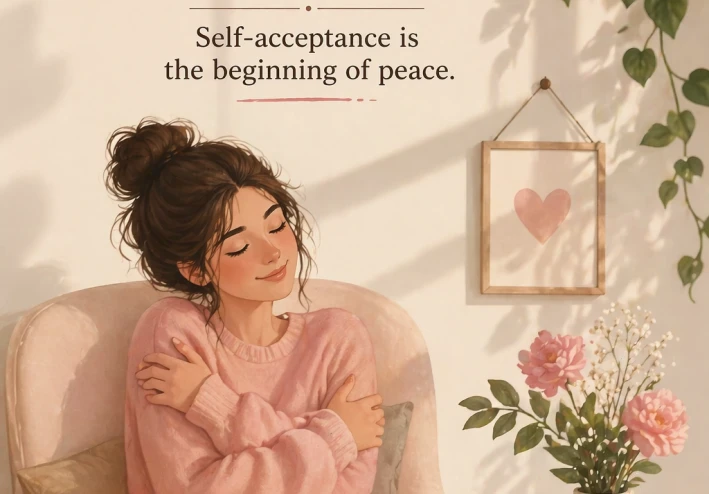
Self-Acceptance: How to Love Yourself as You Are
In a world that constantly tells you to be better, do more, and fix yourself, self-acceptance can feel like a rare and powerful act. Many people spend years trying to become someone else, believing they are not enough as they are. But the truth is simple: you don’t need to become someone else to be worthy — you just need to accept who you already are.
Self-acceptance is not about giving up on growth. It’s about starting from a place of understanding and kindness instead of judgment and criticism.
What Is Self-Acceptance?
Self-acceptance means recognizing and embracing all parts of yourself — your strengths, your weaknesses, your past, and your imperfections. It’s the ability to say, “This is me, and I’m okay with that.”
It doesn’t mean you stop improving. It means you stop hating yourself while trying to improve.
Why Do People Struggle with Self-Acceptance?
Many people find it difficult to accept themselves because of:
- Constant comparison with others
- Fear of judgment
- Negative past experiences
- High expectations and perfectionism
- Social media pressure
When you constantly compare your life to others, it’s easy to feel like you’re not doing enough or not good enough.
Signs You Might Be Lacking Self-Acceptance
- Being overly critical of yourself
- Feeling like you’re never enough
- Seeking validation from others
- Avoiding situations where you might fail
- Comparing yourself constantly
Recognizing these signs is the first step toward change.
How to Practice Self-Acceptance
1. Change Your Inner Voice
Pay attention to how you talk to yourself. Replace harsh criticism with understanding and support. Talk to yourself the way you would talk to a close friend.
2. Stop Comparing Yourself
Your journey is unique. What works for others may not be right for you. Focus on your own growth instead of measuring yourself against others.
3. Accept Your Imperfections
No one is perfect. Your flaws do not make you less worthy — they make you human. Accepting them allows you to grow without shame.
4. Set Healthy Boundaries
Sometimes, self-acceptance means protecting your energy. Say no to what drains you and yes to what supports your well-being.
5. Focus on Progress, Not Perfection
You don’t need to have everything figured out. Small steps forward are more important than perfect results.
The Power of Letting Go
One of the most important parts of self-acceptance is letting go — letting go of unrealistic expectations, past mistakes, and the need to please everyone. You cannot grow if you are constantly holding onto what makes you feel unworthy.
When you let go, you create space for peace, confidence, and real growth.
Final Thoughts
Self-acceptance is a journey, not a destination. Some days will feel easier than others, and that’s okay. What matters is that you keep choosing yourself, even on the hard days.
You are not perfect — and you don’t need to be. You are already enough, just as you are.
And the moment you truly accept yourself is the moment everything starts to change.