

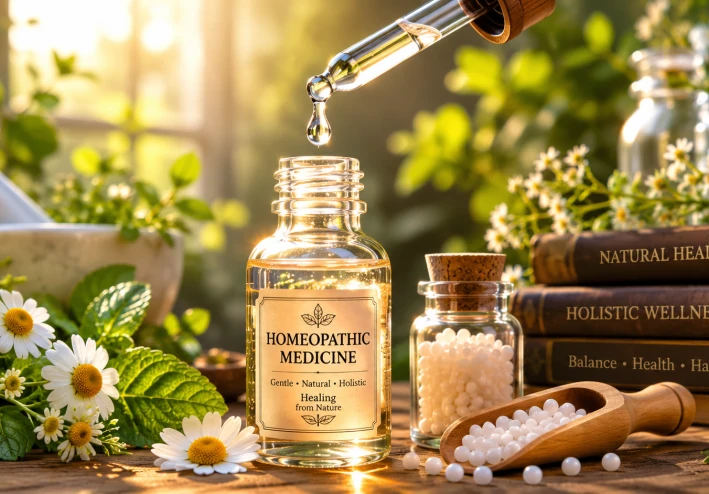
في هذا المقال

Are you tired of exploring conventional wellness options and looking for an alternative approach that focuses on a holistic view of the human body? In this article,
we will take a deep dive into homeopathic medicine, a centuries-old practice that has sparked curiosity and debate worldwide. From its historical roots in 18th-century Europe to its current place in global wellness discussions, we will explore what homepathy is and how it is viewed today.
What is Homeopathic Medicine? A Brief History
To understand homeopathy, we must travel back to the late 1700s. Founded by the German physician Samuel Hahnemann, homeopathy emerged as a system based on the belief that the body has an inherent ability to heal itself.
Unlike conventional medicine, which often uses treatments to counteract symptoms, homeopathy operates on a completely different philosophy. Today, it stands as one of the most widely discussed alternative health practices across the United States and Europe.
The Core Principles of Homeopathy
Homeopathic care is guided by specific foundational ideas that govern how remedies are selected and prepared:
1. Like Cures Like (Similia Similibus Curentur)
This is the cornerstone of homeopathic philosophy. It suggests that a substance which can cause certain symptoms in a healthy person might, when prepared in a specific way, help stimulate the body's natural defenses to manage similar symptoms.
2. The Law of Minimum Dose
Homeopathic remedies undergo a unique process known as potentization. Substances are sequentially diluted and vigorously shaken (succussed). Practitioners believe that this process therapeutic energy while minimizing potential side effects. In many cases, the dilution is so high that only trace amounts—or molecules—of the original substance remain.
3. Individualized Holistic Care
In homeopathy, no two individuals receive the same approach. A practitioner looks at the whole person—including emotional state, lifestyle, and specific constitutional traits—rather than focusing solely on an isolated complaint.
The Modern Wellness Perspective: What Does Research Indicate?
When looking at alternative practices, it is essential to focus on general health benefits and lifestyle integration. Today, millions of people incorporate homeopathic remedies into their daily self-care routines.
General Health Support: Many individuals utilize these natural options to support overall vitality, manage everyday stress, and promote a general sense of well-being.
A Complementary Approach: Research indicates that natural therapies may contribute to reducing the overall burden of daily stressors on the body. Many wellness enthusiasts view it as a supportive tool alongside standard lifestyle modifications, such as a balanced diet and regular exercise.
Ultimately, homeopathic medicine represents a unique chapter in the history of holistic health. Whether you view it as a fascinating historical system or a gentle philosophy for personal wellness, understanding its principles allows for a more informed perspective on the diverse world of alternative care.
If you are passionate about exploring natural health and the history of medicine, feel free to leave a comment below with your thoughts, and follow our blog for more insights into the world of wellness!
Dr. Kareem Elhoseny
is a registered pharmacist and medical writer specializing in pharmacognosy, natural remedies, and holistic wellness therapies. Combining academic precision with an engaging, accessible narrative, he aims to promote health literacy and provide evidence-based insights to help you enhance your daily vitality and embrace a more active lifestyle.
تابع جديد Dr. Kareem Elhoseny
اختر إشعارات الموقع أو البريد أو الاثنين. الزائر يقدر يشترك ببريده دون تسجيل حساب.
الإبلاغ عن المقال
لو لاحظت مشكلة في المحتوى، أرسلها لفريق المراجعة. لن تظهر بياناتك لكاتب المقال أو للقراء.
تعذّر إرسال البلاغ الآن. حاول مرة أخرى لاحقًا.
سجّل الدخول لإرسال بلاغ






النقاش
التعليقات (0)
فكرة تضيفها، أو سؤال يفتح حوارًا.
الرجاء تسجيل الدخول لتتمكن من التعليق