
في هذا المقال
Scoliosis: Understanding Spinal Curvature and Its Impact on Human Health
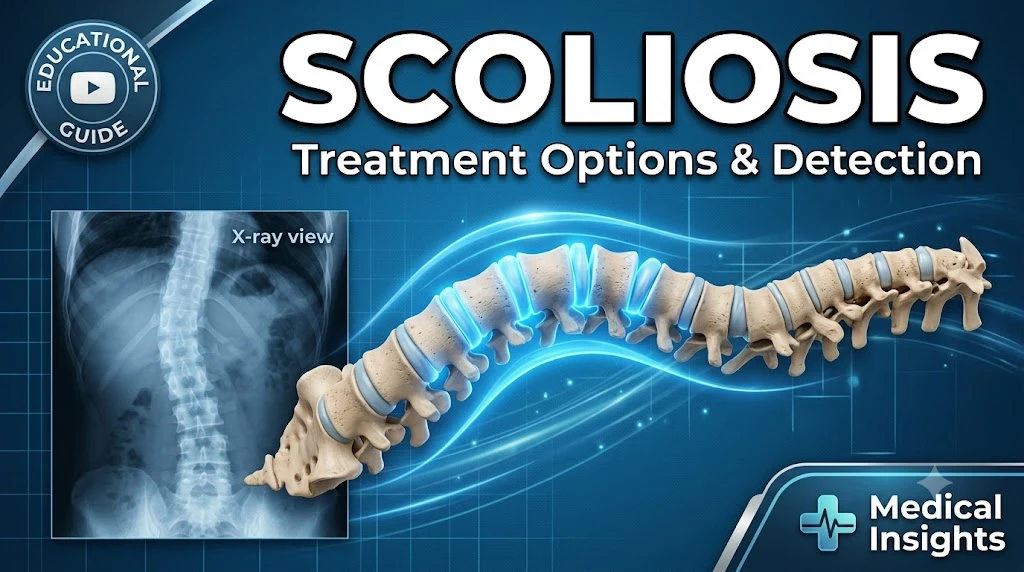
Scoliosis is one of the most common spinal deformities affecting people worldwide. It is defined as an abnormal sideways curvature of the spine measuring more than 10 degrees when assessed using the Cobb angle on radiographic imaging. Unlike a normal spine, which appears straight when viewed from behind, a scoliotic spine develops a lateral curve that may resemble the shape of the letters "C" or "S". In addition to the lateral deviation, scoliosis often involves vertebral rotation, making it a complex three-dimensional deformity.
The exact cause of scoliosis varies depending on its type. The most common form is idiopathic scoliosis, which accounts for approximately 80% of cases and has no clearly identified cause. Other forms include congenital scoliosis, resulting from abnormalities in vertebral development before birth; neuromuscular scoliosis, associated with conditions such as cerebral palsy and muscular dystrophy; and degenerative scoliosis, which occurs in older adults due to age-related spinal changes.
Scoliosis is most frequently diagnosed during adolescence, particularly during periods of rapid growth. Common signs include uneven shoulders, asymmetry of the waist, one shoulder blade appearing more prominent than the other, and an uneven pelvis. In severe cases, the deformity may lead to noticeable trunk imbalance and rib prominence. While many individuals experience no pain, some patients may develop back discomfort, muscle fatigue, or limitations in physical activity.
Diagnosis begins with a thorough clinical examination. Healthcare professionals often perform the Adam's Forward Bend Test to identify spinal asymmetry. If scoliosis is suspected, radiographic evaluation is used to confirm the diagnosis and measure the Cobb angle, which helps determine the severity of the condition. Curves are generally classified as mild, moderate, or severe based on the degree of spinal curvature.
The treatment of scoliosis depends on several factors, including the patient's age, skeletal maturity, curve magnitude, and risk of progression. Mild curves are often managed through regular observation and follow-up examinations. Moderate curves in growing adolescents may require bracing to prevent further progression. For severe curves, particularly those exceeding 40–50 degrees, surgical intervention may be recommended to correct the deformity and stabilize the spine.
Physical therapy plays an important role in scoliosis management. Specialized exercise programs can improve posture, enhance muscular balance, increase spinal stability, and reduce discomfort. Modern rehabilitation approaches, such as scoliosis-specific exercises, aim to address the three-dimensional nature of the deformity and improve functional outcomes.
If left untreated, severe scoliosis can lead to significant complications, including chronic pain, reduced mobility, cosmetic concerns, and in extreme cases, impaired cardiopulmonary function due to thoracic cage deformity. Therefore, early screening and timely intervention are essential to achieving optimal outcomes.
In conclusion, scoliosis is a complex spinal disorder that can affect physical function, appearance, and overall quality of life. Advances in diagnostic methods, rehabilitation strategies, bracing technology, and surgical techniques have significantly improved patient outcomes. Increased awareness, early detection, and individualized treatment plans remain the cornerstone of successful scoliosis management.
تابع جديد محمد اسامه
اختر إشعارات الموقع أو البريد أو الاثنين. الزائر يقدر يشترك ببريده دون تسجيل حساب.
الإبلاغ عن المقال
لو لاحظت مشكلة في المحتوى، أرسلها لفريق المراجعة. لن تظهر بياناتك لكاتب المقال أو للقراء.
تعذّر إرسال البلاغ الآن. حاول مرة أخرى لاحقًا.
سجّل الدخول لإرسال بلاغ









النقاش
التعليقات (0)
فكرة تضيفها، أو سؤال يفتح حوارًا.
الرجاء تسجيل الدخول لتتمكن من التعليق