

في هذا المقال
One Minute of Movement Every Hour: Can It Protect Us from the Dangers of Prolonged Sitting?
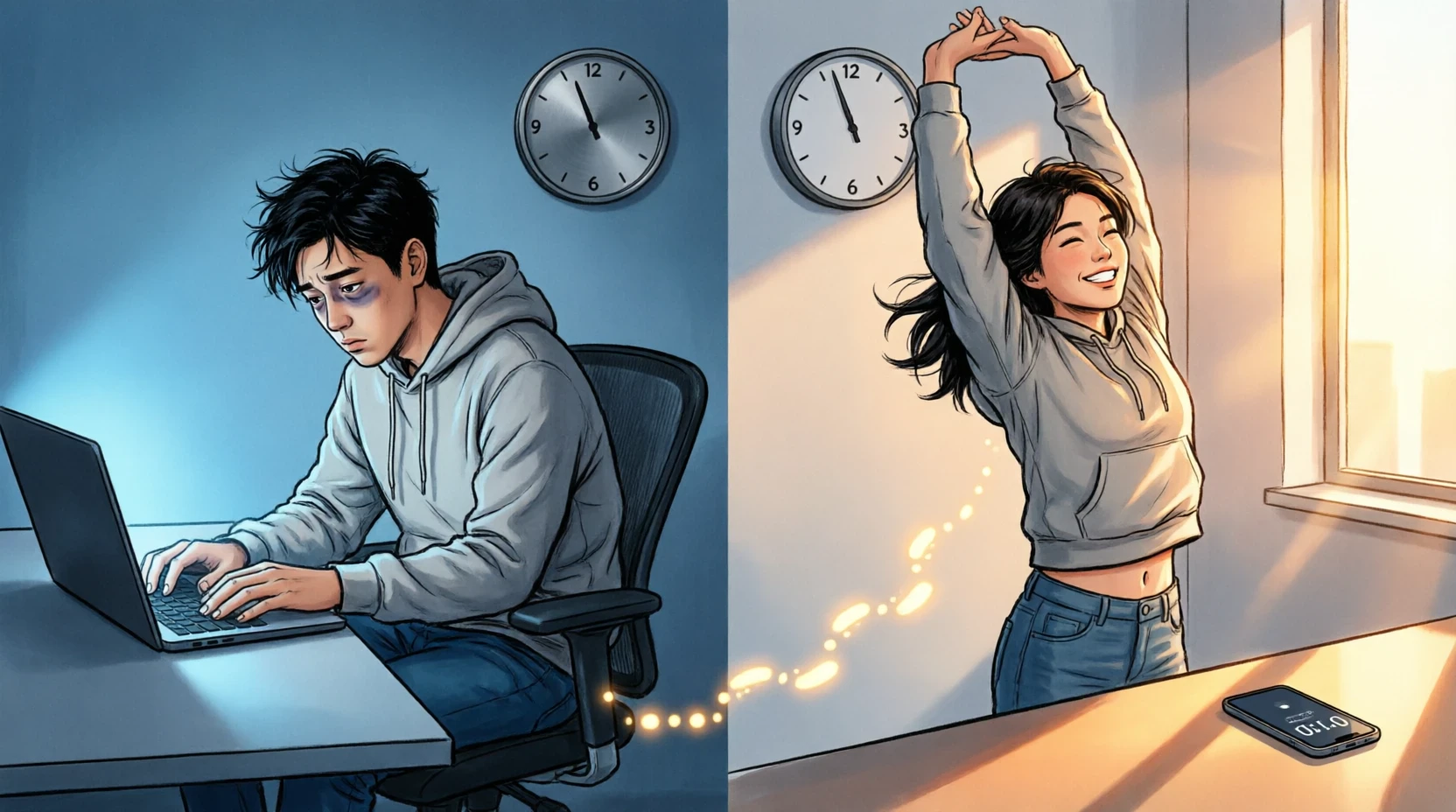
We have all been there. You look up from your computer screen, and realize you have not moved from your chair for hours. Your neck is stiff, your back aches, and you feel a wave of fatigue. In an age where work and life are increasingly screen-based, it is a common experience. We often comfort ourselves with the thought that a daily workout at the gym can offset the damage of a day spent at a desk. However, a growing body of scientific evidence suggests that this might be a dangerous assumption. While regular exercise is undeniably crucial for health, it may not be enough to fully protect us from the risks associated with a predominantly sedentary lifestyle. This article explores why a one-minute movement break every hour might be one of the most effective strategies for combating the dangers of our modern, sitting-centered lives.
## Understanding the Risks of Prolonged Sitting
The human body was not designed for prolonged stillness. Our physiology thrives on movement, and when we remain seated for hours, our internal systems begin to falter.
Leading experts in the field have identified a host of physiological changes that occur when we sit for extended periods. Keith Diaz, a behavioral scientist and Florence Irving Associate Professor of Behavioral Medicine at Columbia University Irving Medical Center, explains that the simple act of sitting constricts the blood vessels in our legs. He describes this as putting a "kink" in the blood vessels . This compression and inactivity can lead to a significant decrease in blood flow, which in turn can cause blood pressure to rise . This occurs because the leg muscles are in a state of dormancy, reducing their demand for oxygen-rich blood and causing the blood vessels to constrict .
Furthermore, muscles play a critical role in regulating blood sugar and insulin sensitivity. When they are not used, their ability to absorb glucose diminishes, contributing to insulin resistance and elevated blood sugar levels . This inactivity also disrupts lipid metabolism, leading to the storage of fat and an increase in the body's inflammatory processes .
A sedentary lifestyle has been linked to a wide array of health complications. Beyond the immediate feelings of stiffness and fatigue, prolonged sitting is associated with:
- **Cardiovascular Disease:** An increased risk of coronary artery disease and heart failure.
- **Metabolic Disorders:** A higher likelihood of developing type 2 diabetes and obesity .
- **High Blood Pressure and Cholesterol:** Elevated readings that strain the cardiovascular system .
- **Cancer:** An elevated risk for certain cancers, including breast, colon, and kidney cancer .
- **Musculoskeletal Issues:** Persistent back and neck pain .
## Why Exercise Alone Is Not Enough
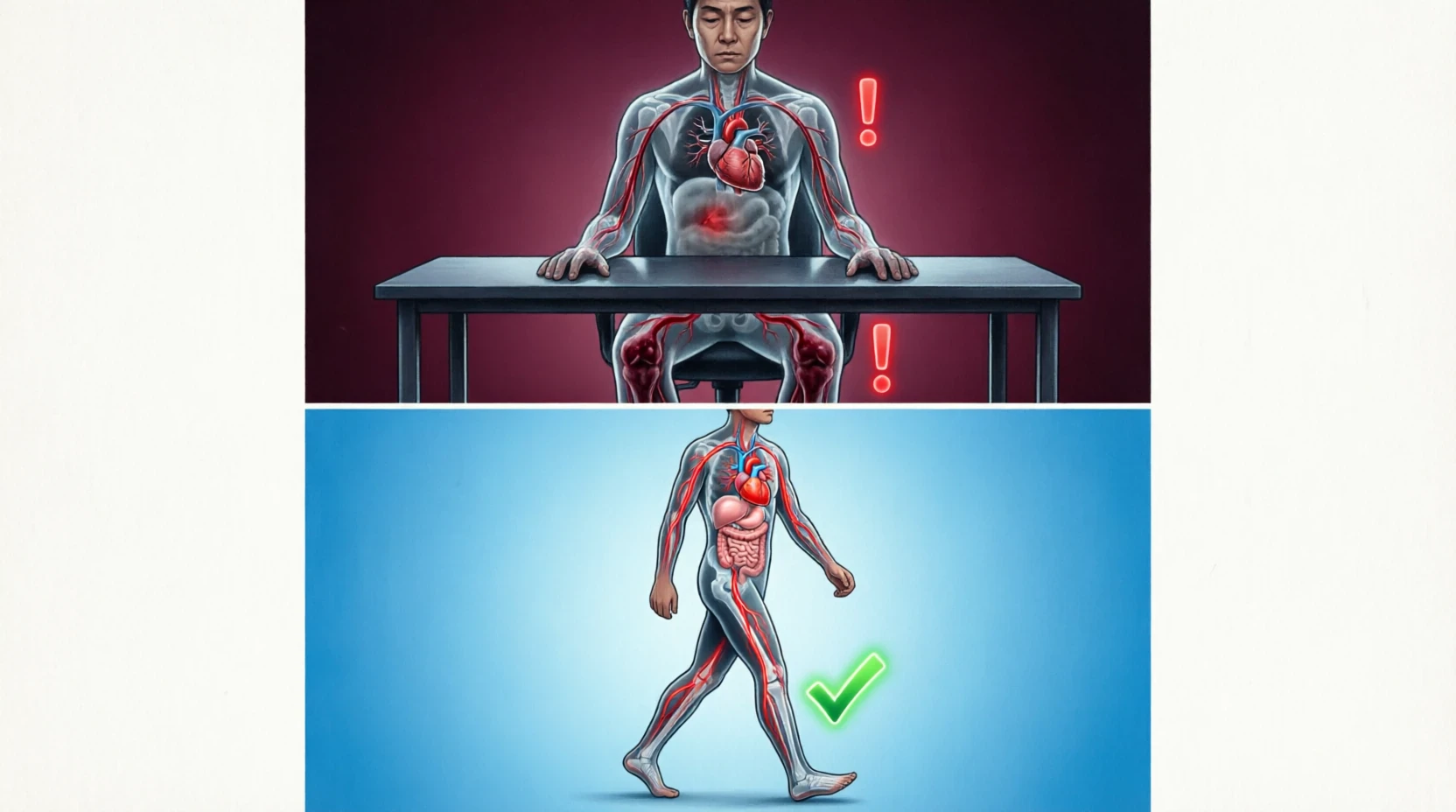
One of the most common questions in health is whether a daily workout can mitigate the risks of sitting. The answer, according to recent research, is nuanced.
A study published in *Nature Communications* in April 2026 found that while increasing daily step counts can reduce some health risks associated with sitting, it does not entirely eliminate them . This is a critical finding. It suggests that even those who meet the recommended guidelines of 150 minutes of moderate exercise per week may still be at risk if they spend the rest of their waking hours in a sedentary state .
Johns Hopkins Medicine underscores this point by distinguishing between "exercise" and "activity." Exercise is the structured, intentional effort to raise the heart rate, while activity refers to how much you move throughout the course of the day . Experts now argue that a 45-minute gym session simply cannot compensate for eight to ten hours of inactivity. Blaha says, "We need both exercise and activity" to achieve optimal health . The key takeaway is that regular exercise alone may be insufficient to completely offset the harms of prolonged sitting .
This is where the concept of "movement snacks," or short bursts of activity, comes into play.
## The Science of Movement Snacks: What Works Best?
So, if a daily workout is not a complete solution, what is? The answer appears to be frequent, short bouts of movement throughout the day, known as "movement snacks" or "exercise snacks." These are brief periods of activity lasting anywhere from one to ten minutes .
A large-scale pragmatic intervention evaluating movement breaks as a public health strategy found that they were feasible, acceptable, and effective at improving psychosocial outcomes like fatigue, positive affect, and negative affect . The study found that movement breaks demonstrated a dose-response pattern: more frequent breaks led to greater improvements. Hourly breaks offered the best balance between feasibility and effectiveness for real-world implementation .
Keith Diaz and his team at Columbia University have conducted some of the most insightful research to determine the optimal frequency and duration of these breaks. In a study involving 11 adults, they compared the effects of different break patterns during an eight-hour simulated workday . Participants engaged in one of five conditions:
1. No walking at all.
2. One minute of walking every 60 minutes.
3. One minute of walking every 30 minutes.
4. Five minutes of walking every 60 minutes.
5. Five minutes of walking every 30 minutes.
The results were striking. The only walking pattern that significantly lowered both blood sugar and blood pressure was five minutes of walking after every 30 minutes of sitting . This regimen also reduced post-meal blood sugar spikes by a remarkable 58% compared to sitting all day .
**But here is the good news for those with busy schedules:**

While the 5-minute break every half hour was the most effective, a shorter break still provided significant benefits. All patterns of walking breaks, including a one-minute break every hour, reduced systolic blood pressure by four to five points . For context, this is a decrease comparable to what one might expect from daily exercise over six months . Furthermore, all break patterns reduced fatigue and improved mood, with the exception of one minute of walking per hour, which was still effective for blood pressure .
This suggests that while more frequent and longer breaks are ideal for blood sugar control and maximizing benefits, even a simple one-minute stroll every hour can offer substantial cardiovascular and psychological advantages.
## Implementing Movement Snacks in Daily Life
While the science is compelling, the challenge lies in implementation. Incorporating movement snacks into a busy workday, with its packed schedule of meetings and deadlines, can seem difficult. However, experts suggest that it is more about forming a habit and making small adjustments.
Keith Diaz emphasizes that the movement does not need to be strenuous. In their studies, participants walked at a slow pace of about 2.0 miles per hour, equivalent to a leisurely stroll . There is no need for running, jumping, or climbing stairs. The key is simply to break up long periods of sitting .
Here are some practical ideas to get started :
- **Set a Timer:** Use your phone or computer to set a reminder to get up every 30 to 60 minutes.
- **Walk While You Think:** Pace around your office or home while brainstorming ideas or taking a phone call.
- **Take the "Water Break":** Keep a glass of water at your desk to encourage frequent trips to the kitchen or water cooler to refill it.
- **March in Place:** A simple and effective way to get your blood flowing without needing to go anywhere.
- **Do "Cardio Snacks":** A one-minute dance break, jogging in place, or a few jumping jacks.
- **Do "Strength Snacks":** A quick series of squats, lunges, or wall push-ups.
- **Walk to a Colleague's Desk:** Instead of sending an email or instant message, walk over to talk to a coworker.
Even small changes can add up. An 8-hour workday with 5-minute walking breaks every hour equates to 40 minutes of movement .
## Conclusion: A Step Toward a Healthier Future
The public health message is becoming clearer: our bodies need regular movement throughout the day, not just a single, concentrated burst of exercise. The concept of "movement snacks" offers a practical and accessible strategy to combat the dangers of a sedentary lifestyle.
While the ideal may be to walk for five minutes every half hour to optimally regulate blood sugar, even taking a one-minute walk every hour can lower blood pressure and improve mood. This is an incredibly achievable goal for most people.
As Keith Diaz succinctly put it, "Your body needs perpetual regular movement... You can't just exercise for 30 minutes every morning and go sit the rest of your day" . By integrating these small, manageable breaks into our daily routines, we can significantly improve our long-term health and well-being---
*Disclaimer: This article is for informational purposes only and does not constitute medical advice. Consult a qualified healthcare professional for any health concerns or before making changes to your physical activity routine.*
تابع جديد Mohamed taha hassan
اختر إشعارات الموقع أو البريد أو الاثنين. الزائر يقدر يشترك ببريده دون تسجيل حساب.
الإبلاغ عن المقال
لو لاحظت مشكلة في المحتوى، أرسلها لفريق المراجعة. لن تظهر بياناتك لكاتب المقال أو للقراء.
تعذّر إرسال البلاغ الآن. حاول مرة أخرى لاحقًا.
سجّل الدخول لإرسال بلاغ









النقاش
التعليقات (0)
فكرة تضيفها، أو سؤال يفتح حوارًا.
الرجاء تسجيل الدخول لتتمكن من التعليق