

في هذا المقال
Skin and Hair Care: Simple Habits for Healthier Skin and Stronger, Healthier-Looking Hair
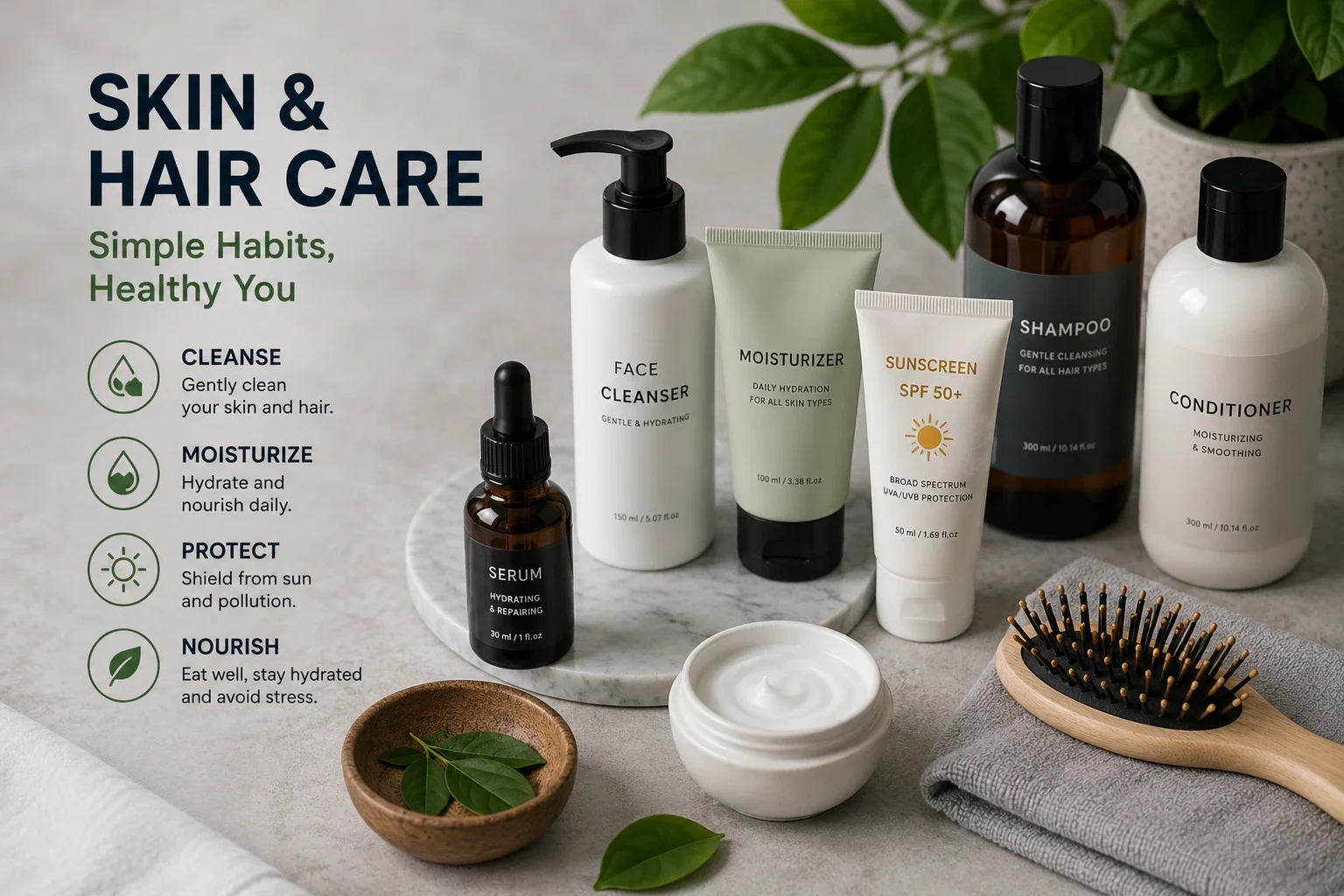
Healthy skin and beautiful hair are often associated with expensive products, complicated routines, and endless beauty trends. But in reality, good skin and hair care does not have to be complicated. A consistent routine based on gentle care, sun protection, proper cleansing, hydration, and avoiding unnecessary damage can provide a much stronger foundation than constantly switching between products.
The skin is the body’s largest organ and serves as an important protective barrier between the body and the outside environment. It helps protect against physical and environmental factors while also playing a role in temperature regulation and sensation. Because of this, taking care of the skin is not simply about appearance; it is also part of maintaining overall skin health.
One of the simplest principles of skincare is to avoid doing too much. A basic routine can be effective without requiring a large number of products. A simple approach generally focuses on gentle cleansing, moisturizing, and protecting the skin from the sun. Using too many products, particularly products with multiple active ingredients, may increase the chance of irritation.
Cleansing helps remove dirt, excess oil, sweat, and other substances from the surface of the skin. However, aggressive scrubbing or harsh cleansers can irritate the skin and may make dryness or sensitivity worse. Using a gentle cleanser and avoiding excessive washing or rubbing can help maintain the skin’s natural barrier.
Moisturizing is another important part of everyday skincare. Moisturizers help reduce water loss from the skin and can make dry skin feel more comfortable and smoother. The best moisturizer depends on individual skin characteristics, because oily, dry, combination, and sensitive skin may respond differently to different formulations. For people who are prone to breakouts, products labeled “oil-free” or “non-comedogenic” may be useful options.
Sun protection deserves special attention because ultraviolet radiation can damage the skin over time. Regular exposure to ultraviolet radiation contributes to sunburn, premature skin aging, and an increased risk of skin cancer. Using broad-spectrum sunscreen with an SPF of 30 or higher, together with shade and protective clothing when appropriate, can help reduce exposure to ultraviolet radiation.
Sun protection is important even when the goal is simply maintaining healthy-looking skin. There is no need to wait for a beach holiday or very hot weather before thinking about UV exposure. Using sunscreen, covering exposed skin when appropriate, seeking shade during periods of strong sunlight, and avoiding sunburn are important parts of sun safety.
Another common mistake is assuming that expensive skincare products are automatically better. Price does not guarantee that a product will be more suitable for your skin. Choosing products according to your skin type and individual needs is generally more useful than following every social-media trend or buying a large number of products. Consistency with a simple routine can be more beneficial than constantly changing products.
Hair care follows a similar principle. Healthy-looking hair is not necessarily the result of using dozens of specialized products. Everyday habits such as gentle washing, appropriate conditioning, and reducing unnecessary heat or chemical damage can help protect the hair from becoming dry, brittle, or damaged.
Hair type also matters. Straight, wavy, curly, and tightly curled hair can have different care requirements, so a routine that works well for one person may not work equally well for another. Understanding your hair type and adjusting your hair-care practices accordingly can make it easier to choose suitable products and routines.
The way hair is styled can also influence its condition. Frequent high-heat styling, aggressive brushing, tight hairstyles, and certain chemical treatments may contribute to hair damage. Reducing unnecessary heat and mechanical or chemical stress can therefore be an important part of maintaining healthier-looking hair.
The scalp should not be forgotten either. It is the environment from which the hair grows, and scalp care is an important part of a complete hair-care routine. Changes such as persistent itching, scaling, significant irritation, or noticeable hair loss may have different causes and should not automatically be treated as a simple cosmetic problem.
Another important point is that skin and hair can reflect changes occurring throughout the body, but appearance alone cannot diagnose a health condition. Dry skin, acne, itching, or hair loss can have many possible causes, and the appropriate approach depends on the individual situation. This is why online beauty advice should not be treated as a substitute for professional medical evaluation when symptoms are persistent, severe, or unusual.
A healthy lifestyle can also support general skin and hair health. Adequate sleep, regular physical activity, avoiding smoking, and maintaining a balanced diet are all parts of a healthy lifestyle. However, no single food, supplement, oil, or cosmetic product can guarantee perfect skin or prevent every hair problem.
When introducing a new skincare product, it is also sensible to be cautious, particularly for people with sensitive skin. Some ingredients can cause irritation or allergic reactions. Testing a small amount of a new product before applying it more widely may help identify potential irritation before using it over a larger area.
It is also important not to confuse healthy skin with flawless skin. Acne, pores, pigmentation, wrinkles, scars, and natural differences in skin texture are common. The goal of skincare should be to support the health and comfort of the skin rather than creating unrealistic expectations based on edited photographs or social-media trends.
The same idea applies to hair. Healthy hair does not necessarily mean perfectly straight, extremely shiny, or completely free of frizz. Hair naturally varies in texture, density, color, and appearance. Good hair care is mainly about reducing avoidable damage and maintaining a healthy scalp and hair as much as possible.
A practical routine therefore does not need to contain ten or fifteen steps. For many people, the foundation can be simple: gently cleanse the skin, moisturize when needed, protect the skin from excessive UV exposure, treat the hair gently, avoid unnecessary damage, and pay attention to changes that persist over time.
In the end, effective skin and hair care is less about chasing the latest trend and more about developing consistent habits that suit your individual needs. The most expensive routine is not necessarily the best routine, and more products do not automatically mean better results. Simple, evidence-based care and realistic expectations can go a long way toward maintaining healthy skin and healthier-looking hair.
Important Note: This article is intended for general educational purposes and does not provide personalized medical or dermatological advice. Skin and hair conditions can have many different causes, and the appropriate treatment may vary from person to person. Persistent, painful, severe, or unusual skin or hair symptoms should be evaluated by a qualified healthcare professional or dermatologist. Do not start prescription treatments or supplements based solely on information from this article.
Trusted Sources:
https://www.aad.org/public/everyday-care�
https://www.aad.org/public/everyday-care/skin-care-basics�
https://www.aad.org/public/everyday-care/hair-scalp-care�
https://www.nhs.uk/live-well/seasonal-health/sunscreen-and-sun-safety/�
تابع جديد Mohamed Mohsen
اختر إشعارات الموقع أو البريد أو الاثنين. الزائر يقدر يشترك ببريده دون تسجيل حساب.
الإبلاغ عن المقال
لو لاحظت مشكلة في المحتوى، أرسلها لفريق المراجعة. لن تظهر بياناتك لكاتب المقال أو للقراء.
تعذّر إرسال البلاغ الآن. حاول مرة أخرى لاحقًا.
سجّل الدخول لإرسال بلاغ







النقاش
التعليقات (0)
فكرة تضيفها، أو سؤال يفتح حوارًا.
الرجاء تسجيل الدخول لتتمكن من التعليق