


في هذا المقال
Why does acne keep coming back well past your teenage years, especially along the jawline? Adult acne is far more common than most people realise, and in Europe it affects women more than any other region in the world. This article breaks down why adult female acne happens, the different forms it takes, and the natural and medical approaches most often discussed in dermatology research.
Quick overview: This guide covers what makes adult acne in women different from teenage breakouts, the main hormonal, hereditary and lifestyle triggers, the distinct types of blemishes involved (hormonal, inflammatory, comedonal and reactive/sensitised skin), and an evidence-based look at natural remedies and medical treatments — along with when it's time to see a dermatologist.
Disclaimer: This article is for general educational purposes only, based on published medical literature. It is not a substitute for a diagnosis or personalised treatment plan from a qualified dermatologist or GP. No dosing information is provided, as this must always be determined by a healthcare professional based on your individual case.
Adult Acne in Women: Causes, Types and Treatment Options
Acne is often thought of as a teenage problem, but research increasingly shows this isn't accurate. A large-scale review of global skin disease data found that adult-onset acne can affect up to 40% of the adult population, and that Western Europe has one of the highest recorded rates of acne worldwide, with breakouts around 25% more common in young women than in young men in the region[1].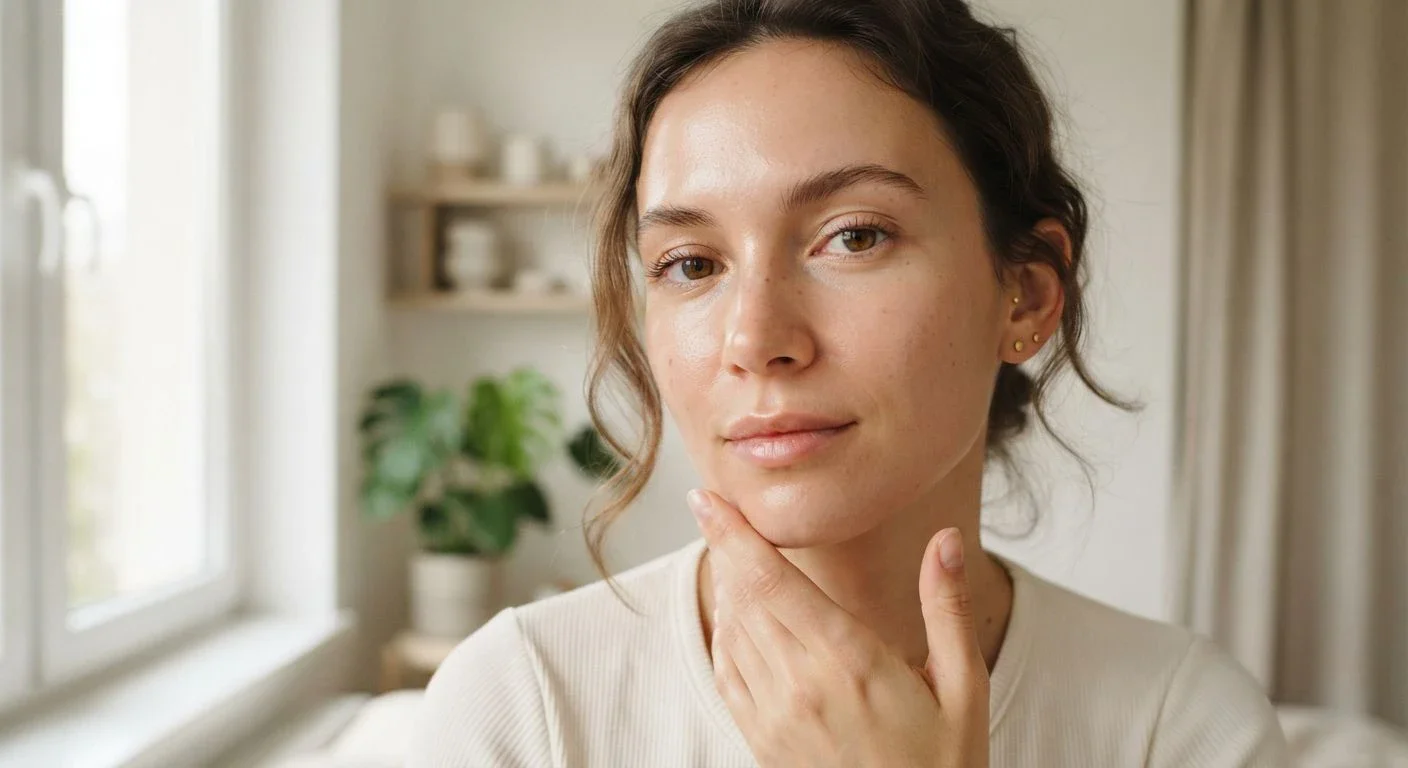
This piece looks at why acne persists or reappears in adult women, walks through the main categories of blemishes dermatologists describe, and summarises what the current medical literature says about natural and clinical treatment options — always with the reminder that a proper diagnosis needs a professional assessment.
(Insert image: close-up of adult jawline acne on a woman's skin)
Why Does Adult Acne Happen?
According to a 2015 review published in the Journal of the European Academy of Dermatology and Venereology, adult female acne can either persist from the teenage years or appear for the first time well into adulthood, and its presentation and underlying biology can differ from adolescent acne, which is one reason it often needs a different treatment approach[2].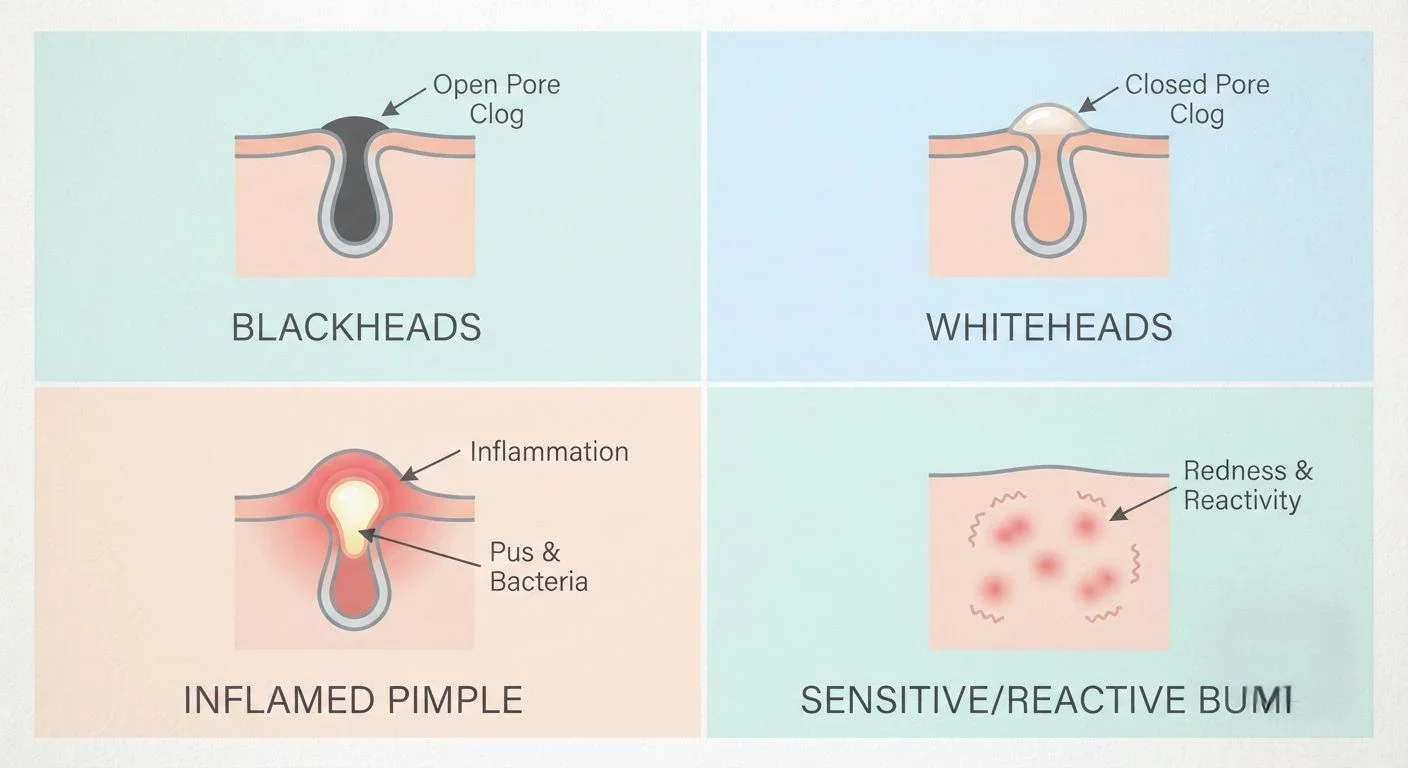
Genetic predisposition and hormonal fluctuations are described as key contributors in most reviews on the topic, alongside a chronic, relapsing pattern that tends to require longer-term management rather than a single short course of treatment[2].
It's worth noting that no two cases are identical — a dermatologist typically looks at a woman's full history (cycle regularity, family history, product use, stress levels) before identifying likely contributing factors, rather than relying on the appearance of the skin alone.
Common Causes of Persistent Breakouts
Medical literature generally frames acne as multifactorial, meaning several processes tend to overlap rather than a single cause acting alone: excess sebum production, blocked hair follicles, colonisation by the skin bacterium Cutibacterium acnes, and a related inflammatory response[3].
Hormonal Triggers
Androgen hormones are widely discussed in the literature as a driver of increased oil production in the skin, which is one reason breakouts often cluster around the menstrual cycle, pregnancy, or hormonal conditions such as polycystic ovary syndrome (PCOS)[4]. A 2025 case series on treatment-resistant acne in women specifically highlighted hormonal, metabolic and corticosteroid-related triggers as recurring contributors in adult patients[1].
Jawline and chin breakouts that flare in a cyclical pattern are frequently associated with hormonal activity in dermatology sources, but this pattern alone isn't considered diagnostic — blood tests and a clinical history are usually needed to confirm whether a hormonal imbalance is actually present.
Lifestyle and Environmental Factors
Diet, stress and skincare habits are commonly discussed as contributing factors, though the strength of evidence varies. Some studies point to high-glycaemic diets and certain dairy products as potentially linked to flare-ups in a subset of people, while acknowledging this doesn't apply universally[3].
Central heating, colder climates and heavier winter skincare products — factors relevant to much of northern and central Europe — are also mentioned anecdotally in clinical guidance as potential contributors to clogged pores, alongside more established factors like poor sleep and high stress levels.
The Main Types of Adult Acne
Not all adult breakouts are the same, and dermatology sources generally separate them into a few recognisable categories. Understanding which type you're dealing with matters, because the treatment approach differs meaningfully between them.
(Insert image: comparison chart of different acne lesion types on skin)
Hormonal (Jawline) Acne
This form tends to appear along the jaw, chin and lower cheeks, and is often deep, tender and slow to resolve. It's the pattern most frequently associated with hormonal fluctuations in the literature on adult female acne, and dermatologists may recommend hormone-related blood work if it's persistent or accompanied by irregular periods[2][4].
Inflammatory Acne (Papules and Pustules)
These are the classic red, sometimes pus-filled bumps most people associate with "acne." They result from a combination of clogged follicles, bacterial activity and the skin's inflammatory response, and dermatology guidance notes they can occur at any adult age, not only during adolescence[3][5].
Comedonal Acne (Blackheads and Whiteheads)
Blackheads are open pores blocked with oil and dead skin cells that oxidise and darken on contact with air, while whiteheads are the same blockage under closed skin. These are classified as non-inflammatory lesions in most acne classification systems, and while generally milder, picking or squeezing them is commonly cited as a risk factor for turning them into more inflamed lesions[3].
Reactive or Sensitised Breakouts
Some skin reactions that look like acne are actually contact irritation or sensitivity to a new product, fragrance, or environmental factor, presenting as small red bumps with redness or itching rather than classic acne lesions. Distinguishing this from true acne matters because the treatment (identifying and removing the trigger, calming the skin) is very different from standard acne therapy.
Natural Approaches Often Discussed for Acne-Prone Skin
Many women look for gentler, natural options either as a first step or alongside professional treatment. It's important to flag that the quality of evidence behind these remedies varies considerably, and results are inconsistent from person to person.
Ingredients frequently mentioned include aloe vera gel, traditionally used to soothe inflamed skin, and diluted tea tree oil, which has been studied on a small scale as a topical option for mild acne — though it should always be patch-tested first, since essential oils can trigger irritation or allergic reactions in some people.
Green tea extract and general lifestyle measures — adequate hydration, a balanced diet, reduced intake of high-glycaemic foods, and a gentle twice-daily cleansing routine — are also commonly cited as supportive habits, though none of these are presented in the literature as a stand-alone cure, particularly for hormonal or moderate-to-severe acne.
Medical Treatments Discussed in Dermatology Research
Clinical literature outlines a range of treatment options that a dermatologist may consider, tailored to the type and severity of acne, and to individual factors such as pregnancy or breastfeeding[6].
Topical options frequently referenced include benzoyl peroxide, which targets acne-related bacteria, and salicylic acid, used to help clear blocked pores. Topical retinoids (such as adapalene and tretinoin) are described across multiple reviews as a first-line option for many acne presentations, and azelaic acid is noted for both its anti-bacterial action and its effect on post-acne dark marks[3][6].
(Insert image: dermatologist consultation for acne treatment)
For adult female acne that doesn't respond to topical treatment, the literature discusses systemic options such as combined oral contraceptives and the anti-androgen medication spironolactone, both of which have been studied specifically in adult women with hormonally-driven acne — a 2021 UK-based clinical trial protocol (the SAFA study) was designed specifically to evaluate spironolactone's effectiveness in this group[7][2]. These are prescription-only treatments requiring individualised assessment by a doctor.
In more severe or treatment-resistant cases, oral isotretinoin is described in the literature as an option, alongside a clear note that it carries documented hormonal and other side effects and requires close medical supervision throughout treatment[8]. No dosing or duration information is given here, as this is determined entirely by the prescribing physician based on the individual patient.
General Prevention Tips
While there's no guaranteed way to prevent acne altogether, several habits are commonly recommended in general skin health guidance as supportive measures.
Cleansing twice daily with a gentle, non-stripping cleanser is generally advised, since over-washing can trigger the skin to produce more oil as a compensatory response. Choosing non-comedogenic skincare and make-up, avoiding touching the face frequently, and regularly washing pillowcases are also widely suggested.
Daily sun protection is another commonly cited habit, both for general skin health and because unprotected sun exposure can make post-acne dark marks more difficult to fade over time.
When to See a Dermatologist
Medical sources generally recommend seeking professional advice if acne persists for several months despite over-the-counter treatment, if it's painful or leaves scarring, or if it appears alongside other symptoms such as irregular periods or excess hair growth, which may point to an underlying hormonal cause worth investigating[2][4].
A dermatologist can also help distinguish between true acne and other look-alike skin conditions, such as rosacea or folliculitis, which require different treatment altogether — something that's difficult to do reliably without a clinical examination.
Conclusion
Adult acne in women is common, particularly in Europe, and is rarely caused by a single factor — hormones, genetics, lifestyle and skincare habits typically overlap. This guide has walked through the main causes, the different types of adult breakouts, and what the medical literature says about natural and clinical treatment options.
This article is intended as general educational content and isn't a substitute for a proper skin assessment. If breakouts are persistent, painful or affecting your confidence, a dermatologist can help identify the specific cause and the treatment path best suited to you. Feel free to explore more of our skincare guides for further reading.
Related topics you might find useful:
- Building a Skincare Routine for Acne-Prone Skin in Winter
- Hormonal Acne vs Regular Acne: How to Tell the Difference
- How to Fade Post-Acne Marks and Scarring Safely
- Diet and Skin Health: What the Research Actually Says
Sources: [1] Multifactorial Refractory Acne in Women — PMC, 2025 — https://www.ncbi.nlm.nih.gov/pmc/articles/PMC12387328/ [2] Treatment of adult female acne: a new challenge — J Eur Acad Dermatol Venereol, 2015 — https://pubmed.ncbi.nlm.nih.gov/26059821/ [3] Exploring Acne Treatments: From Pathophysiological Mechanisms to Emerging Therapies — PMC — https://www.ncbi.nlm.nih.gov/pmc/articles/PMC11121268/ [4] A review of diagnosis and treatment of acne in adult female patients — Int J Womens Dermatol — https://pmc.ncbi.nlm.nih.gov/articles/PMC5986265 [5] Acne treatment: research progress and new perspectives — Frontiers in Medicine, 2024 — https://www.ncbi.nlm.nih.gov/pmc/articles/PMC11266290/ [6] Acne: Diagnosis, Treatment, and Steps to Take — NIAMS — https://www.niams.nih.gov/health-topics/acne/diagnosis-treatment-and-steps-to-take [7] Spironolactone for adult female acne (SAFA) — study protocol — PMC — https://www.ncbi.nlm.nih.gov/pmc/articles/PMC8395279/ [8] Isotretinoin influences pituitary hormone levels in acne patients — PMC — https://www.ncbi.nlm.nih.gov/pmc/articles/PMC8437010/
تابع جديد أحمد عمر عبدالمنعم
اختر إشعارات الموقع أو البريد أو الاثنين. الزائر يقدر يشترك ببريده دون تسجيل حساب.
الإبلاغ عن المقال
لو لاحظت مشكلة في المحتوى، أرسلها لفريق المراجعة. لن تظهر بياناتك لكاتب المقال أو للقراء.
تعذّر إرسال البلاغ الآن. حاول مرة أخرى لاحقًا.
سجّل الدخول لإرسال بلاغ




النقاش
التعليقات (0)
فكرة تضيفها، أو سؤال يفتح حوارًا.
الرجاء تسجيل الدخول لتتمكن من التعليق