

في هذا المقال
5 Simple Daily Habits to Lose Weight Without Extreme Diets

Many individuals believe that successful weight management requires severe calorie restriction or intense exercise regimens. However, clinical research indicates that long-term weight loss is best supported by sustainable lifestyle modifications rather than short-term, drastic measures (Gardner et al., 2018).
Disclaimer: The following article provides general educational information regarding metabolism, nutrition, and physiological wellness. It is not personalized medical advice, diagnosis, or treatment. Individual nutritional needs vary based on age, genetics, and health status. Always consult a qualified healthcare provider or registered dietitian before modifying your diet, exercise, or medical regimen.
1. Drink Water Before Meals
Maintaining hydration supports general cellular function and metabolic efficiency. Pre-meal fluid intake can assist with appetite regulation and temporary metabolic elevation.
Mechanisms and Evidence: Consuming 500 mL of water roughly 30 minutes prior to meals has been shown to reduce acute energy intake, aiding natural portion control without voluntary deprivation (Davy et al., 2008). Ingestion of water also induces a transient increase in resting metabolic rate—a physiological response termed water-induced thermogenesis (Boschmann et al., 2003).
Application: Replacing sugar-sweetened beverages with plain water significantly reduces free sugar intake, which correlates with decreased overall adiposity (Te Morenga et al., 2013).
2. Prioritize Dietary Protein and Fiber
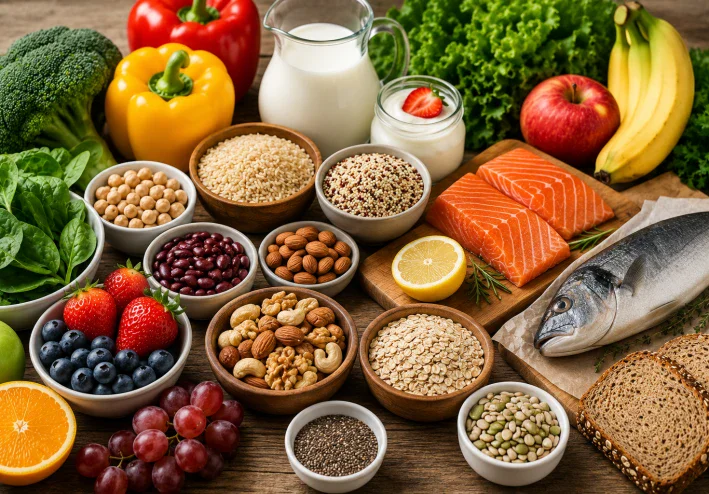
Macronutrients such as dietary protein and fiber play crucial roles in regulating satiety hormones and stabilizing blood glucose.
Dietary Protein: Digesting protein-rich foods requires greater energy output than digesting fats or carbohydrates—a process known as the Thermic Effect of Food (TEF) (Pesta & Samuel, 2014). High-protein meals stimulate the release of satiety peptides such as peptide YY (PYY) and glucagon-like peptide-1 (GLP-1), helping preserve lean body mass during weight loss (Leidy et al., 2015).
Dietary Fiber: Soluble and insoluble fibers slow gastric emptying and delay glucose absorption, mitigating postprandial glucose spikes and promoting sustained fullness (Slavin, 2005).
3. Incorporate Daily Physical Activity
Beyond structured workouts, daily movement drives Non-Exercise Activity Thermogenesis (NEAT), which constitutes a major portion of overall energy expenditure (Levine, 2004).
Mechanisms and Evidence: Light-to-moderate activities—such as a daily 30-minute walk—improve skeletal muscle insulin sensitivity and enhance glucose disposal independent of insulin action (Way et al., 2016). Consistent physical movement helps maintain metabolic flexibility and vascular function.
4. Optimize Sleep Quality and Duration
Sleep quality directly influences endocrine regulation and appetite control mechanisms.
Hormonal Regulation: Partial sleep restriction alters key metabolic hormones:
Ghrelin: Sleep deprivation leads to elevated circulating ghrelin, the hormone that stimulates appetite (Taheri et al., 2004).
Leptin: Lack of sleep decreases circulating leptin, the hormone responsible for signaling satiety (Spiegel et al., 2004).
General Target: Clinical consensus recommends 7 to 9 hours of quality sleep per night to support metabolic stability and optimal energy balance (St-Onge et al., 2016).
5. Practice Mindful Eating
Mindful eating emphasizes awareness of physiological hunger and fullness signals rather than restrictive external rules.
Mechanisms and Evidence: Rapid eating is clinically associated with higher Body Mass Index (BMI) and increased risk of metabolic dysfunction (Ohkuma et al., 2015). Gut-brain satiety pathways require approximately 20 minutes to signal fullness to the hypothalamus. Eating slowly allows adequate time for hormonal feedback loops to function, effectively moderating energy intake (Kokkinos et al., 2010).
References
Boschmann, M., Steiniger, J., Hille, U., Tank, J., Adams, F., Sharma, A. M., Klaus, S., Luft, F. C., & Jordan, J. (2003). Water-induced thermogenesis. The Journal of Clinical Endocrinology & Metabolism, 88(12), 6015–6019. https://doi.org/10.1210/jc.2003-030780 Cited by: 325
Davy, B. M., Dennis, E. A., Dengo, A. L., Wilson, E. A., & Davy, K. P. (2008). Water consumption reduces energy intake at a breakfast meal in obese older adults. Journal of the American Dietetic Association, 108(7), 1236–1239.
Gardner, C. D., Trepanowski, J. F., Del Gobbo, L. C., Hauser, M. E., Rigdon, J., Ioannidis, J. P. A., Desai, M., & King, A. C. (2018). Effect of low-fat vs low-carbohydrate diet on 12-month weight loss in overweight adults: The DIETFITS randomized clinical trial. JAMA, 319(7), 667–679.
Kokkinos, A., le Roux, C. W., Alexiadou, K., Tentolouris, N., Vincent, R. P., Kyriaki, D., Perrea, D., Ghatei, M. A., Bloom, S. R., & Katsilambros, N. (2010). Eating slowly stimulates the secretion of gut hormones in healthy subjects. The Journal of Clinical Endocrinology & Metabolism, 95(1), 333–337.
Levine, J. A. (2004). Non-exercise activity thermogenesis (NEAT). Best Practice & Research Clinical Endocrinology & Metabolism, 18(4), 679–708.
Pesta, D. H., & Samuel, V. T. (2014). A high-protein diet for reducing body fat: Mechanisms and possible caveats. Nutrition & Metabolism, 11(1), 53.
Slavin, J. L. (2005). Dietary fiber and body weight. Nutrition, 21(3), 411–418.
St-Onge, M. P., Grandner, M. A., Brown, D., Conroy, M. B., Jean-Louis, G., Coons, M., & Bhatt, D. L. (2016). Sleep duration and quality: Impact on lifestyle behaviors and cardiometabolic health. Circulation, 134(18), e367–e386.
تابع جديد Dr.Mohamed Mekkawy
اختر إشعارات الموقع أو البريد أو الاثنين. الزائر يقدر يشترك ببريده دون تسجيل حساب.
الإبلاغ عن المقال
لو لاحظت مشكلة في المحتوى، أرسلها لفريق المراجعة. لن تظهر بياناتك لكاتب المقال أو للقراء.
تعذّر إرسال البلاغ الآن. حاول مرة أخرى لاحقًا.
سجّل الدخول لإرسال بلاغ







النقاش
التعليقات (0)
فكرة تضيفها، أو سؤال يفتح حوارًا.
الرجاء تسجيل الدخول لتتمكن من التعليق