

في هذا المقال
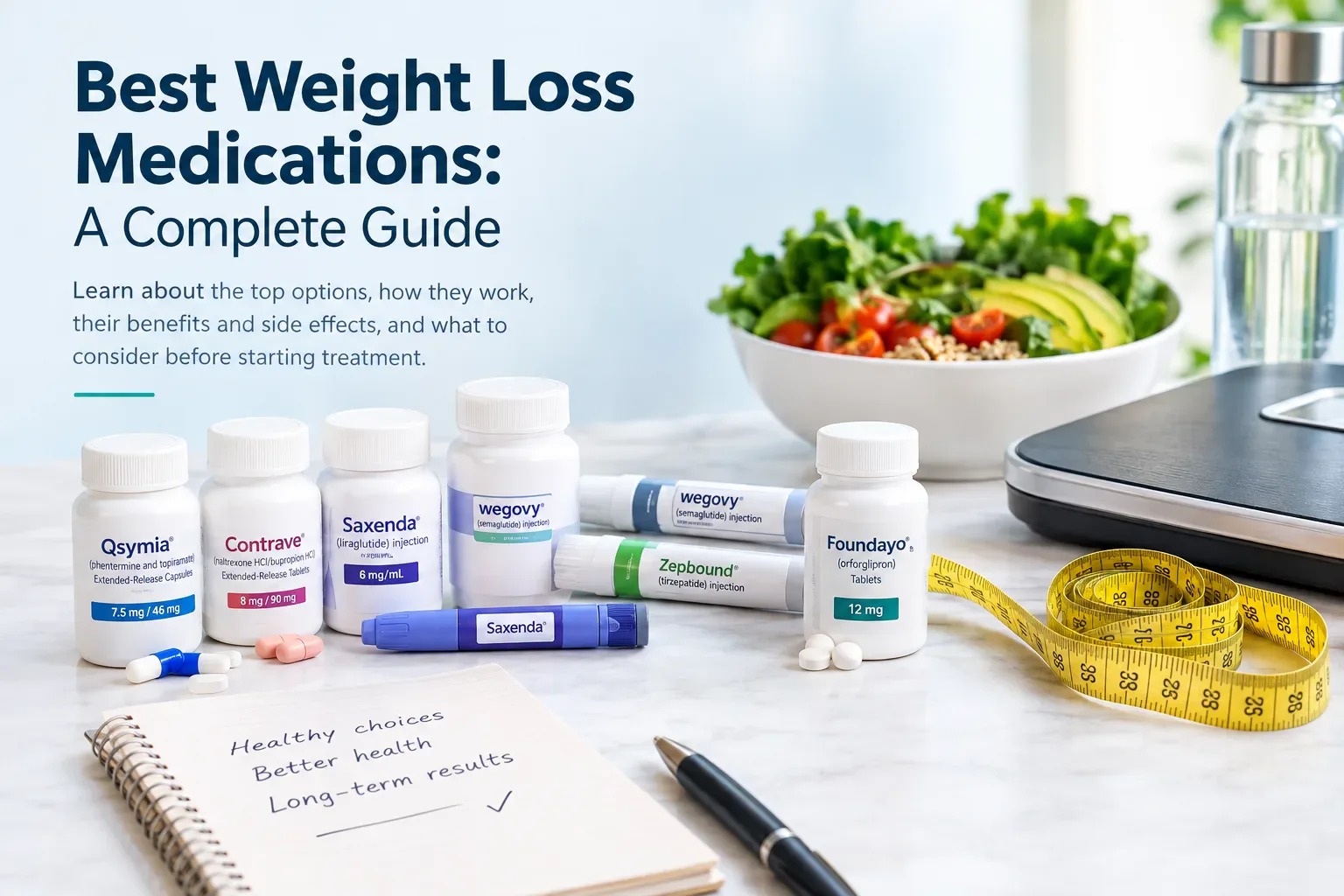 Losing weight is not always as simple as eating less and exercising more. For some people living with obesity or weight-related health conditions, weight management can be a long-term challenge. Prescription medications may be one part of treatment for eligible people, alongside nutrition, physical activity, and behavioral support.
Several medications are approved in the United States for chronic weight management, but they work differently and have different risks, eligibility requirements, and costs. No single option is appropriate for everyone.
This guide summarizes commonly discussed prescription and over-the-counter options using information from the U.S. Food and Drug Administration (FDA), the National Institute of Diabetes and Digestive and Kidney Diseases (NIDDK), and official prescribing information. It is general educational information, not individualized medical advice.
What Are Weight Loss Medications?
Weight loss medications, also called anti-obesity medications, are treatments that may help eligible people lose weight and maintain some of that loss. Depending on the medicine, they may affect appetite, feelings of fullness, or the absorption of dietary fat.
In general, a healthcare professional may consider prescription medication for an adult with a body mass index (BMI) of 30 or higher, or a BMI of 27 or higher with at least one weight-related health condition. These are general criteria, not a diagnosis or a guarantee that a particular medication is suitable. Individual drug labels may have additional requirements.
NIDDK explains that medication works best as part of a broader weight-management plan that includes healthy eating, physical activity, and behavioral changes. Source: https://www.niddk.nih.gov/health-information/weight-management/prescription-medications-treat-overweight-obesity
Prescription Weight Loss Medications
There is no universally “best” weight loss medication. The options below differ in how they work, their approved uses, and their safety considerations. Always check the latest prescribing information because labeling can change.
1. Wegovy (semaglutide)
Wegovy contains semaglutide, a GLP-1 receptor agonist that acts on pathways involved in appetite and food intake. In the United States, Wegovy has approved formulations and indications that may vary by patient group and product form; consult the current FDA-approved label for the exact indication.
Common adverse effects reported with semaglutide products include nausea, diarrhea, vomiting, constipation, and abdominal discomfort. The prescribing information also describes more serious warnings and precautions, including pancreatitis and gallbladder problems. Wegovy carries a boxed warning about thyroid C-cell tumors observed in rodents; it is contraindicated in people with a personal or family history of medullary thyroid carcinoma (MTC) or multiple endocrine neoplasia syndrome type 2 (MEN 2).
Wegovy and Ozempic both contain semaglutide, but their approved uses and dosing are not identical. Do not treat them as interchangeable. Read the current official label: https://dailymed.nlm.nih.gov/dailymed/search.cfm?query=WEGOVY
FDA information: https://www.accessdata.fda.gov/scripts/cder/daf/
2. Zepbound (tirzepatide)
Zepbound contains tirzepatide, which acts on GIP and GLP-1 receptors involved in appetite and food intake. It is used with a reduced-calorie eating plan and increased physical activity for approved weight-management indications in eligible adults. The current U.S. label also includes an indication for certain adults with obesity and moderate-to-severe obstructive sleep apnea.
Common adverse effects include nausea, diarrhea, constipation, vomiting, and abdominal discomfort. The official label warns about potential serious gastrointestinal reactions, pancreatitis, gallbladder disease, and other risks. Zepbound has a boxed warning about thyroid C-cell tumors observed in rats; its relevance to humans is unknown. It is contraindicated in people with a personal or family history of MTC or MEN 2.
Mounjaro also contains tirzepatide but has different approved uses. Review the current official label: https://dailymed.nlm.nih.gov/dailymed/drugInfo.cfm?setid=487cd7e7-434c-4925-99fa-aa80b1cc776b
3. Foundayo (orforglipron)
The FDA approved Foundayo (orforglipron) in April 2026 for use with a reduced-calorie diet and increased physical activity to reduce excess body weight and maintain weight reduction long term in adults with obesity, or adults with overweight and at least one weight-related condition. It is an oral GLP-1 receptor agonist taken once daily.
Reported adverse effects include gastrointestinal symptoms such as nausea, constipation, diarrhea, vomiting, and abdominal discomfort. The FDA-approved label includes a boxed warning concerning thyroid C-cell tumors observed in rodents; the relevance to humans is unknown. It is contraindicated in people with a personal or family history of MTC or MEN 2. The label also includes other warnings and precautions, so this summary is not a substitute for reviewing the full label.
FDA approval announcement: https://www.fda.gov/news-events/press-announcements/fda-approves-first-new-molecular-entity-under-national-priority-voucher-program
Official prescribing information: https://www.accessdata.fda.gov/drugsatfda_docs/label/2026/220934s003lbl.pdf
4. Saxenda (liraglutide)
Saxenda contains liraglutide, another GLP-1 receptor agonist used for chronic weight management in eligible patients. Unlike weekly injectable options, it is administered daily. Possible adverse effects include nausea, vomiting, diarrhea, constipation, and abdominal discomfort. Its official label includes warnings about pancreatitis, gallbladder disease, and thyroid C-cell tumors observed in rodents. It is contraindicated in people with a personal or family history of MTC or MEN 2.
Check the latest official labeling before publication: https://dailymed.nlm.nih.gov/dailymed/search.cfm?query=SAXENDA
5. Qsymia (phentermine/topiramate)
Qsymia combines phentermine and topiramate in an oral medication approved for chronic weight management in eligible adults and certain adolescents. Possible adverse effects include tingling, dizziness, altered taste, constipation, dry mouth, and sleep difficulties. Important risks include effects on heart rate, mood or cognition, and fetal harm. Qsymia must not be used during pregnancy; people who could become pregnant should discuss the label’s pregnancy-prevention and monitoring requirements with a healthcare professional.
Official labeling: https://dailymed.nlm.nih.gov/dailymed/search.cfm?query=QSYMIA
6. Contrave (naltrexone/bupropion)
Contrave combines naltrexone and bupropion, which affect pathways involved in appetite regulation. It is used with reduced-calorie eating and increased physical activity. Possible adverse effects include nausea, constipation, headache, vomiting, dizziness, and dry mouth.
The medication has important contraindications, including uncontrolled high blood pressure, seizure disorders, and use of opioid medications. It also has other restrictions and interactions, so a healthcare professional must review the person’s health history and current medicines before prescribing it.
Official labeling: https://dailymed.nlm.nih.gov/dailymed/search.cfm?query=CONTRAVE
7. Orlistat (Xenical and Alli)
Orlistat reduces the absorption of some dietary fat in the digestive system. Xenical is a prescription product, while Alli is a lower-strength product available over the counter in the United States. Digestive adverse effects can include oily stools, gas with discharge, more frequent bowel movements, and difficulty controlling bowel movements. These effects can be more noticeable after high-fat meals.
Orlistat may affect the absorption of fat-soluble vitamins and can interact with certain medicines. Ask a healthcare professional or pharmacist whether additional precautions are needed. People should check the official product information for contraindications and interactions.
Official labeling: https://dailymed.nlm.nih.gov/dailymed/search.cfm?query=ORLISTAT
FDA consumer information: https://www.fda.gov/drugs
Wegovy vs. Zepbound: What Is the Difference?
Wegovy contains semaglutide and targets the GLP-1 receptor. Zepbound contains tirzepatide and targets both GIP and GLP-1 receptors. Both are used with lifestyle changes for approved weight-management indications, and both can cause gastrointestinal adverse effects.
Clinical trials have reported weight reduction with both medicines, but average results depend on the study design, participants, duration, and dose. Results from separate trials should not be compared as though the studies were identical. A healthcare professional can explain which evidence applies to a person’s circumstances and review contraindications, other conditions, cost, and coverage.
Sources: Wegovy label https://dailymed.nlm.nih.gov/dailymed/search.cfm?query=WEGOVY ; Zepbound label https://dailymed.nlm.nih.gov/dailymed/drugInfo.cfm?setid=487cd7e7-434c-4925-99fa-aa80b1cc776b
Who May Qualify for Weight Loss Medication?
In general, prescription weight-management medication may be considered for adults with a BMI of 30 or higher, or a BMI of 27 or higher with a weight-related condition. These are broad criteria. The approved indication, age range, contraindications, and other requirements differ by medication, and eligibility should be assessed by a qualified healthcare professional.
An assessment may include weight history, other health conditions, pregnancy plans where relevant, current prescription and nonprescription medicines, family history, treatment preferences, and affordability. BMI alone does not determine whether a medicine is safe or suitable.
Source: NIDDK, https://www.niddk.nih.gov/health-information/weight-management/prescription-medications-treat-overweight-obesity
Side Effects and Safety Considerations
Every medication has potential risks, and the type and likelihood of adverse effects differ by product and by person. GLP-1-based medications commonly cause gastrointestinal symptoms; other medicines may have different effects or important drug interactions. Some warnings apply only to particular products.
Before treatment, discuss all medical conditions, allergies, prescription medicines, over-the-counter products, and supplements with a healthcare professional. Do not combine weight-loss medicines or change a prescribed dose without professional guidance. Weight-management medications should not be used during pregnancy; people who are pregnant, planning pregnancy, or breastfeeding should seek advice from a healthcare professional.
Seek urgent medical care for severe or persistent symptoms or a suspected serious reaction. The summaries in this article do not list every possible side effect or precaution. Consult the current prescribing information for the specific product.
General source: NIDDK, https://www.niddk.nih.gov/health-information/weight-management/prescription-medications-treat-overweight-obesity
Official drug labels: https://dailymed.nlm.nih.gov/dailymed/
How Much Do Weight Loss Medications Cost?
Costs vary by medication, formulation, pharmacy, insurance plan, and available assistance programs. A medication’s advertised price may not be the amount an individual pays. Check directly with your insurer and pharmacy for current coverage and out-of-pocket costs, and verify any manufacturer assistance program through an official source.
Be cautious of websites that offer prescription medicines without a valid prescription or from unverified sources. Source: NIDDK, https://www.niddk.nih.gov/health-information/weight-management/prescription-medications-treat-overweight-obesity
Can You Keep Weight Off After Stopping Medication?
Some people regain weight after stopping weight-management medication, although the amount varies. These medicines can affect appetite and other biological signals related to weight, and their effects may not continue after treatment ends. NIDDK notes that weight regain is likely for many people after stopping medication.
Do not stop a prescribed treatment solely because you have reached a goal weight. Discuss long-term options and any changes with the prescribing healthcare professional.
Source: NIDDK, https://www.niddk.nih.gov/health-information/weight-management/prescription-medications-treat-overweight-obesity
How to Discuss Treatment Options With a Healthcare Professional
The decision about medication should be made with a qualified healthcare professional who can review the person’s health history and the current prescribing information. Useful questions include: Which treatments are approved for my circumstances? What benefits and risks should I understand? How will progress and side effects be monitored? What will the treatment cost? What are the options if it is ineffective or not well tolerated?
These questions support an informed discussion; they do not replace a medical evaluation.
Frequently Asked Questions
What is the most effective weight loss medication?
There is no single medicine that is most effective or most suitable for everyone. Results differ by medication, study conditions, and individual factors. Ask a healthcare professional to explain evidence and risks relevant to your circumstances. NIDDK provides a general overview: https://www.niddk.nih.gov/health-information/weight-management/prescription-medications-treat-overweight-obesity
Are there weight loss medications that come as pills?
Yes. Oral options include Foundayo, Qsymia, Contrave, and orlistat; Wegovy also has an oral formulation in the United States. Approval, eligibility, and safety information vary by product. Check current FDA-approved labeling before relying on a particular use.
Can I get weight loss medication without a prescription?
In the United States, lower-strength orlistat is sold over the counter as Alli. Most medications discussed in this guide require a prescription. Over-the-counter availability does not mean a product is appropriate for everyone; follow the product labeling and consult a healthcare professional or pharmacist when needed.
Do weight loss medications work without diet and exercise?
These medications are generally used alongside nutrition and physical-activity changes, rather than as replacements for them. NIDDK explains that weight-management medications work best when combined with a lifestyle program. Source: https://www.niddk.nih.gov/health-information/weight-management/prescription-medications-treat-overweight-obesity
Will I regain weight after stopping medication?
Some people regain weight after stopping treatment, but the amount varies. Discuss the possibility of weight regain and the longer-term plan with a healthcare professional before changing treatment.
Conclusion
Prescription weight loss medications use different approaches and have different benefits, risks, eligibility requirements, and costs. Wegovy, Zepbound, Foundayo, Saxenda, Qsymia, Contrave, and orlistat are not interchangeable, and no single option is right for everyone.
Use reliable, current sources to understand the approved uses and safety information for each product, and discuss treatment choices with a qualified healthcare professional. Medication may be one part of long-term weight management, alongside sustainable lifestyle changes and appropriate follow-up.
Medical Disclaimer
This article is intended for general educational and informational purposes only. It is not a substitute for professional medical advice, diagnosis, or treatment. Drug approvals, prescribing information, and safety recommendations may change. Individual results and treatment needs vary. Consult a qualified healthcare professional before starting, stopping, or changing any medication. In an emergency or if you suspect a serious adverse reaction, seek urgent medical care.
Trusted Resources
1. National Institute of Diabetes and Digestive and Kidney Diseases (NIDDK): Prescription Medications to Treat Overweight & Obesity — https://www.niddk.nih.gov/health-information/weight-management/prescription-medications-treat-overweight-obesity
2. U.S. Food and Drug Administration (FDA): Drugs@FDA database — https://www.accessdata.fda.gov/scripts/cder/daf/
3. FDA: Foundayo approval announcement — https://www.fda.gov/news-events/press-announcements/fda-approves-first-new-molecular-entity-under-national-priority-voucher-program
4. FDA-approved Foundayo prescribing information — https://www.accessdata.fda.gov/drugsatfda_docs/label/2026/220934s003lbl.pdf
5. DailyMed, U.S. National Library of Medicine: Official medication labeling — https://dailymed.nlm.nih.gov/dailymed/
تابع جديد Mohamed Nader
اختر إشعارات الموقع أو البريد أو الاثنين. الزائر يقدر يشترك ببريده دون تسجيل حساب.
الإبلاغ عن المقال
لو لاحظت مشكلة في المحتوى، أرسلها لفريق المراجعة. لن تظهر بياناتك لكاتب المقال أو للقراء.
تعذّر إرسال البلاغ الآن. حاول مرة أخرى لاحقًا.
سجّل الدخول لإرسال بلاغ








النقاش
التعليقات (0)
فكرة تضيفها، أو سؤال يفتح حوارًا.
الرجاء تسجيل الدخول لتتمكن من التعليق