

في هذا المقال
Sensitive Skin, Acne and Dark Spots: A Gentler Way to Break the Cycle
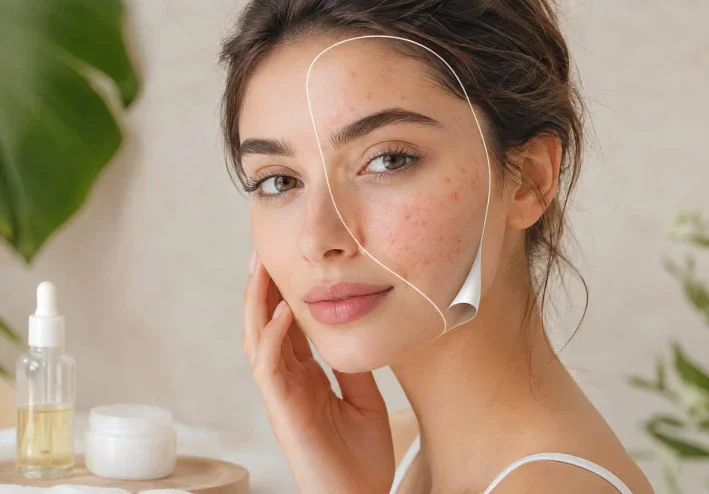
A pimple can disappear in a few days, but the mark it leaves behind may stay much longer. For people with sensitive skin, this can become a frustrating cycle: a breakout appears, the skin becomes irritated, a dark spot remains, and then another product is added in an attempt to make everything disappear faster.
Unfortunately, more products do not always mean better results.
When acne and pigmentation happen on sensitive skin, the goal should not be to attack every problem at once. A calmer and more consistent approach can be much easier for the skin to handle.
Understanding the Dark Mark Left Behind.
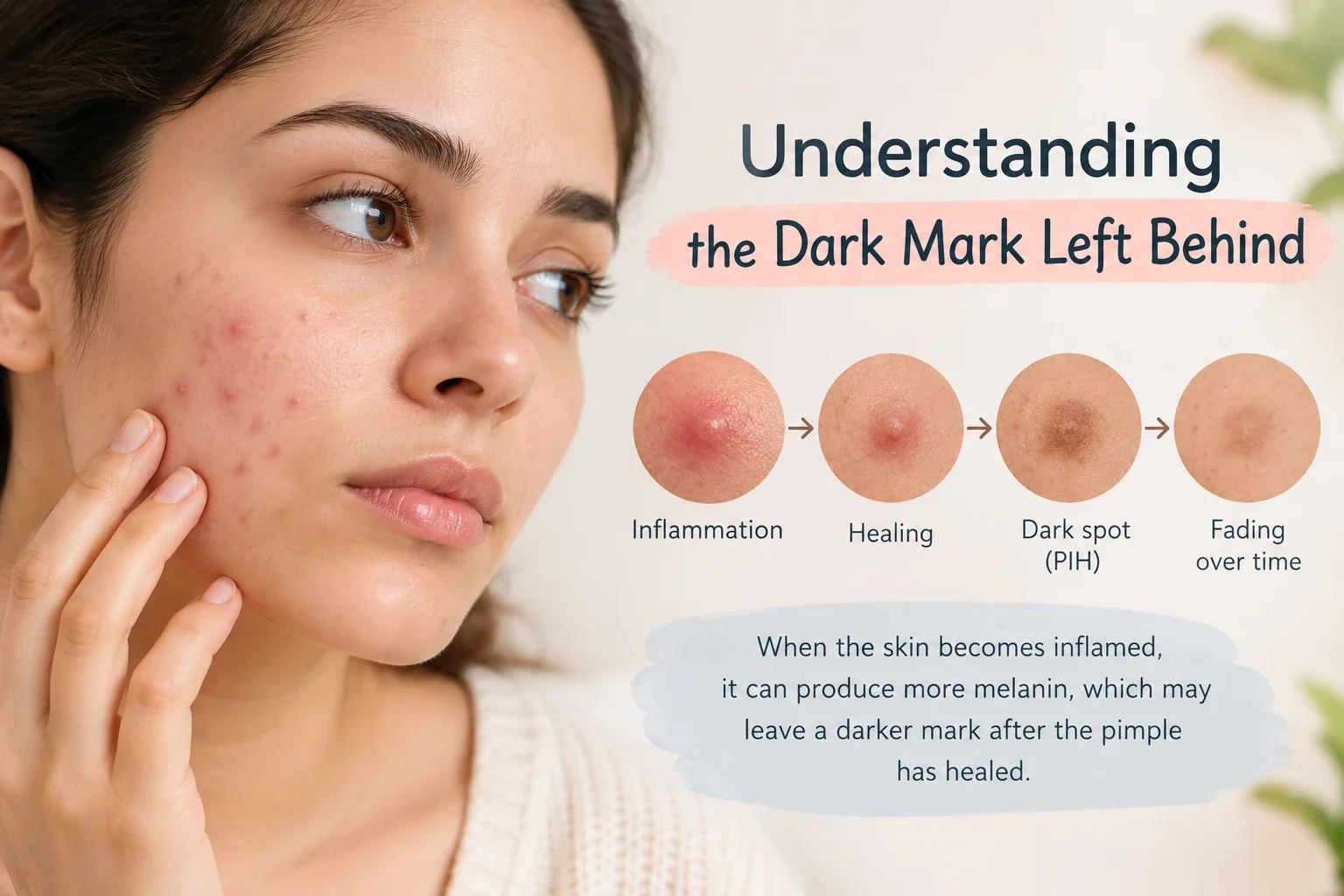
Not every dark spot is the same, but marks that appear after inflammation are often described as post-inflammatory hyperpigmentation.
When the skin becomes inflamed, it can produce more melanin, the pigment responsible for skin color. After the original inflammation settles, the area may remain darker than the surrounding skin.
These marks can be especially noticeable in people with darker skin tones, and they may take time to fade. In other words, the fact that a pimple has disappeared does not necessarily mean that the skin has finished recovering.
This is one reason why patience matters when dealing with acne marks.
Why Sensitive Skin Needs a Different Approach.
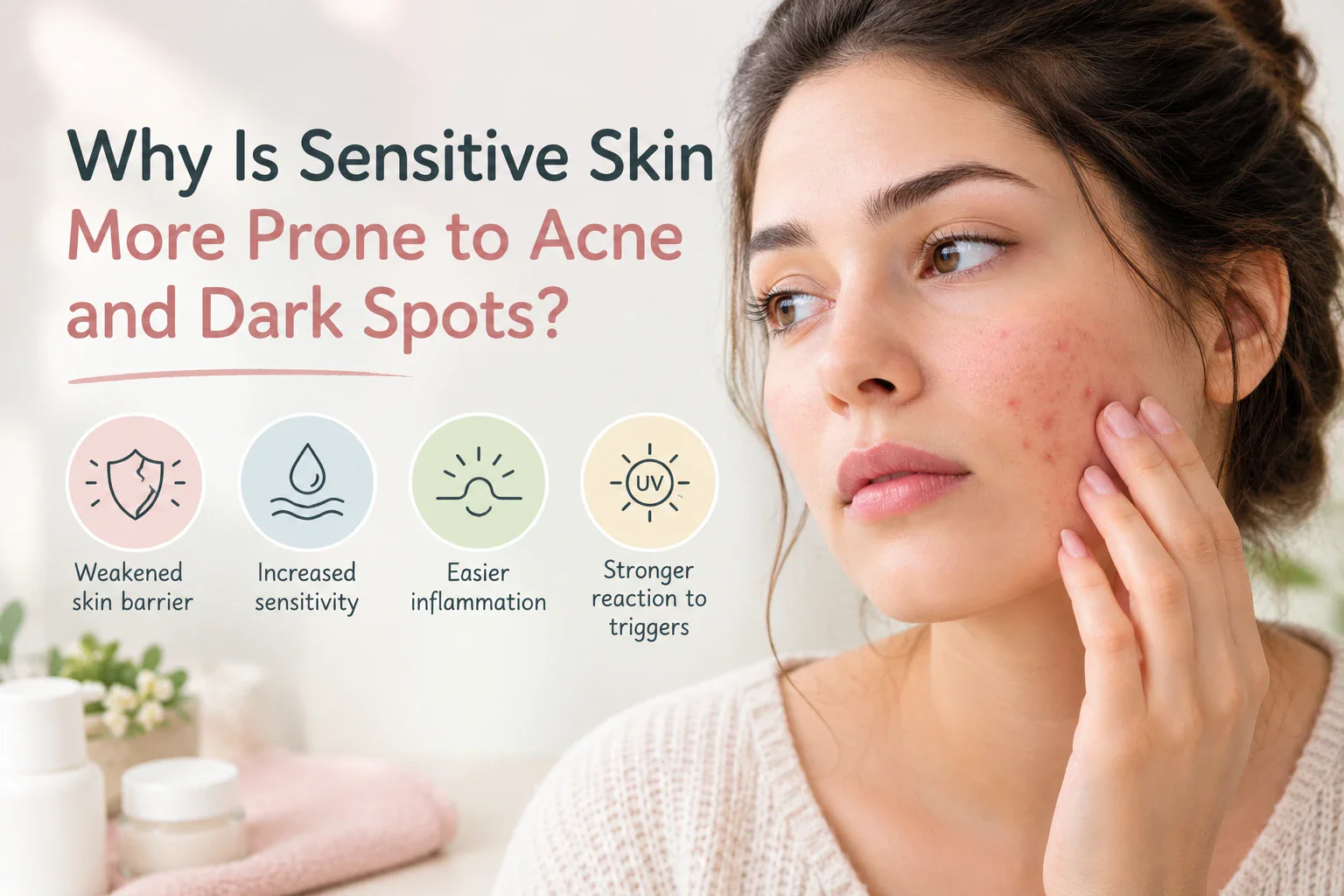
Sensitive skin can react more easily to products, environmental factors, and aggressive routines. A product that feels perfectly comfortable for one person may cause dryness, stinging, or redness in another.
This does not mean that sensitive skin cannot be treated. It simply means that the routine should be built carefully.
Using several strong ingredients at the same time may make it difficult to know what is helping and what is causing irritation. Keeping the basic routine simple can make it easier to observe how the skin responds.
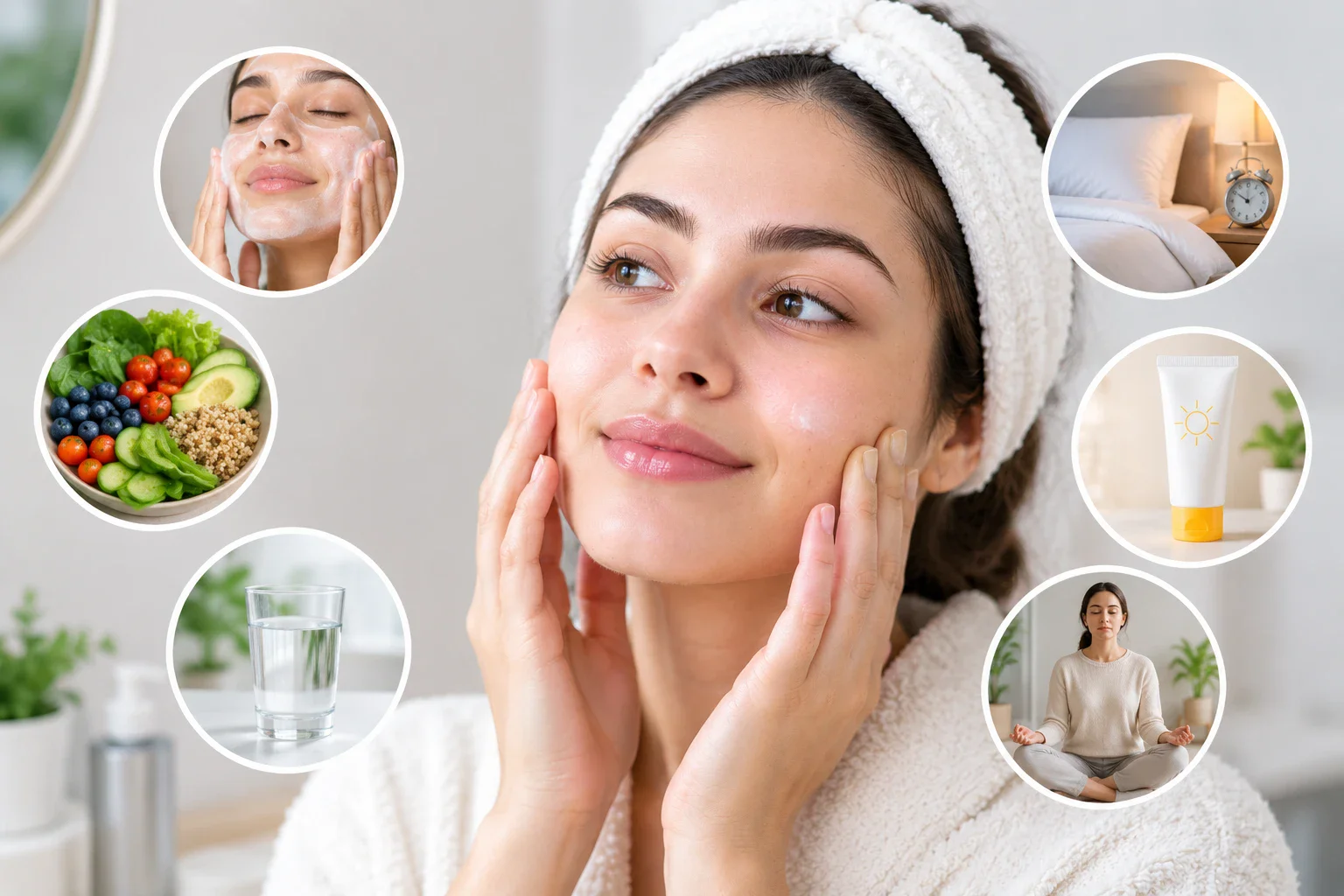
A gentle cleanser, a suitable moisturizer, and daily sun protection can provide a useful foundation. Any additional active ingredient can then be considered according to the individual skin condition and tolerance.
The Habit That Can Make Acne Marks Worse.
It is tempting to squeeze a pimple when it appears, especially before an important occasion.
However, repeated touching, squeezing, or picking can increase inflammation and may raise the risk of marks and scarring.
The same idea applies to aggressive scrubbing. Dark spots are not dirt sitting on the surface of the skin, so rubbing them harder does not necessarily make them disappear. In irritated skin, excessive friction can create another source of inflammation.
Sometimes, doing less is actually the more sensible choice.
What About Ingredients for Acne and Pigmentation?
Some ingredients have been studied for both acne and the marks that can follow it.
Azelaic acid is one example. Dermatology sources describe it as an ingredient that can be used for acne and can also help reduce the appearance of post-inflammatory dark spots.
However, even a useful ingredient is not automatically suitable for every person or every routine. Some people may experience irritation, dryness, or a stinging sensation, particularly when their skin is already sensitive.
For that reason, introducing active ingredients gradually and paying attention to the skin's response is generally more reasonable than applying several treatments together.
Sun Protection Matters More Than It May Seem.
When dark marks are already present, daily sun protection becomes an important part of the overall routine.
Sun exposure can contribute to increased pigmentation and may make existing dark spots more noticeable. Broad-spectrum sunscreen can help protect the skin from ultraviolet radiation and reduce additional exposure that may worsen pigmentation.
For acne-prone skin, choosing a sunscreen labeled non-comedogenic may be worth considering, especially for people who find that certain products feel heavy or contribute to clogged pores.
The important point is consistency. Using sun protection occasionally is very different from making it a regular part of daily skin care.
Do Not Turn Your Routine Into a Chemistry Experiment.
One common mistake is changing everything at once.
A new cleanser is added on Monday. A peeling product appears a few days later. Then another active ingredient is introduced because the previous one has not produced an immediate result.
The problem is that skin does not always respond overnight.
Acne treatments can take several weeks to show noticeable improvement, and pigmentation can take even longer to fade. Constantly changing products may also increase irritation and make it difficult to identify which products are actually suitable.
A simple routine that can be maintained consistently is often easier to manage than a complicated routine filled with multiple active ingredients.
When Professional Advice Makes Sense.
Persistent acne or pigmentation should not always be treated as a simple cosmetic issue.
Severe or painful breakouts, acne that leaves noticeable scars, persistent irritation, or dark patches that appear without an obvious connection to previous inflammation may need professional assessment.
There are many possible causes of changes in skin color, and appearance alone is not always enough to determine the cause.
A dermatologist can evaluate the skin and decide whether a medical treatment or further assessment is appropriate.
A Better Way to Think About Sensitive Skin..
There is no prize for having the longest skin-care routine.
Sensitive skin often benefits from consistency, moderation, and careful product choices. The aim is not to make every mark disappear immediately, but to reduce unnecessary irritation while giving the skin time to recover.
Acne and pigmentation can be connected, but they do not have to control the entire routine. Avoiding unnecessary picking, protecting the skin from the sun, choosing gentle products, and introducing active ingredients thoughtfully can create a more balanced approach.
Sometimes the biggest improvement starts when the routine becomes simpler rather than more complicated.
Important Disclaimer.
This article is provided for general educational purposes only. It is not a medical diagnosis and should not be considered a personalized treatment plan or a substitute for professional medical advice. Skin conditions can have different causes, and individual responses to skin-care products and treatments may vary. Anyone experiencing severe, persistent, or worsening symptoms should consider consulting a qualified dermatologist.
Sources.
American Academy of Dermatology Association (AAD), Acne treatment and skin-care guidance:
https://www.aad.org/public/diseases/acne/derm-treat/treat
American Academy of Dermatology Association (AAD), Choosing and using sunscreen:
DermNet, Post-inflammatory hyperpigmentation:
https://dermnetnz.org/topics/postinflammatory-hyperpigmentation
DermNet, Azelaic acid:
https://dermnetnz.org/topics/azelaic-acid
NHS, Acne treatment:
https://www.nhs.uk/conditions/acne/treatment/
تابع جديد نجمة السماء
اختر إشعارات الموقع أو البريد أو الاثنين. الزائر يقدر يشترك ببريده دون تسجيل حساب.
الإبلاغ عن المقال
لو لاحظت مشكلة في المحتوى، أرسلها لفريق المراجعة. لن تظهر بياناتك لكاتب المقال أو للقراء.
تعذّر إرسال البلاغ الآن. حاول مرة أخرى لاحقًا.
سجّل الدخول لإرسال بلاغ





النقاش
التعليقات (0)
فكرة تضيفها، أو سؤال يفتح حوارًا.
الرجاء تسجيل الدخول لتتمكن من التعليق