

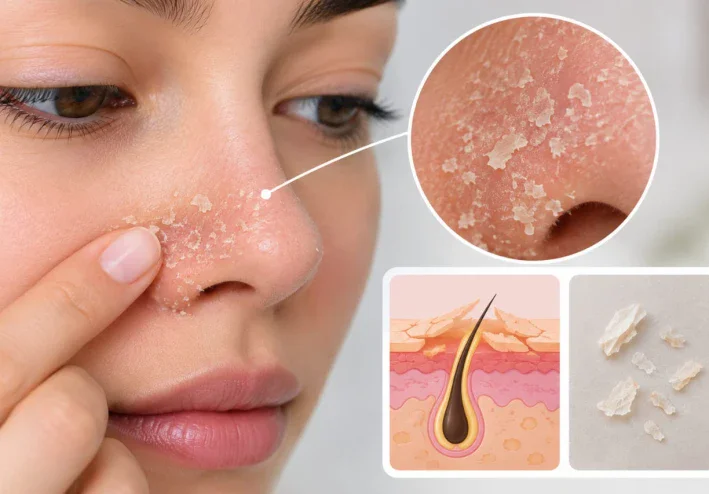
في هذا المقال
Why Does the Skin Around the Nose Get Flaky?
It can be frustrating to notice small flakes around the nose when the rest of the face looks perfectly normal. The area may feel rough, tight, or slightly irritated, and the problem can become even more noticeable after washing the face or applying makeup.
Although dryness is one possible explanation, flaky skin around the nose does not always have a single cause. The location itself, repeated friction, weather conditions, and certain skincare products can all play a role.
Understanding what may be happening can make it easier to avoid habits that aggravate the area.
Why Is the Skin Around the Nose So Easily Irritated.
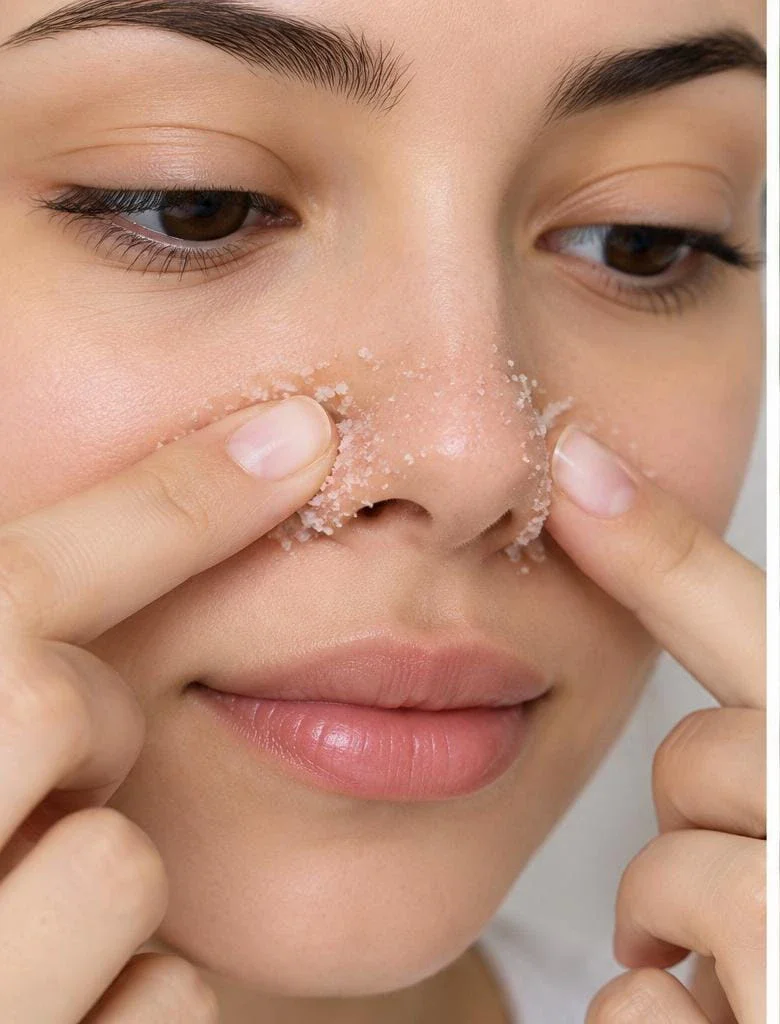
The skin around the nose is exposed to a surprising amount of daily contact. Tissues, facial cleansers, makeup, sunscreen, and even frequent touching can repeatedly affect the same small area.
When the skin loses too much moisture, its surface can become rough and flaky. Cold and dry weather may make this worse because dry air encourages moisture loss from the skin.
Harsh soaps, strong cleansing products, and hot water can also remove some of the natural oils that help protect the skin. Dermatologists generally recommend gentle cleansing and avoiding products that leave already-dry skin feeling irritated or tight.
Could Frequent Nose Wiping Be Making It Worse.
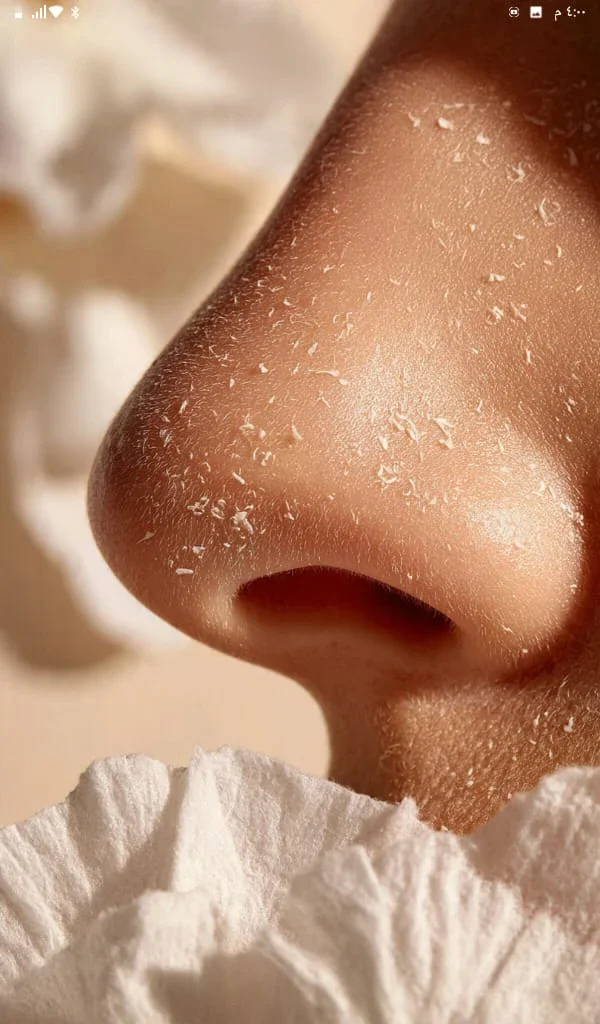
Sometimes the problem is not simply what is being applied to the skin, but how often the area is being rubbed.
Frequent nose wiping can create repeated friction, especially during a cold or allergy season. When the same area is wiped many times a day, the skin may become more sensitive and uncomfortable.
This does not mean that every case of flaky skin is caused by friction. However, reducing unnecessary rubbing can be a simple way to prevent additional irritation.
Why Does Makeup Make the Flaking Look Worse.
Flaky skin often becomes easier to notice after makeup is applied.
Foundation and concealer are designed to sit on the surface of the skin. When that surface is rough or uneven, makeup can collect around dry patches and make them appear more visible.
Adding more layers may seem like an easy solution, but it can sometimes draw even more attention to the texture. A gentler approach is to focus on keeping the skin comfortable and avoiding aggressive scrubbing before applying makeup.
When Flaking May Be More Than Simple Dryness.
There is an important detail that should not be overlooked: flaky skin around the nose is not always caused by ordinary dryness.
Seborrheic dermatitis, for example, commonly affects the sides of the nose and can cause scaly patches on the face. The skin may look dry in some areas and oily in others, and redness, itching, or burning may also occur.
Contact dermatitis is another possibility. It can develop when the skin reacts to an irritating substance or an ingredient that triggers an allergic reaction. Facial skincare products and fragrances are among the things that can cause this type of reaction in some people. Symptoms may include itching, burning, redness, excessive dryness, or cracking.
This is why persistent or unusual flaking should not automatically be treated as simple dry skin.
What Can Help Keep the Area Comfortable.
A simple routine can be useful when the skin around the nose feels dry or irritated.
Using lukewarm water instead of very hot water can help avoid unnecessary dryness. A gentle cleanser is generally preferable to a harsh product, especially when the skin already feels sensitive.
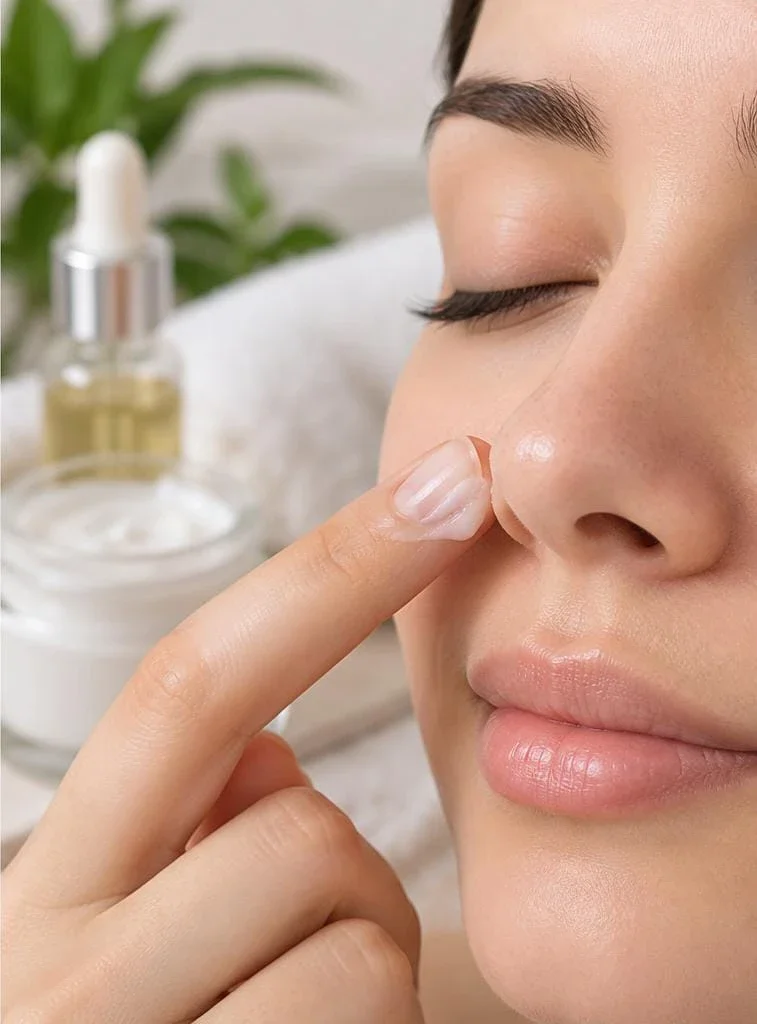
After cleansing, a suitable fragrance-free moisturizer can help support the skin's moisture barrier. Dermatologists commonly recommend creams or ointments for dry skin because they can be more effective at reducing moisture loss than lighter lotions.
It is also helpful to avoid picking at flakes or scrubbing them away. Removing visible flakes may provide a temporary cosmetic improvement, but aggressive rubbing can further irritate the skin.
When Should Flaky Skin Be Checked.
Occasional dryness may improve when irritating habits and environmental factors are reduced. However, persistent flaking deserves more attention, particularly when it is accompanied by significant redness, itching, burning, cracks, swelling, or repeated flare-ups.
Because several skin conditions can look similar at first, a dermatologist can determine whether the problem is ordinary dryness, irritation, contact dermatitis, seborrheic dermatitis, or another skin condition.
A little flaking does not always mean something is seriously wrong. The important point is to avoid assuming that every flaky patch has the same cause.
Final Thoughts.
Flaky skin around the nose can have a surprisingly complicated story behind it. Dry air, frequent rubbing, harsh cleansing, and unsuitable skincare products may all contribute to dryness and irritation.
At the same time, recurring flakes around the nose can sometimes be associated with conditions such as seborrheic dermatitis or contact dermatitis. Paying attention to other signs, such as itching, redness, burning, or persistent scaling, can help distinguish ordinary dryness from a problem that may need professional evaluation.
The safest approach is usually a gentle one: reduce unnecessary friction, avoid harsh products, keep the skin moisturized, and seek professional advice when the problem does not settle.
Disclaimer.
This article is intended for general educational purposes only and is not a medical diagnosis or a substitute for professional medical advice. Skin conditions can have similar symptoms but different causes. Anyone experiencing persistent, severe, painful, or worsening symptoms should consult a qualified dermatologist for an appropriate evaluation.
Sources:
1. American Academy of Dermatology (AAD) – Dry Skin: Causes and Treatment
https://www.aad.org/public/diseases/a-z/dry-skin-causes
2. American Academy of Dermatology (AAD) – Seborrheic Dermatitis: Symptoms and Causes
https://www.aad.org/public/diseases/a-z/seborrheic-dermatitis-symptoms
3. American Academy of Dermatology (AAD) – Contact Dermatitis: Causes
https://www.aad.org/public/diseases/eczema/types/contact-dermatitis/causes
4. American Academy of Dermatology (AAD) – Dermatologists' Tips for Relieving Dry Skin
https://www.aad.org/public/everyday-care/skin-care-basics/dry/dermatologists-tips-relieve-dry-skin
تابع جديد نجمة السماء
اختر إشعارات الموقع أو البريد أو الاثنين. الزائر يقدر يشترك ببريده دون تسجيل حساب.
الإبلاغ عن المقال
لو لاحظت مشكلة في المحتوى، أرسلها لفريق المراجعة. لن تظهر بياناتك لكاتب المقال أو للقراء.
تعذّر إرسال البلاغ الآن. حاول مرة أخرى لاحقًا.
سجّل الدخول لإرسال بلاغ







النقاش
التعليقات (0)
فكرة تضيفها، أو سؤال يفتح حوارًا.
الرجاء تسجيل الدخول لتتمكن من التعليق