
في هذا المقال

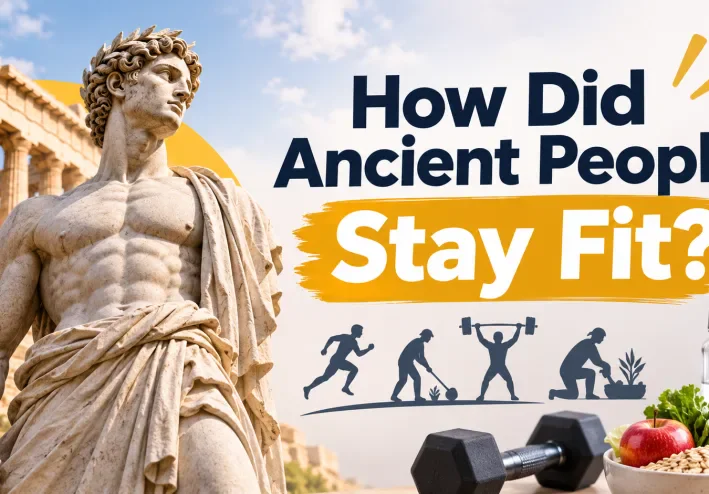
How Did Ancient People Stay Fit?
When we think about fitness today, images of crowded gyms, high-tech treadmills, smartwatches, and protein shakes immediately come to mind. We live in an era where staying fit is often a conscious, scheduled lifestyle choice. But have you ever wondered how people survived and maintained physical conditioning thousands of years ago without modern amenities?
The truth is that ancient humans didn't need a gym membership. Their daily survival depended on functional fitness—strength, endurance, agility, and resilience built directly into the fabric of their everyday lives.
1. Life as a Continuous Workout (Survival of the Fittest)
For our ancestors, physical activity wasn't optional or compartmentalized into a "workout hour"; it was an inescapable part of survival.
The Hunter-Gatherer Routine: Anthropological studies of ancient and foraging societies show that gathering food, tracking game, and migrating across terrains required immense cardiovascular endurance. Walking and running long distances were standard modes of transportation.
Heavy Lifting by Necessity: Building shelters, carrying harvested crops, moving heavy stones, and hauling water meant that ancient people constantly engaged in heavy lifting, pulling, and pushing—effectively practicing functional weight training all day long.
2. Ancient Military Training and Conditioning
As civilizations evolved and empires rose, physical fitness became institutionalized, particularly for soldiers and warriors.
The Spartans: Renowned for their rigorous physical regimen, Spartan youth engaged in running, wrestling, jumping, and javelin throwing from a very young age. Their training was designed not just for combat effectiveness, but to build supreme discipline and endurance.
Roman Legionnaires: Roman soldiers marched up to 20 miles a day wearing heavy armor and carrying equipment weighing around 80 pounds, all while constructing camps and fortifications. Their conditioning was a masterclass in loaded carries and muscular endurance.
3. Traditional Martial Arts and Combat Sports
Across ancient Greece, China, India, and Mesoamerica, physical combat was elevated into sport, art, and a pillar of cultural fitness.
The Ancient Greek Olympics: Dating back to 776 BCE, events like the pankration (a brutal mix of boxing and wrestling), stadion (sprinting), and the pentathlon celebrated peak physical form. Athletes trained under strict dietary and exercise regimens supervised by professional trainers (paidotribes).
Eastern Traditions: In ancient India and China, practices like early forms of yoga, kung fu, and traditional wrestling (malli-yuddha) emphasized flexibility, core strength, breath control, and mental focus alongside physical prowess.
4. What We Can Learn from Ancient Fitness
While we certainly enjoy the comforts of modern technology, looking back at how ancient people stayed fit offers timeless lessons that modern science continues to validate:
Embrace Functional Movement: Instead of isolating single muscles on machines, focus on movements that mimic real-life demands—lifting, carrying, pushing, pulling, and squatting.
Prioritize Consistency Over Intensity: Ancient fitness wasn't a 45-minute intense burst followed by hours of sitting; it was steady, low-to-moderate movement integrated throughout the entire day.
Connect Mind and Body: Many ancient fitness traditions viewed physical conditioning as inseparable from mental discipline, breathing, and overall well-being.
Conclusion
Ancient people stayed fit because their environment demanded it. While we no longer need to outrun predators or march twenty miles in heavy armor to secure our next meal, adopting an ancient mindset—moving more naturally, lifting with purpose, and valuing functional strength—can help us achieve a healthier, more balanced lifestyle today.
تابع جديد Eslam Nader
اختر إشعارات الموقع أو البريد أو الاثنين. الزائر يقدر يشترك ببريده دون تسجيل حساب.
الإبلاغ عن المقال
لو لاحظت مشكلة في المحتوى، أرسلها لفريق المراجعة. لن تظهر بياناتك لكاتب المقال أو للقراء.
تعذّر إرسال البلاغ الآن. حاول مرة أخرى لاحقًا.
سجّل الدخول لإرسال بلاغ






النقاش
التعليقات (0)
فكرة تضيفها، أو سؤال يفتح حوارًا.
الرجاء تسجيل الدخول لتتمكن من التعليق