

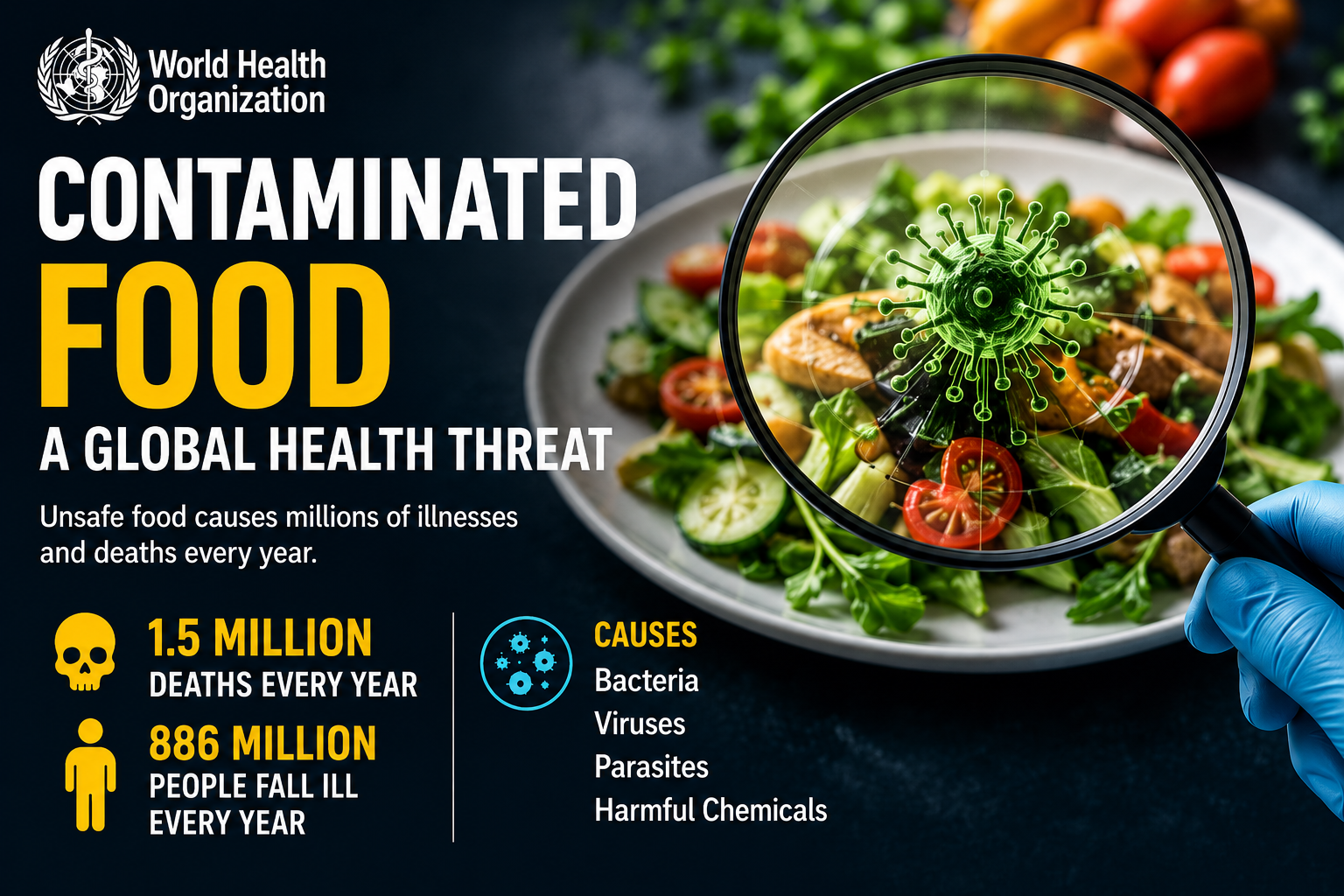
WHO Warns Contaminated Food Causes 1.5 Million Deaths Annually, with Children Most at Risk
WHO Warns Contaminated Food Causes 1.5 Million Deaths Every Year
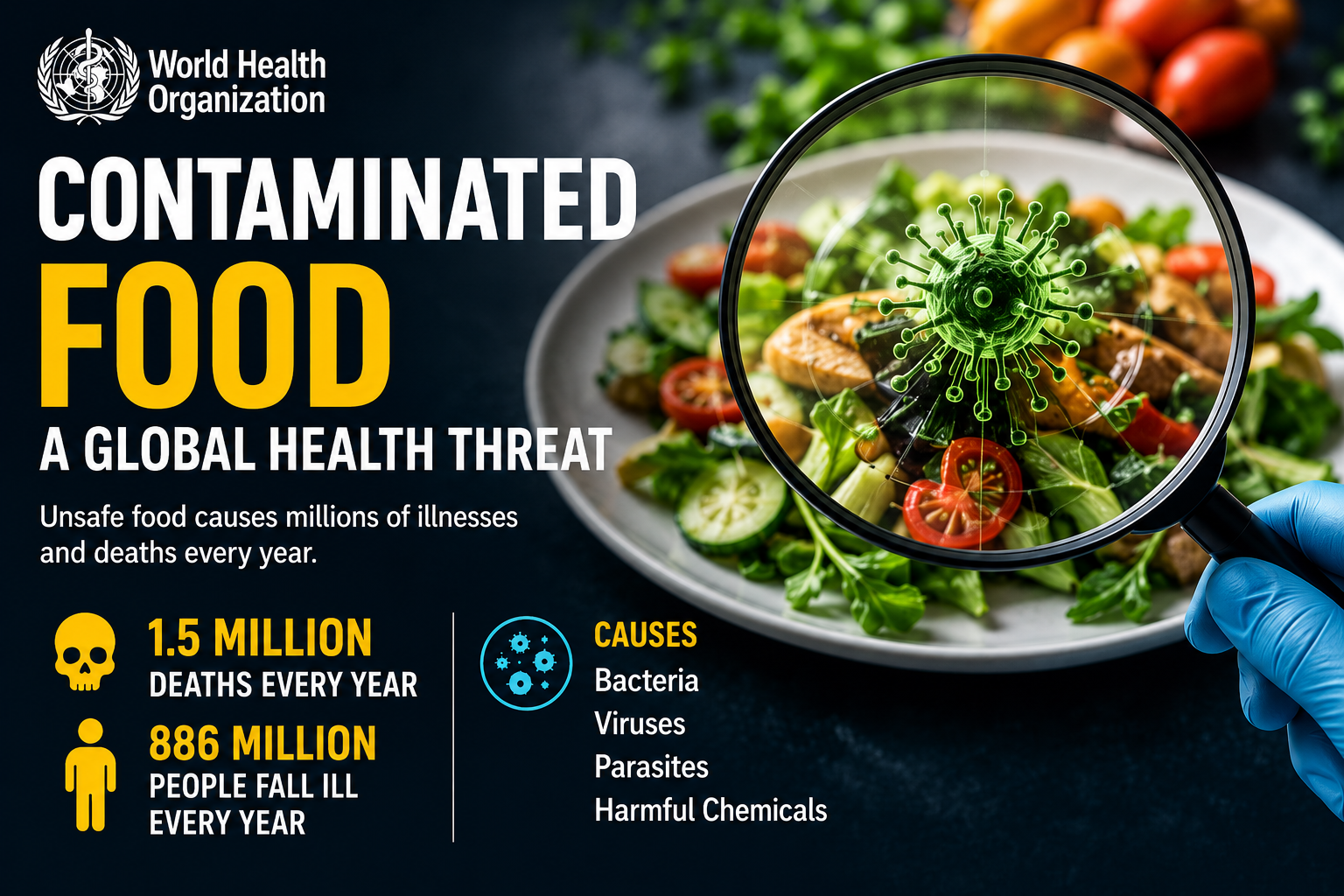
The World Health Organization (WHO) has warned that contaminated food poses a growing threat worldwide, calling unsafe food one of the leading causes of illness and death globally, particularly jamong young children.
According to the WHO, contaminated food—whether by bacteria, viruses, parasites, or harmful chemicals—causes approximately 1.5 million deaths each year. Hundreds of millions more people suffer from foodborne diseases associated with eating unsafe food.
Nearly 886 Million Foodborne Illness Cases Each Year
A WHO analysis of 194 countries from 2000 to 2021 estimated that 886 million people develop foodborne illnesses each year.
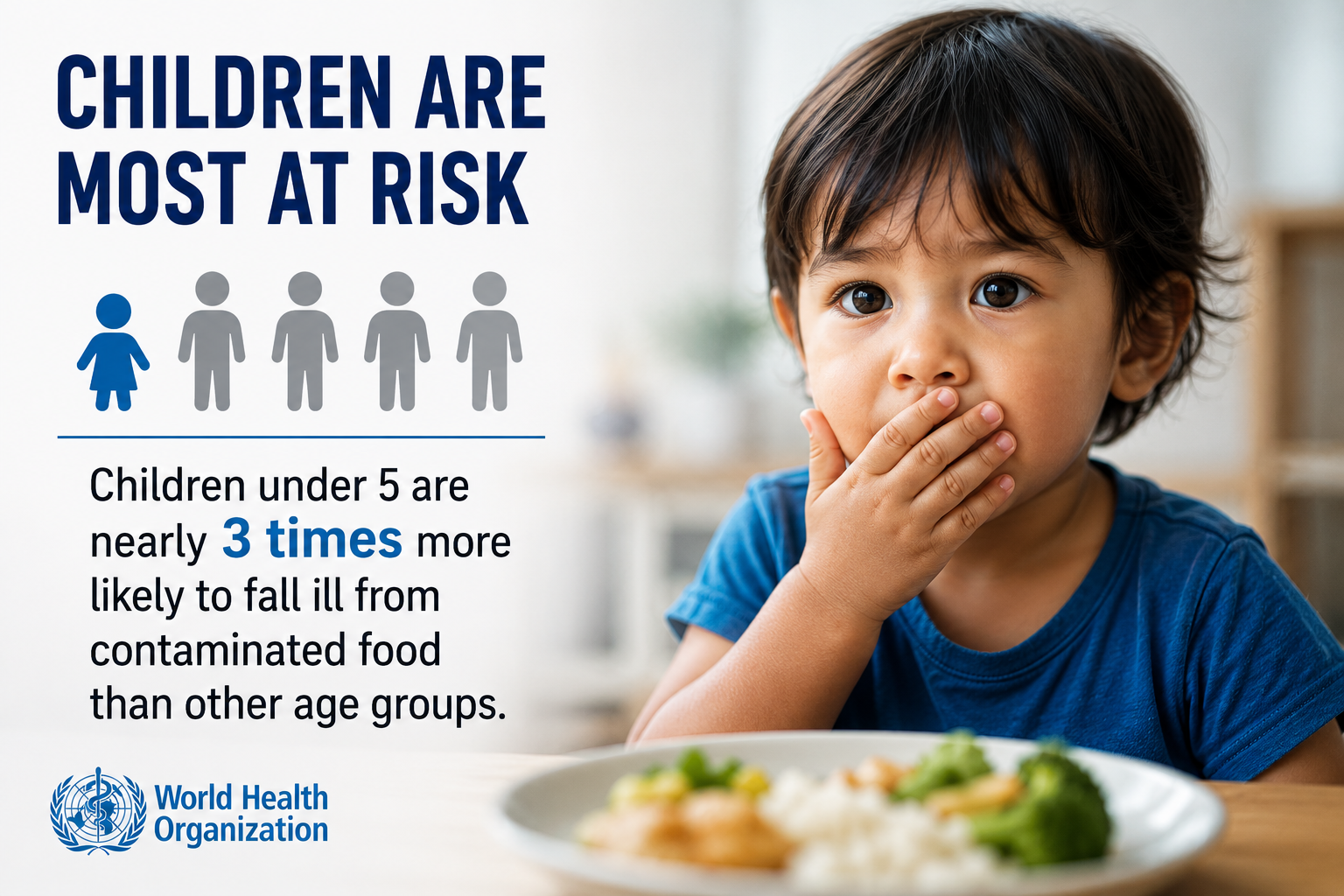
The report points out that children younger than five become ill from contaminated food nearly three times as often as people in older age groups, placing them among the most vulnerable populations.
Africa and Southeast Asia Bear the Greatest Burden
A WHO analysis of 194 countries from 2000 to 2021 estimated that 886 million people develop foodborne illnesses each year.
The report points out that children younger than five are nearly three times as likely as older age groups to fall ill after eating contaminated food, placing them among the most vulnerable populations.
Africa and Southeast Asia Bear the Greatest Burden
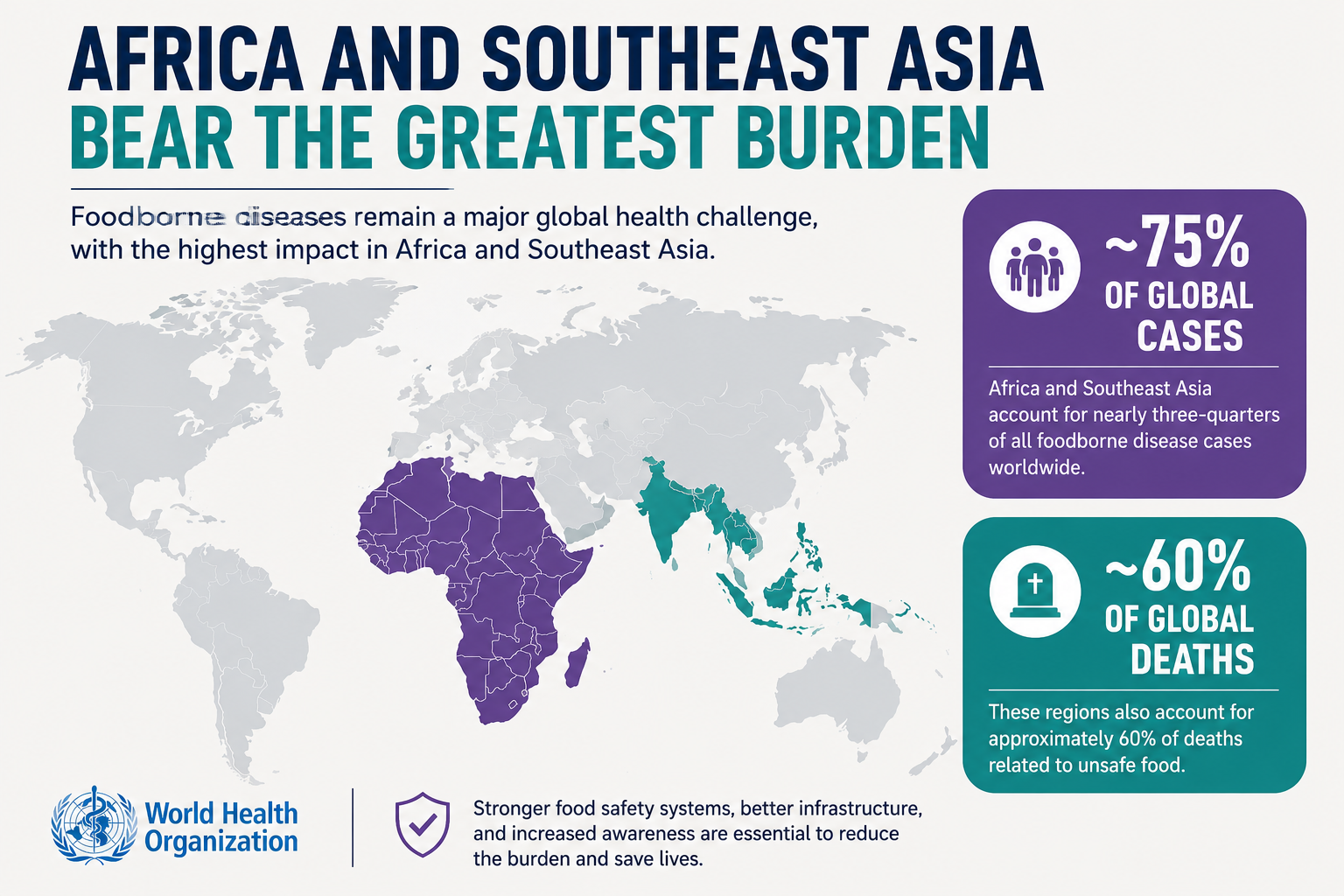
The study found that nearly three-quarters of all foodborne disease cases worldwide occur in Africa and Southeast Asia. Unsafe food is also linked to approximately 60% of deaths globally.
Limited food safety infrastructure, environmental risks, and unequal access to healthcare continue to create serious public health challenges in these regions.
Biological Contaminants Remain the Leading Cause
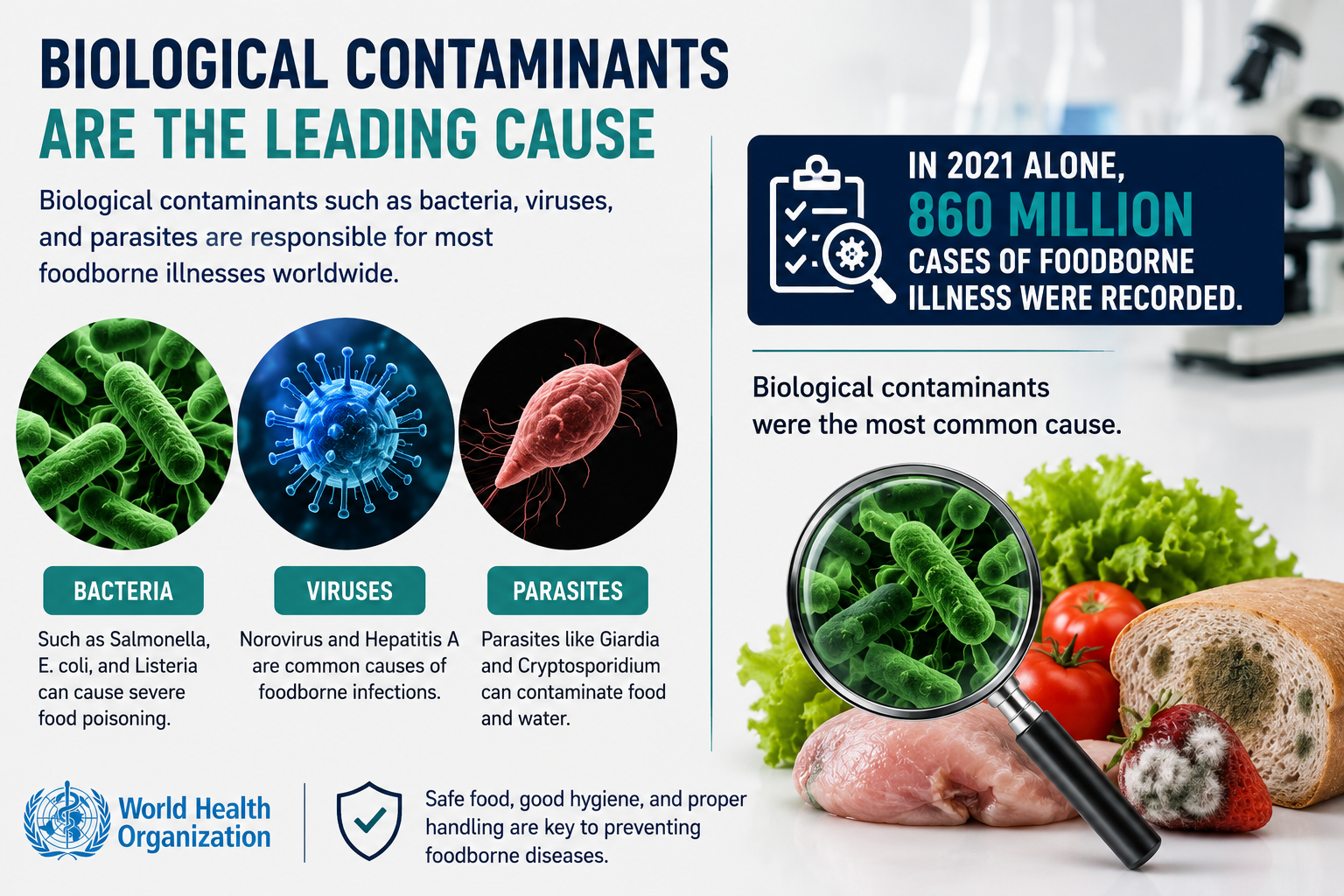
In 2021 alone, the WHO recorded approximately 860 million cases of foodborne illness.
Most of those infections resulted from biological contaminants, such as:
Bacteria.
Viruses.
Parasites.
Although chemical contaminants caused fewer illnesses overall, they accounted for a disproportionately large share of deaths, especially those linked to arsenic and lead poisoning.
Climate Change and Antibiotic Resistance Increase the Risk
Yuki Minato, a WHO Technical Officer for Food Safety, warned that controlling foodborne diseases is becoming increasingly difficult.
She explained that climate change is contributing to conditions that raise the risk of food contamination. At the same time, antimicrobial resistance (AMR) is making infections more difficult to treat, placing an even heavier burden on global health systems.
Global Economic Losses Reach $647 Billion
Beyond the human toll, foodborne diseases also have a severe economic impact.
The WHO estimates that unsafe food caused approximately $647 billion in global productivity losses in 2021, reflecting the enormous financial burden associated with illness, healthcare costs, and reduced workforce productivity.
Key Takeaways
Contaminated food is responsible for 1.5. million deaths worldwide each year.
Every year, around 886 million people become ill from foodborne diseases.
Children under five are nearly three times as likely to become infected.
The greatest numbers of cases and deaths occur in Africa and Southeast Asia.
Foodborne disease is caused mainly by bacteria, viruses, and parasites.
Chemical contaminants, especially arsenic and lead, are also responsible for many fatal cases.
Climate change and antibiotic resistance are making food safety risks worse.
In 2021, foodborne illnesses caused an estimated $647 billion in economic losses worldwide.
This growing public health challenge highlights the urgent need for stronger food safety systems, improved monitoring, and international cooperation to reduce food contamination and protect vulnerable populations
worldwide.