

في هذا المقال
A Gentle Exercise for Softening Your Inner Voice
Here's an exercise. Follow it step by step, and don't skip ahead.
1- Grab a small photo of yourself as a child.
2- Look at it closely.
3- Now imagine that little girl standing in front of you — alive, breathing, playing the way children do.
4- Next, imagine a stranger crouching down next to her. And imagine that stranger opening their mouth to say the harshest, coldest thing they could possibly say to a child — the kind of words that would break something in her.
…
…
…
What's wrong?
Does that feel wrong to even picture?
You wouldn't let anyone speak to an innocent child that way, would you? You'd probably step in. You'd protect her.
…
Alright. Now picture that same little girl walking toward you. She looks just like you.
In fact, she is you — you, as a child.
And the stranger about to speak to her? That's you too. That's your inner voice, on an ordinary Tuesday.
…
…
…
If the thought of that stranger speaking to her made your stomach turn, here's what's worth sitting with: many of us carry a habit of speaking to ourselves more harshly than we'd ever speak to a child, or to a friend. Words like:
I can't improve. I'm afraid of failing. I'll never succeed like they did. I'm less than them.
Psychologist Kristin Neff, who has spent over two decades researching this area, calls the opposite of that harshness "self-compassion" — treating yourself with the same kindness, support, and understanding you'd offer a good friend who was struggling. Her research, along with work by others in the field, has found self-compassion is linked to greater self-confidence and intrinsic motivation to learn and grow, rather than motivation driven by fear of judgment. It's also been associated with greater emotional resilience and stability than simply trying to think well of yourself.
This is a general pattern found across many people in research studies — it's not a diagnosis of what's happening in your particular case, and it isn't a substitute for talking to a therapist if self-criticism is seriously affecting your life.
A small beginning is still a beginning. If I don't read a single page today, by the end of the month I'll have read nothing. But if I read just one page a day, I'll have read thirty pages by then.
So don't compare your beginning to someone else's ending. Everyone who's gotten good at something started as a beginner who made mistakes along the way.
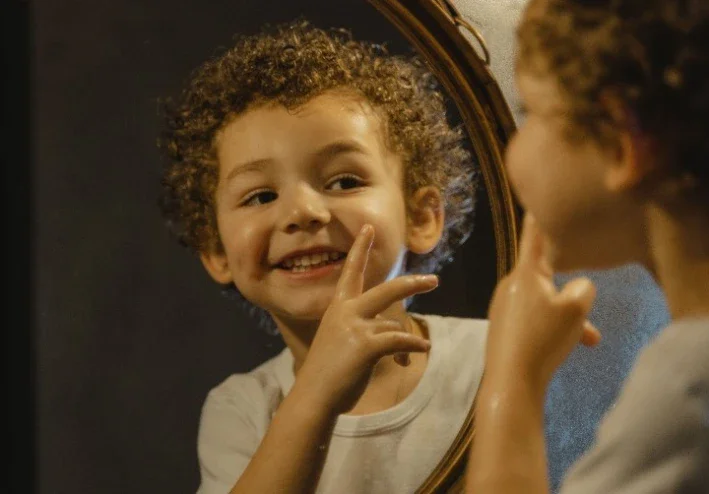
Replace the Harsh Words
Try this today: swap a harsh sentence you say to yourself for a gentler one.
Instead of "I'm a failure," try “I'm learning.”
Instead of "I can't," try “I haven't yet.”
Instead of "I'm less than them," try “Everyone has their own path and their own timing.”
Talk to yourself the way you might talk to a close friend. You likely wouldn't tell a friend "you're a failure" when she makes a mistake — you'd probably say something like "it's okay, try again." Neff's research suggests this isn't just a nicer way of talking — mindful self-compassion programs have shown improvements in participants' mental health, including reductions in reported depression, anxiety, and stress, alongside gains in wellbeing, in the studies that have measured this.
Start Small, Stay Patient
Begin today with one small step — a single kind word to yourself. It might be the start of a longer process toward feeling more at ease with yourself.
Don't expect everything to change overnight. A pattern of self-criticism built up over years isn't likely to shift in a single night, and that's normal, not a failure on your part. Just notice, adjust, and keep going.
Try this before bed: ask yourself what good thing you did today, no matter how small — a smile, a kind word to someone, a task you finished. Write it down, or just sit with the thought.
A note on the "the mind believes what you repeat" idea: you'll often hear this claim in pop psychology, and there's something to it — how we habitually talk to ourselves does seem to shape our emotional patterns over time. But the research doesn't support a literal, mechanical version of this idea (that specific repeated phrases directly "reprogram" belief). What the self-compassion research actually shows is more modest: a sustained pattern of self-kindness versus self-judgment, practiced over time, correlates with better emotional outcomes across many studied populations. It isn't a switch you flip with one sentence, and it isn't guaranteed to work the same way for everyone.
Be the Voice You Never Had
The child inside the metaphor above never chose the harsh words she may have heard growing up. But she can choose, now, to offer herself something gentler going forward.
Try being, for yourself, the kind of steady presence you might have wished for as a kid. The friend who doesn't pile on when you've made a mistake. The teacher who encourages you even after you get something wrong.
This kind of change tends to start small and internal: one moment of choosing a kinder inner sentence over a cruel one.
---
If self-criticism feels bigger than this exercise — if it's tangled up with anxiety, depression, or thoughts of harming yourself — this kind of self-talk practice is not a substitute for professional support. A therapist or counselor can help in ways a reflection exercise can't. If you're in crisis, contacting a crisis line is a good next step.
Sources: Kristin Neff's self-compassion research program at self-compassion.org, and her 2023 review in the Annual Review of Psychology, “Self-Compassion: Theory, Method, Research, and Intervention.”
تابع جديد Esraa
اختر إشعارات الموقع أو البريد أو الاثنين. الزائر يقدر يشترك ببريده دون تسجيل حساب.
الإبلاغ عن المقال
لو لاحظت مشكلة في المحتوى، أرسلها لفريق المراجعة. لن تظهر بياناتك لكاتب المقال أو للقراء.
تعذّر إرسال البلاغ الآن. حاول مرة أخرى لاحقًا.
سجّل الدخول لإرسال بلاغ









النقاش
التعليقات (0)
فكرة تضيفها، أو سؤال يفتح حوارًا.
الرجاء تسجيل الدخول لتتمكن من التعليق