


How to Stop Overthinking and Find Peace of Mind
How to Stop Overthinking and Find Peace of Mind
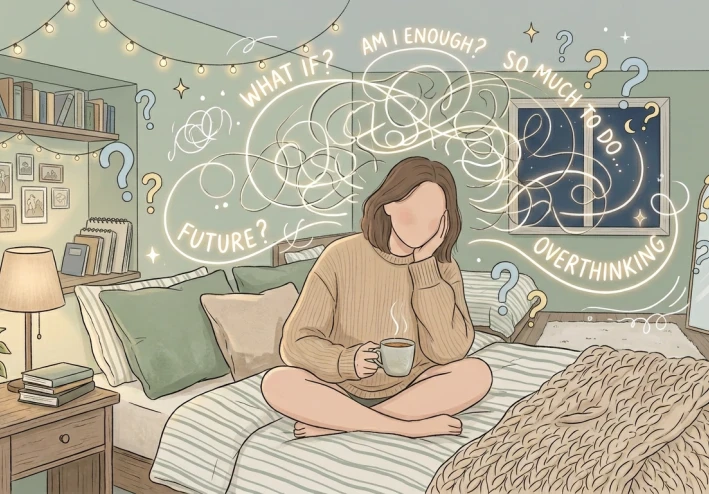
Overthinking is something many people struggle with every day. It often starts with a simple thought, but within minutes, your mind creates endless “what if” scenarios, worries about the future, or regrets about the past. Instead of helping, overthinking usually leaves you mentally exhausted, anxious, and emotionally drained.
The truth is, overthinking does not solve problems as much as it creates more stress. Learning how to manage your thoughts can improve your mental health, increase your confidence, and help you feel more present in your daily life.
Why Do We Overthink?
Overthinking usually comes from fear, anxiety, or the need to control situations. Sometimes we overthink because we are afraid of making mistakes or disappointing others. Other times, we replay conversations in our heads or imagine worst-case scenarios because we want certainty and reassurance.
Social media, pressure from daily life, and comparing ourselves to others can also make overthinking worse. When your mind never truly rests, even small problems can start to feel overwhelming.
Signs You Might Be Overthinking
Many people overthink without even realizing it. Here are some common signs:
Replaying conversations repeatedly
Constantly worrying about the future
Struggling to make decisions
Thinking about every possible outcome
Feeling mentally exhausted all the time
Having trouble sleeping because your mind feels busy
Overanalyzing what people say or think about you
Overthinking can slowly affect your confidence, relationships, and peace of mind if it becomes a daily habit.
How to Stop Overthinking
1. Focus on the Present Moment
One of the biggest causes of overthinking is living too much in the future or the past. Try bringing your attention back to the present moment.
Take a deep breath. Notice your surroundings. Ask yourself: What is actually happening right now?
Most of the things we worry about never happen the way we imagine them.
Practicing mindfulness, meditation, or even taking a short walk can help calm your thoughts and reconnect you with the present.
2. Challenge Negative Thoughts
Not every thought you have is true. Overthinking often creates unrealistic fears and assumptions.
When a negative thought appears, ask yourself:
Is this fact or fear?
Am I assuming the worst?
Would I say this to someone I care about?
Learning to question your thoughts instead of automatically believing them can reduce anxiety and help you think more clearly.
3. Stop Seeking Perfection
Many overthinkers are also perfectionists. They want every decision to be perfect and every situation to go exactly as planned.
But perfection does not exist.
Sometimes “good enough” is more than enough. Making mistakes is part of life, growth, and learning. The more you accept that uncertainty is normal, the less power overthinking will have over you.
4. Limit Mental Overload
Your brain needs rest just like your body does.
Spending hours on social media, constantly consuming information, or staying busy all day can overwhelm your mind. Give yourself breaks from screens and noise.
Journaling, listening to calming music, reading, or spending quiet time alone can help slow down racing thoughts.
You Don’t Need Every Answer
One of the most important things to remember is that you do not need to figure everything out immediately. Life is full of uncertainty, and that is completely normal.
Peace comes when you stop trying to control every outcome and start trusting yourself more.
You are stronger than your anxious thoughts. Your mind may become loud sometimes, but that does not mean every thought deserves your attention.
Final Thoughts
Overthinking can feel exhausting, but it is possible to break the cycle. It takes patience, self-awareness, and practice. Small habits like staying present, challenging negative thoughts, and protecting your mental space can make a huge difference over time.
Be gentle with yourself during the process. Healing your mind is not about becoming perfect — it is about learning how to create peace within yourself.
Sometimes the most powerful thing you can do is simply let go of the thoughts that no longer serve you. 🌿









الرجاء تسجيل الدخول لتتمكن من التعليق