

في هذا المقال
Ebola virus : symptoms, transmission, treatment and prevention
Introduction
The Ebola virus is one of the viruses associated with severe and potentially life-threatening outbreaks. However, medical knowledge and treatment options have advanced significantly in recent years. Early detection, supportive medical care, specialized treatments, and vaccination now play important roles in reducing the impact of the disease.
So, what exactly is the Ebola virus? How does it spread? What are its main symptoms? Is there an effective treatment or vaccine? In this article, we answer the most important questions about Ebola disease in a clear and easy-to-understand way.
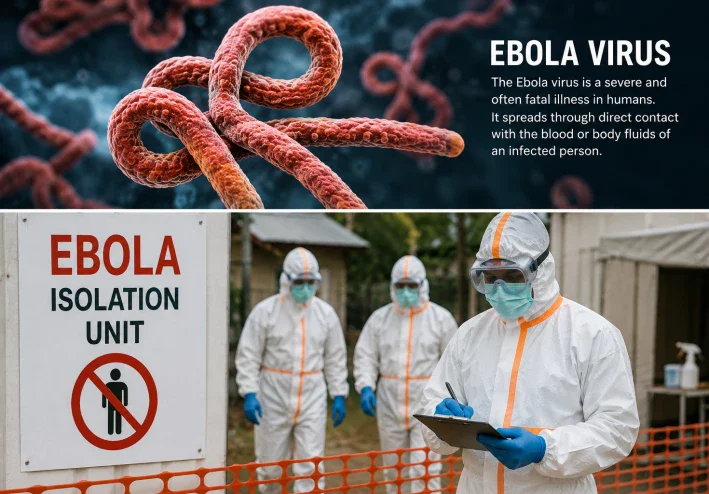
What Is the Ebola Virus?
Ebola viruses belong to a group of viruses known as Orthoebolavirus, which can cause severe illness in humans. The first recognized Ebola outbreaks occurred in 1976 in two simultaneous outbreaks in what are now South Sudan and the Democratic Republic of the Congo.
Fruit bats are believed to be natural hosts of some Ebola viruses. The virus can spread to humans after exposure to infected animals or their bodily fluids and can subsequently spread from person to person under certain conditions.
Is Ebola Contagious?
Yes. Ebola disease can spread from one person to another, primarily through direct contact with the blood or other bodily fluids of an infected person.
People generally do not become infectious before symptoms appear. The risk of transmission can increase as the disease progresses and the amount of virus in bodily fluids rises. The incubation period usually ranges from 2 to 21 days.
Ebola Virus Symptoms
Ebola symptoms can appear suddenly and may initially resemble those of several other infectious diseases. This can make early clinical diagnosis challenging.
Early Symptoms
Common early symptoms may include:
- Fever
- Severe fatigue
- Headache
- Muscle pain
- Sore throat
- General weakness
As the disease progresses, additional symptoms may develop, including vomiting, diarrhea, abdominal pain, and skin rash. In severe cases, the disease can affect liver and kidney function and may cause internal or external bleeding.
It is important to note that these symptoms are not specific to Ebola. Similar symptoms can occur with diseases such as malaria and dengue fever. Therefore, suspected Ebola cases require medical evaluation and appropriate laboratory testing.
How Does the Ebola Virus Spread?
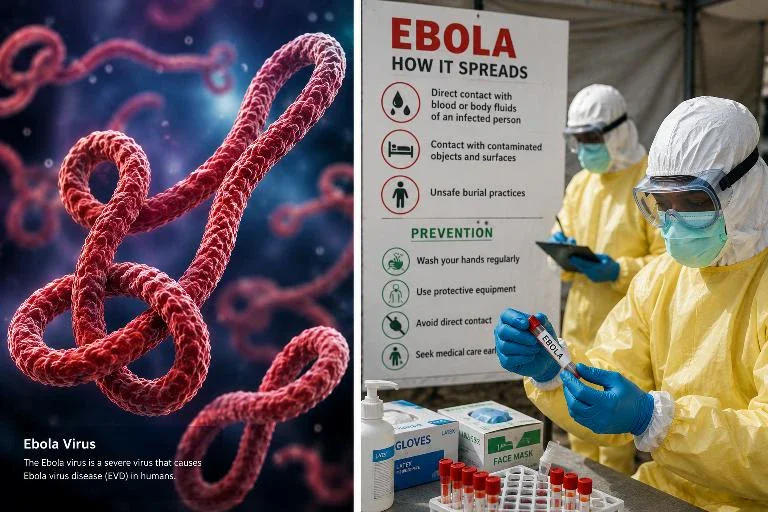
Ebola is primarily transmitted through direct contact with the blood or other bodily fluids of an infected person, whether the person is alive or deceased. Transmission can also occur through contact with contaminated objects or surfaces.
Main Routes of Transmission
Ebola transmission can occur through:
- Contact with the blood or bodily fluids of an infected person
- Unsafe handling of the body of someone who died from Ebola
- Contact with contaminated medical equipment or other objects
- Exposure to bodily fluids from infected animals in certain circumstances
- Inadequate infection prevention and control practices in healthcare facilities
For this reason, protecting healthcare workers, properly isolating suspected or confirmed cases, and monitoring people who have been exposed are essential measures for controlling outbreaks.
How Is Ebola Diagnosed?
Symptoms alone cannot confirm an Ebola infection because early symptoms may resemble those of other diseases.
Laboratory tests such as reverse transcription polymerase chain reaction (RT-PCR) can be used to detect Ebola virus infection. Other diagnostic tests may also be used depending on the stage of illness and available resources.
Because patient specimens can pose a significant biological hazard, they must be handled by trained professionals in properly equipped laboratories and under strict safety procedures.
Treatment for Ebola Virus Disease
Treatment for Ebola does not rely on a single medication. Patients generally require intensive supportive care, which may include fluid and electrolyte replacement, appropriate nutrition, symptom management, and treatment of complications or other infections when necessary.
There are also specific antibody-based treatments recommended for Ebola virus disease caused by Ebola virus (EBOV). These include the monoclonal antibodies mAb114 (ansuvimab) and REGN-EB3 (Inmazeb).
Early diagnosis and rapid access to appropriate medical care can significantly improve the chances of survival.
Can Ebola Be Treated at Home?
People suspected of having Ebola should not be managed at home. They require assessment and care in an appropriately equipped healthcare facility because of the risk of transmission and the need for specialized infection prevention and medical support.
Anyone who develops symptoms after a possible exposure should seek urgent medical advice and inform healthcare professionals about the potential exposure.
Ebola Vaccine
Significant progress has been made in preventing Ebola disease. According to the World Health Organization (WHO), a licensed and WHO-prequalified vaccine called Ervebo is available to protect against Ebola virus disease caused by Ebola virus (EBOV).
Ervebo is administered as a single dose and is particularly important during outbreak response and for protecting people at high risk of exposure.
However, it is important not to assume that Ebola vaccines protect against every type of orthoebolavirus. For example, Ebola vaccines should not be considered automatically effective against Sudan virus or Bundibugyo virus.
How Can Ebola Be Prevented?
Preventing Ebola requires several complementary measures rather than relying on a single method.
Important prevention strategies include:
- Avoiding direct contact with the blood and bodily fluids of infected people.
- Following strict infection prevention and control procedures in healthcare settings.
- Using appropriate personal protective equipment when caring for suspected or confirmed cases.
- Detecting and isolating cases as early as possible.
- Identifying and monitoring people who have been in close contact with infected individuals.
- Following safe and dignified burial practices.
- Using vaccination when recommended and available during an outbreak.
- Providing communities with accurate and reliable health information.
Community cooperation is also essential. Public awareness and trust can play a major role in controlling Ebola outbreaks and preventing further transmission.
Is Ebola Still Present Today?
Ebola outbreaks can vary depending on the location, timing, and type of virus involved. In 2026, the World Health Organization reported developments involving Bundibugyo virus disease, highlighting an important point: the Ervebo vaccine licensed for Ebola virus has not been established as reliably effective against Bundibugyo virus.
Therefore, it is important to distinguish between the different viruses within the orthoebolavirus group rather than assuming that a vaccine developed for one virus provides protection against all of them.
Conclusion
Although Ebola virus can cause severe and potentially fatal disease, major advances in diagnosis, treatment, and prevention have improved the ability of health systems to respond to outbreaks.
Early detection, specialized medical care, strict infection prevention measures, contact tracing, and appropriate vaccination strategies are among the most important tools for controlling Ebola transmission and saving lives.
The availability of an effective vaccine against Ebola virus disease represents a major step forward in outbreak preparedness. At the same time, understanding the differences between Ebola virus and other orthoebolaviruses remains essential.
For accurate and up-to-date information, readers should rely on trusted health authorities such as the World Health Organization (WHO) and national public health agencies.
Sources:
- World Health Organization (WHO) — Ebola disease: WHO Ebola Disease Fact Sheet
- WHO — Ebola disease questions and answers: WHO Ebola Questions and Answers
- WHO — Ebola vaccines: WHO Ebola Vaccines
- WHO — Ebola disease information and outbreak updates: WHO Ebola Disease Information
تابع جديد Osama
اختر إشعارات الموقع أو البريد أو الاثنين. الزائر يقدر يشترك ببريده دون تسجيل حساب.
الإبلاغ عن المقال
لو لاحظت مشكلة في المحتوى، أرسلها لفريق المراجعة. لن تظهر بياناتك لكاتب المقال أو للقراء.
تعذّر إرسال البلاغ الآن. حاول مرة أخرى لاحقًا.
سجّل الدخول لإرسال بلاغ



النقاش
التعليقات (0)
فكرة تضيفها، أو سؤال يفتح حوارًا.
الرجاء تسجيل الدخول لتتمكن من التعليق