


In this article
Premature rupture of membrane
Introduction
Pregnancy is a journey filled with important changes, and the rupture of the amniotic membranes is one of the events that can signal the beginning of labor. But what happens when the membranes break before labor begins?
This condition is known as Premature Rupture of Membranes (PROM) or, more accurately, Prelabor Rupture of Membranes. When it occurs before 37 weeks of pregnancy, it is called Preterm Prelabor Rupture of Membranes (PPROM) and requires careful medical assessment because it may increase the risk of infection and premature birth.
Understanding the symptoms, causes, diagnosis, possible complications, and treatment options can help pregnant women recognize the condition early and seek appropriate medical care.
What Is Premature Rupture of Membranes (PROM)?
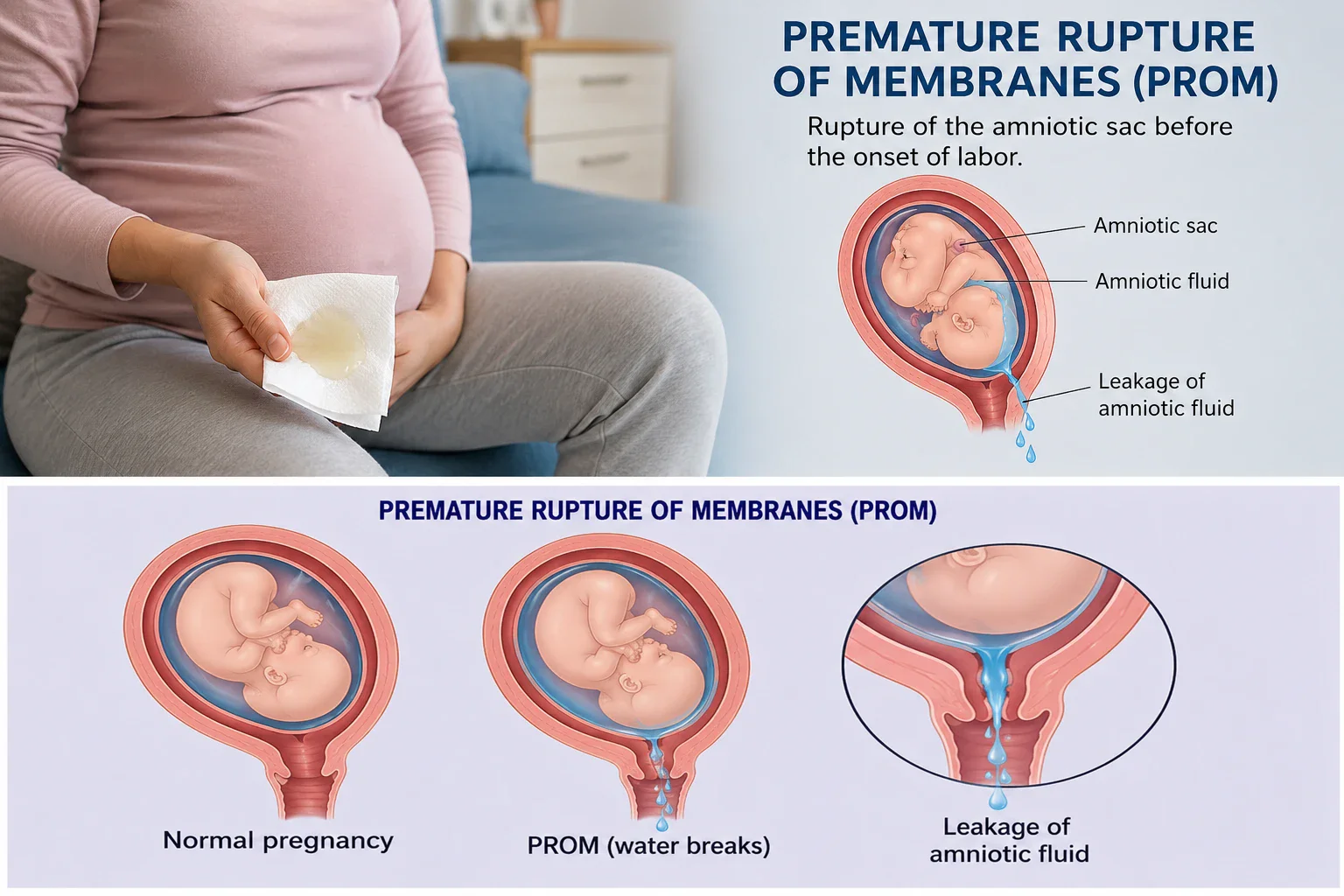
Premature Rupture of Membranes refers to the rupture of the amniotic sac before the onset of labor, regardless of the gestational age.
The amniotic sac contains the fetus and amniotic fluid, which protects the baby, allows movement, and supports normal development. When the membranes rupture, amniotic fluid begins to leak through the vagina.
PROM can occur at term, meaning at or after 37 weeks of pregnancy, or earlier.
What Is PPROM?
Preterm Prelabor Rupture of Membranes (PPROM) occurs when the membranes rupture before 37 weeks of pregnancy and before labor begins.
PPROM is clinically important because it can lead to preterm birth and may increase the risk of infection for both the mother and baby.
What Causes Premature Rupture of Membranes?
In many cases, it is not possible to identify one specific cause of PROM. However, several factors may weaken the membranes or increase the likelihood of early rupture.
Possible risk factors include:
- Intra-amniotic or genital tract infection
- Previous preterm birth or previous PPROM
- Cervical problems
- Vaginal bleeding during pregnancy
- Multiple pregnancy, such as twins or triplets
- Abnormalities involving the uterus, placenta, or fetus
- Excessive stretching of the membranes
- Certain medical or pregnancy-related conditions
- Smoking during pregnancy
Sometimes, PROM occurs without an identifiable risk factor.
Symptoms of Premature Rupture of Membranes
The most common symptom of PROM is leakage of fluid from the vagina.
The amount of fluid can vary considerably. Some women experience a sudden gush, while others notice a continuous or intermittent trickle.
Common signs may include:
- A sudden gush of clear or pale fluid from the vagina
- Continuous vaginal fluid leakage
- Feeling unusually wet in the underwear
- Fluid leakage that increases with movement or changing position
- Pelvic pressure or contractions if labor has begun
Because urine leakage and increased vaginal discharge can occur during pregnancy, it may sometimes be difficult to determine whether the fluid is amniotic fluid.
If you suspect that your membranes have ruptured, you should contact your healthcare provider promptly rather than trying to diagnose the condition at home.
Signs That May Indicate Infection
Certain symptoms require urgent medical evaluation because they may indicate an intra-amniotic infection.
These include:
- Fever
- Abdominal or uterine tenderness
- Foul-smelling vaginal fluid
- Heavy or unusual vaginal discharge
- Rapid fetal heart rate
- Feeling generally unwell
Infection can become a serious complication of ruptured membranes and may require delivery depending on the circumstances.
How Is PROM Diagnosed?
The diagnosis of PROM is primarily based on the patient's history and a clinical examination.
A healthcare professional may perform a sterile speculum examination to look for amniotic fluid leaking through the cervix.
Tests Used to Confirm PROM
Depending on the clinical situation, several methods may help confirm membrane rupture.
Sterile Speculum Examination
During this examination, the clinician looks for amniotic fluid pooling in the vagina or leaking from the cervix.
This is generally the initial examination when PROM is suspected.
Ferning Test
A sample of vaginal fluid can be placed on a microscope slide. When amniotic fluid dries, it may produce a characteristic fern-like pattern.
Nitrazine Testing
Amniotic fluid is more alkaline than normal vaginal secretions. A pH-based test may therefore provide evidence of membrane rupture.
However, some substances, including blood, semen, urine, and certain infections, can affect the result and cause false-positive findings.
Ultrasound
Ultrasound may be used to assess the amount of amniotic fluid and evaluate the fetus.
A reduced amount of amniotic fluid can support the diagnosis, although ultrasound alone does not always confirm that the membranes have ruptured.
Why Should Digital Vaginal Examination Be Avoided?
When PROM is suspected, repeated digital vaginal examinations are generally avoided unless delivery is imminent.
This is because unnecessary vaginal examinations may increase the risk of introducing bacteria and may contribute to infection.
Complications of Premature Rupture of Membranes
PROM does not always lead to complications, but the risk depends largely on the gestational age, the presence of infection, and the condition of the mother and fetus.
Possible complications include:
- Intra-amniotic infection
- Maternal infection
- Neonatal infection
- Preterm birth
- Placental abruption
- Abnormal fetal presentation
- Respiratory complications related to prematurity
- Other complications associated with very early birth
When PPROM occurs very early in pregnancy, prolonged loss of amniotic fluid can also interfere with normal fetal lung development.
PROM and Preterm Birth
One of the major concerns associated with PPROM is premature birth.
The earlier the membranes rupture, the greater the concern about complications related to fetal immaturity. These may include respiratory problems, neurological complications, and other health problems associated with preterm birth.
Treatment of Premature Rupture of Membranes
There is no single treatment plan that applies to every woman with PROM.
Management depends on several factors, including:
- Gestational age
- Presence or absence of infection
- Fetal condition
- Maternal health
- Whether labor has started
- Evidence of fetal distress
- Availability of appropriate neonatal care
The main goal is to balance the risks of continuing the pregnancy against the risks associated with premature delivery.
Management at or Near Term
When PROM occurs at term, labor often begins naturally. If labor does not begin, healthcare providers may recommend induction of labor to reduce the risk of infection.
According to guidance summarized from ACOG recommendations, delivery is generally recommended when there is infection, fetal compromise, or when the pregnancy has reached an appropriate gestational age for delivery.
Management of PPROM Before 34 Weeks
When PPROM occurs before 34 weeks and there are no immediate reasons for delivery, doctors may recommend expectant management.
This usually involves close monitoring, often in a hospital, to watch for:
- Infection
- Labor
- Vaginal bleeding
- Changes in fetal heart rate
- Maternal or fetal deterioration
Antibiotics
Antibiotics may be given in cases of PPROM to help reduce the risk of infection and prolong the period between membrane rupture and delivery, often referred to as the latency period.
Corticosteroids
Corticosteroids may be administered when preterm birth is expected within a certain timeframe to help accelerate fetal lung maturation and reduce complications associated with prematurity.
Their use depends on gestational age and the clinical circumstances.
Magnesium Sulfate
For some pregnancies at very early gestational ages, particularly before 32 weeks, magnesium sulfate may be considered for fetal neuroprotection when preterm delivery is expected.
When Is Immediate Delivery Necessary?
Regardless of gestational age, delivery may become necessary when continuing the pregnancy poses a significant risk to the mother or baby.
Possible reasons include:
- Intra-amniotic infection
- Significant fetal distress
- Certain cases of placental abruption
- Advanced labor
- Other serious maternal or fetal complications
The healthcare team determines the safest approach based on the overall clinical situation.
Can Premature Rupture of Membranes Be Prevented?
Not every case of PROM can be prevented, especially when there is no identifiable cause.
However, maintaining good prenatal care can help identify and manage some risk factors early.
Helpful measures include:
- Attending regular prenatal appointments
- Treating infections when diagnosed
- Avoiding smoking during pregnancy
- Informing the healthcare provider about previous preterm birth or PPROM
- Following medical advice for pregnancy-related conditions
- Seeking medical attention for unusual vaginal discharge, bleeding, or fluid leakage
Regular prenatal care is particularly important for women with a previous history of premature birth or membrane rupture.
What Should You Do If Your Water Breaks Before Labor?
If you notice a sudden gush or continuous leakage of fluid from the vagina before labor begins, do not assume that it is normal vaginal discharge or urine.
Instead:
- Contact your doctor, midwife, or maternity unit immediately.
- Note the approximate time when the leakage started.
- Observe the color and smell of the fluid.
- Avoid inserting anything into the vagina unless instructed by a healthcare professional.
- Do not delay medical assessment, especially if you are less than 37 weeks pregnant.
- Seek urgent care if you develop fever, abdominal pain, vaginal bleeding, foul-smelling fluid, or reduced fetal movement.
Early assessment is important because the management of ruptured membranes depends heavily on gestational age and the condition of both mother and fetus.
Frequently Asked Questions About PROM
What is the difference between PROM and PPROM?
PROM means that the membranes rupture before labor begins. PPROM specifically refers to rupture before labor and before 37 weeks of pregnancy.
Is PROM dangerous?
PROM can be uncomplicated, particularly at term, but it increases the risk of infection and may lead to labor and delivery. PPROM carries additional concerns because of the risk of premature birth.
How do I know if my water has broken?
You may notice a sudden gush or a continuous trickle of fluid from the vagina. However, urine and vaginal discharge can look similar, so medical evaluation is needed to confirm the diagnosis.
Can PROM cause premature birth?
Yes. Especially when membrane rupture occurs before 37 weeks, there is an increased risk of preterm labor and birth.
Can the membranes heal after they rupture?
Small membrane leaks may sometimes stop temporarily, but a suspected rupture still requires medical evaluation. A decrease in leakage does not necessarily mean that the membranes have completely healed.
Is bed rest always required for PPROM?
Management varies from one patient to another. Women with PPROM are often monitored closely, frequently in the hospital, but the exact activity recommendations should come from the treating healthcare team.
Can a woman have PROM without contractions?
Yes. PROM specifically refers to membrane rupture before labor starts, so contractions may be absent when the fluid leakage begins.
Final Thoughts
Premature Rupture of Membranes (PROM) is an important pregnancy complication that deserves prompt medical assessment, particularly when it occurs before 37 weeks.
The most recognizable symptom is the leakage of amniotic fluid, but determining whether the membranes have actually ruptured requires professional evaluation. Once PROM is confirmed, treatment depends on gestational age, maternal and fetal condition, and the presence or absence of infection or labor.
The good news is that careful monitoring, appropriate antibiotics when indicated, corticosteroids in selected pregnancies, and timely delivery when necessary can help healthcare professionals balance the risks of infection against those associated with prematurity.
If you are pregnant and suspect that your water has broken, do not wait for contractions to begin before seeking medical advice. Prompt assessment can make an important difference in protecting both mother and baby.
Medical Sources
- American College of Obstetricians and Gynecologists (ACOG), Practice Bulletin: Prelabor Rupture of Membranes.
- Merck Manual Professional Edition, Prelabor Rupture of Membranes (PROM).
- Merck Manual Consumer Version, Prelabor Rupture of Membranes.
- Merck Manual Professional Edition, Preterm Labor.
Keep up with Osama
Choose site notifications, email, or both. Guests can subscribe by email without an account.
Report this article
Tell our review team about a problem with this content. Your details will not be shown to the author or other readers.
Your report could not be sent. Please try again later.
Sign in to report an article





Discussion
comments (0)
Share a perspective. Start a thoughtful conversation.
please login to be able to comment