

في هذا المقال
Shingles :Symptoms, Causes, Treatment and preventio.
Introduction
It may start with a mild burning sensation, tingling, or unusual sensitivity in a specific area of the skin. A few days later, a painful rash may appear as a band of fluid-filled blisters. This condition is known as shingles, or herpes zoster.
Although shingles does not affect everyone, it can cause significant pain and, in some cases, long-lasting complications. The risk increases with age and in people with weakened immune systems.
So, what causes shingles? Is shingles contagious? What are its symptoms, and how is it treated? Most importantly, can it be prevented?
What Is Shingles?
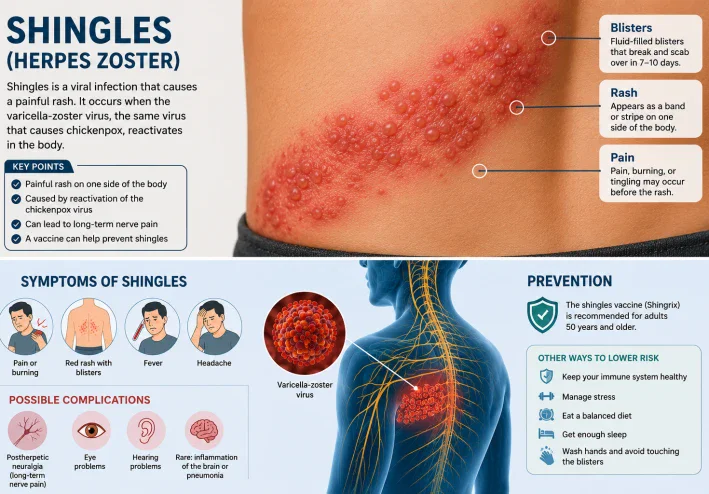
Shingles, medically known as herpes zoster, is a viral infection caused by the reactivation of the varicella-zoster virus (VZV), the same virus responsible for chickenpox.
After a person recovers from chickenpox, the virus does not completely leave the body. Instead, it remains dormant in nerve cells. Years later, the virus may become active again and travel along a nerve to the skin, causing the characteristic shingles rash.
The risk of developing shingles increases with age, particularly after the age of 50. People with weakened immune systems are also more likely to develop the condition.
Symptoms of Shingles
The symptoms of shingles can vary from one person to another. However, the most recognizable feature is usually a painful rash that appears on one side of the body or face.
Early Symptoms of Shingles
Before the rash appears, a person may experience symptoms in the affected area, including:
- Pain or burning sensation
- Tingling or numbness
- Itching
- Increased sensitivity to touch
Some people may also experience fever, headache, tiredness, or general weakness.
What Does the Shingles Rash Look Like?
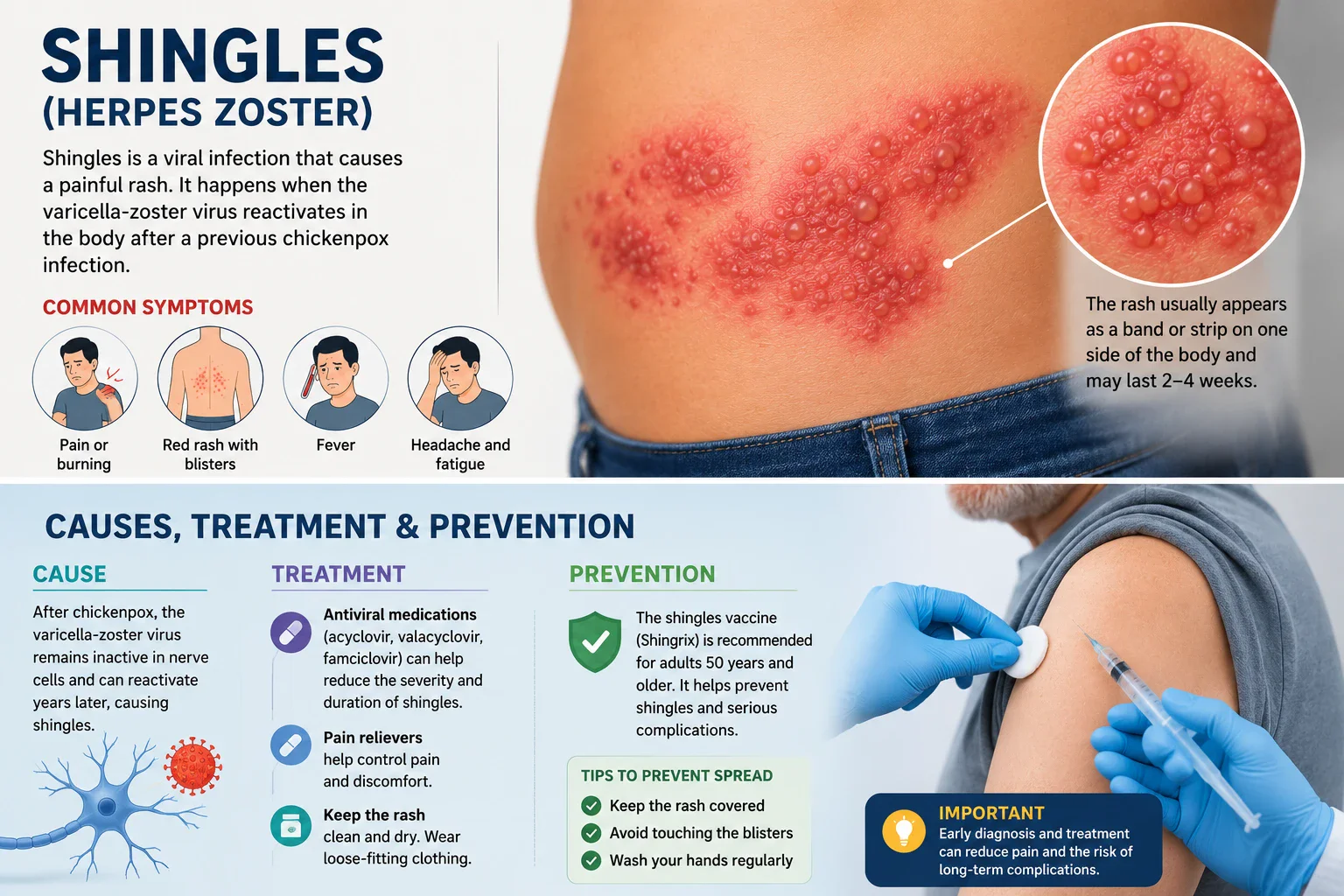
The rash usually appears as clusters of small, fluid-filled blisters. These blisters typically form a band or strip on one side of the body.
After several days, the blisters begin to dry out and form scabs. The rash generally clears within two to four weeks, although the pain may last longer.
If the rash develops near the eye, prompt medical attention is important because shingles affecting the eye can potentially lead to serious eye complications and vision problems.
Causes and Risk Factors for Shingles
The direct cause of shingles is the reactivation of the varicella-zoster virus that remains in the body after a previous chickenpox infection.
Several factors may increase the risk of reactivation, including:
- Older age
- A weakened immune system
- Certain chronic medical conditions
- Medications that suppress the immune system
- Periods of significant physical or emotional stress
However, anyone who has previously had chickenpox can potentially develop shingles.
Is Shingles Contagious?
Shingles itself does not spread from one person to another as shingles. However, the virus contained in the fluid from the blisters can spread to someone who has never had chickenpox or has not been vaccinated against it.
In such cases, the newly infected person may develop chickenpox rather than shingles.
To reduce the risk of spreading the virus, people with shingles should keep the rash covered, avoid touching or scratching the blisters, and wash their hands regularly.
It is also advisable to avoid close contact with newborn babies, pregnant people who are not immune to chickenpox, and individuals with weakened immune systems until the rash has completely crusted over.
Treatment for Shingles
Treatment depends on the severity of the infection and the person's overall health. Antiviral medications are among the most important treatments for shingles and are generally most effective when started early.
Common antiviral medicines used to treat shingles include:
- Acyclovir
- Valacyclovir
- Famciclovir
Starting antiviral treatment within approximately 72 hours of the appearance of the rash can help reduce the severity and duration of symptoms and lower the risk of certain complications.
Relieving Shingles Pain and Discomfort
Supportive care may include appropriate pain relievers, keeping the rash clean and dry, wearing loose-fitting clothing, and using cool compresses to help relieve itching and discomfort.
A healthcare professional should determine the most appropriate treatment, especially for older adults and people with chronic conditions or weakened immune systems.
Complications of Shingles
One of the most common complications is postherpetic neuralgia (PHN). This condition causes nerve pain that can continue for months or even years after the skin rash has disappeared.
Other complications may include eye problems, hearing problems, pneumonia, or inflammation of the brain, although these complications are less common.
The risk of complications tends to increase with age and in people with weakened immune systems.
How Can Shingles Be Prevented?
Shingles vaccination is one of the most effective ways to reduce the risk of developing shingles and its complications.
The recombinant zoster vaccine is recommended for certain older adults and people at increased risk, depending on national vaccination guidelines and individual health circumstances.
In the United States, the CDC recommends two doses of Shingrix for adults aged 50 years and older, as well as certain adults aged 19 years and older who are immunocompromised or immunosuppressed.
Vaccination can significantly reduce the likelihood of developing shingles and is particularly important because the risk of complications increases with age.
Conclusion
Shingles is more than just a temporary skin rash. It can cause intense nerve pain and, in some cases, lead to complications that continue long after the rash has disappeared.
Recognizing the early symptoms and seeking medical attention promptly can help ensure that appropriate treatment is started as soon as possible. Early antiviral therapy may reduce the severity of the illness and the risk of complications.
Vaccination remains one of the most effective ways to reduce the risk of shingles, particularly among older adults and people at higher risk.
If you develop a painful rash on one side of your body or face—especially around the eye—do not ignore it. Seeking medical evaluation promptly can make an important difference in treatment and help prevent serious complications.
Sources
تابع جديد Osama
اختر إشعارات الموقع أو البريد أو الاثنين. الزائر يقدر يشترك ببريده دون تسجيل حساب.
الإبلاغ عن المقال
لو لاحظت مشكلة في المحتوى، أرسلها لفريق المراجعة. لن تظهر بياناتك لكاتب المقال أو للقراء.
تعذّر إرسال البلاغ الآن. حاول مرة أخرى لاحقًا.
سجّل الدخول لإرسال بلاغ




النقاش
التعليقات (0)
فكرة تضيفها، أو سؤال يفتح حوارًا.
الرجاء تسجيل الدخول لتتمكن من التعليق