Rewilding Your Child's Asthma: The Innovative Soil-Gut-Breath Protocol for Resilient Lungs
Rewilding Your Child's Asthma: The Innovative Soil-Gut-Breath Protocol for Resilient Lungs
When your child struggles to draw a full breath, the instinct is to reach for relief—the quick-acting inhaler that opens constricted airways. This medicine is vital and life-saving. But what if it only addresses the final symptom of a deeper, systemic issue? Modern research reveals childhood asthma is less about brittle airways and more about a misguided immune system and a disrupted dialogue between a child's body and the world
A healthy, well-educated immune system can encounter common environmental particles like pollen or dust and manage them appropriately. In asthma, however, this system is dysregulated; it sees these particles as severe threats, launching an inflammatory attack in the lungs that leads to wheezing and constriction. The problem isn't the particles themselves, but the excessive, misplaced immune response they trigger
This article introduces a paradigm shift: treating asthma not just as a bronchial emergency, but as an opportunity to "rewild" your child's internal and external ecosystems. By strategically reintroducing elements our modern environment lacks—specific microbes, nourishing foods, and healthy breathing patterns—we can educate and calm the overreactive immune system, strengthen mucosal barriers, and build lungs that are resilient, not just reactive
The Soil Protocol – Cultivating Immunity from the Outside-In
The Science: Exposure to a rich biodiversity of environmental microbes, particularly in early childhood, is crucial for developing immune tolerance. Specific bacteria, like Mycobacterium vaccae found in soil, have been shown in studies to stimulate the production of regulatory T-cells and reduce inflammatory responses
The Innovative Method: Strategic Microbial "Farming"
This is not about being unsanitary; it's about being selectively dirty
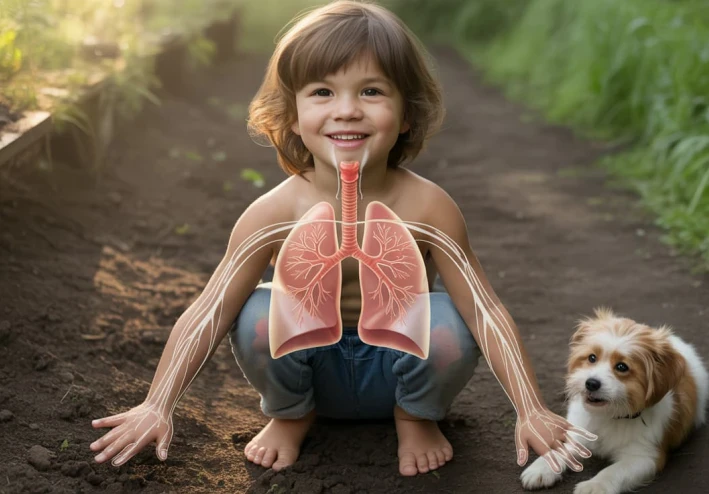
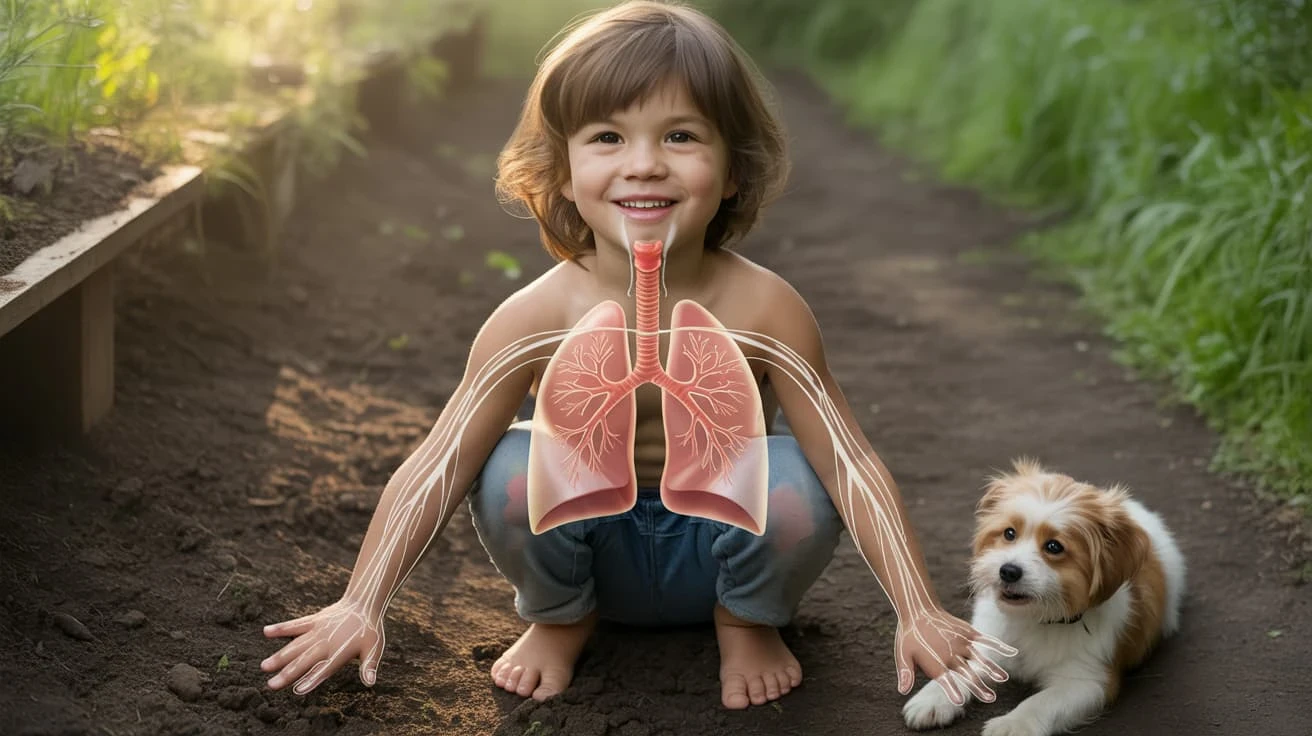
Prescribed Play in Organic Soil: Encourage daily, hands-in-the-dirt play in a garden using organic compost or soil. This isn't just play; it's a therapeutic microbial exchange. The goal is gentle, consistent exposure
The "Pet as Probiotic" Principle: If possible, welcome a dog into the home. Research from the NIH suggests children living with dogs from an early age have a significantly reduced risk of asthma and allergies, as dogs bring a diverse array of outdoor microbes indoors
Forest Bathing for Families: Make weekly trips to biodiverse forests or parks a ritual. Inhaling the air rich in phytoncides (natural compounds released by trees) and a variety of environmental microbes has documented anti-inflammatory effects
The Gut Protocol – Building Peace from the Inside-Out
The Science: The gut and lungs are in constant communication via the gut-lung axis. An imbalanced gut microbiome (dysbiosis) can promote systemic inflammation and allergic airway responses. The goal is to foster bacteria that produce anti-inflammatory compounds
The Innovative Method: Targeted Prebiotic & Postbiotic Nourishment
Forget generic probiotics. We target food for specific, beneficial bacteria
Prebiotic Precision: Focus on foods rich in pectin (apples with the skin, carrots) and specific fibers (from green bananas, oats, legumes). These are premier fuel for bacteria like Faecalibacterium prausnitzii, which produces butyrate—a short-chain fatty acid that calms systemic inflammation and strengthens gut (and potentially airway) barrier function
Postbiotic-Rich Foods: Introduce small amounts of traditional, live fermented foods like sauerkraut brine (a teaspoon in water), unsweetened kefir, or kimchi. These contain beneficial metabolites (postbiotics) that can directly signal immune regulation
The Omega-3 Rebalance: Supplement with high-quality fish oil (EPA/DHA). A study in the Journal of Clinical Immunology found that omega-3 fatty acids can reduce bronchial inflammation in children with asthma by helping the body produce Specialized Pro-Resolving Mediators (SPMs)—molecules that actively resolve inflammation
The Breath Protocol – Retraining the Airway's Nervous System
The Science: Many children with asthma develop dysfunctional breathing patterns—chronic mouth breathing and hyperventilation—which dry and irritate the airways, making them more twitchy. The breath is the direct link to the autonomic nervous system
The Innovative Method: Neurological Reset and Airway Hygiene
Buteyko Breathing Play: Adapt the Buteyko Method into child-friendly games. Practice gentle breath-holding after a normal exhale (starting with 2-3 seconds) or "quiet mouse breathing" through the nose only. This increases carbon dioxide tolerance, a natural bronchodilator, and reduces the "air hunger" that triggers panic and wheezing
Nasal Irrigation as Non-Negotiable Hygiene: Just as we brush teeth, daily saline nasal rinsing with a pediatric squeeze bottle is essential. It washes away inflammatory particles (pollen, dust) and inflammatory mediators from the nasal passages before they drip into the lungs. Research in the European Respiratory Journal confirms its efficacy in reducing lower airway symptoms
The Humming Prescription: Teach your child to hum their favorite song for 5 minutes daily. Humming creates vibrations that dramatically increase nasal nitric oxide production—a gas that is a potent vasodilator, antimicrobial agent, and bronchodilator, naturally produced in the sinuses
Implementing the Protocol: A Practical, Gentle Start
Week 1-2: Focus on Breath & Soil
Introduce a fun, daily 3-minute "nose breathing" game
Begin a small gardening project together
Maintain all prescribed medication
Week 3-4: Introduce Gut Nourishment
Add one prebiotic-rich food daily (e.g., oatmeal with sliced apple)
Introduce a teaspoon of live kefir or sauerkraut brine
Begin a high-quality omega-3 supplement (consult your pediatrician for dosage)
Week 5 Onward: Integrate and Observe
Combine all three pillars into daily life
Keep an asthma symptom diary to track frequency of rescue inhaler use, cough, and energy levels
Crucially, work with your pediatrician. This protocol is designed to be complementary. Share your diary and work together to potentially reduce medication reliance as resilience builds
From Management to Resilience
The "Rewilding" protocol offers more than symptom management; it offers a path to foundational resilience. It addresses the root causes of immune dysregulation by filling the "experience gaps" of modern life. By thoughtfully reconnecting our children with soil microbes, nourishing their inner ecosystem, and retraining their breath, we don't just open their airways—we help build a robust, balanced system that is less likely to overreact in the first place
This is the future of chronic condition management: not just suppressing the fire, but creating an environment where fire is less likely to spark. It empowers you, as a parent, with a hopeful, proactive toolkit to help your child breathe easier, from the ground up
FAQs: Your Rewilding Protocol Questions Answered
Q1: Is this protocol safe to do alongside my child's steroid inhaler
A: Absolutely, and this is critical. This protocol is a complementary, foundational strategy, not a replacement for prescribed medication. Do not alter any medication schedule without explicit guidance from your pediatrician. The goal is to use this protocol to build health so that, under medical supervision, medication needs may be reassessed over time
Q2: My child has severe asthma. Isn't soil exposure risky for infections
A: The focus is on common garden soil, not areas with animal waste. The benefits of diverse microbial exposure for immune education significantly outweigh the minimal risk of common soil bacteria for a healthy child. If your child is immunocompromised, consult your doctor first. Start with small, supervised exposures
Q3: How long before we see improvements
A: This is not a quick fix. Some aspects, like improved nasal breathing from irrigation, can be felt within days. Changes in gut microbiome and systemic immune modulation take consistent effort over 3-6 months. Track subtle wins: better sleep, more stamina, reduced nighttime coughing, or decreased rescue inhaler use
Q4: My child won't eat fermented foods or do nasal rinsing. What now
A: Creativity is key. Mix a small amount of kefir into a smoothie. Use "superhero" stories for nasal rinsing ("let's wash away the pollen monsters!"). For breath play, lead by example and make it a short, bonding activity. Start with tiny, non-confrontational steps
Q5: Where's the hard science for this? It sounds alternative
A: Each pillar is grounded in established research
Soil: The "farm effect" and studies on M. vaccae are published in journals like Nature and Psychopharmacology
Gut: The gut-lung axis and role of SCFAs like butyrate are covered in Frontiers in Immunology and The Journal of Allergy and Clinical Immunology
Breath: Buteyko's efficacy is confirmed in the Thorax journal, and nitric oxide biology is well-documented in European Respiratory Review
This is not alternative medicine; it's ecological medicine based on cutting-edge immunology