Sensory Pollution: How Fast Food Hijacks Your Biology
Sensory Pollution: How Fast Food Hijacks Your Biology
You know the scene: the crumpled wrappers, the lingering salt-and-grease scent, the fizzy aftertaste of soda. You’re physically full, even sluggish, yet a strange, unsatisfied craving hums in the background. This isn't a personal failure of willpower. It is, according to a growing body of nutritional neuroscience and food science research, the predictable outcome of deliberate biological engineering
Modern fast food's greatest threat isn't merely its excess calories or poor nutrient profile. Its profound harm lies in its ability to act as a form of sensory pollution—a carefully crafted bombardment of tastes, textures, and chemical signals that hijacks our ancient evolutionary biology. This article moves beyond the standard "these foods are bad" lecture to explore how the hyper-palatable engineered bite dysregulates our gut-brain communication, corrupts our taste perception, and traps our metabolism in a cycle of craving and storage. This is the story of how fast food doesn't just feed you; it actively reprograms you
The Engineered "Bliss Point" - A Recipe for Compulsion
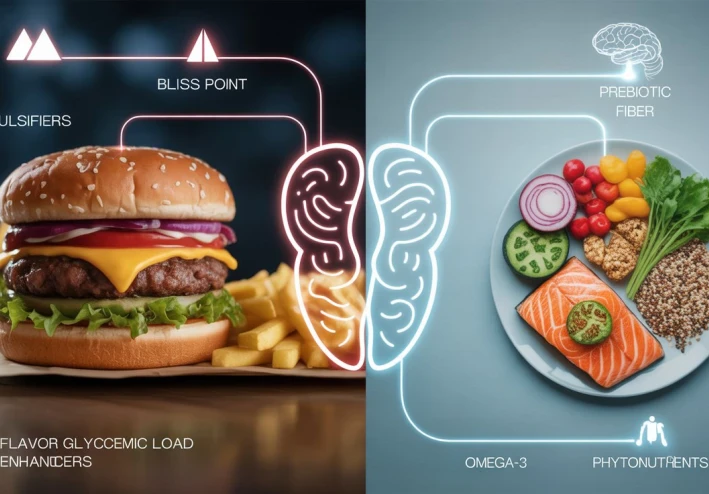
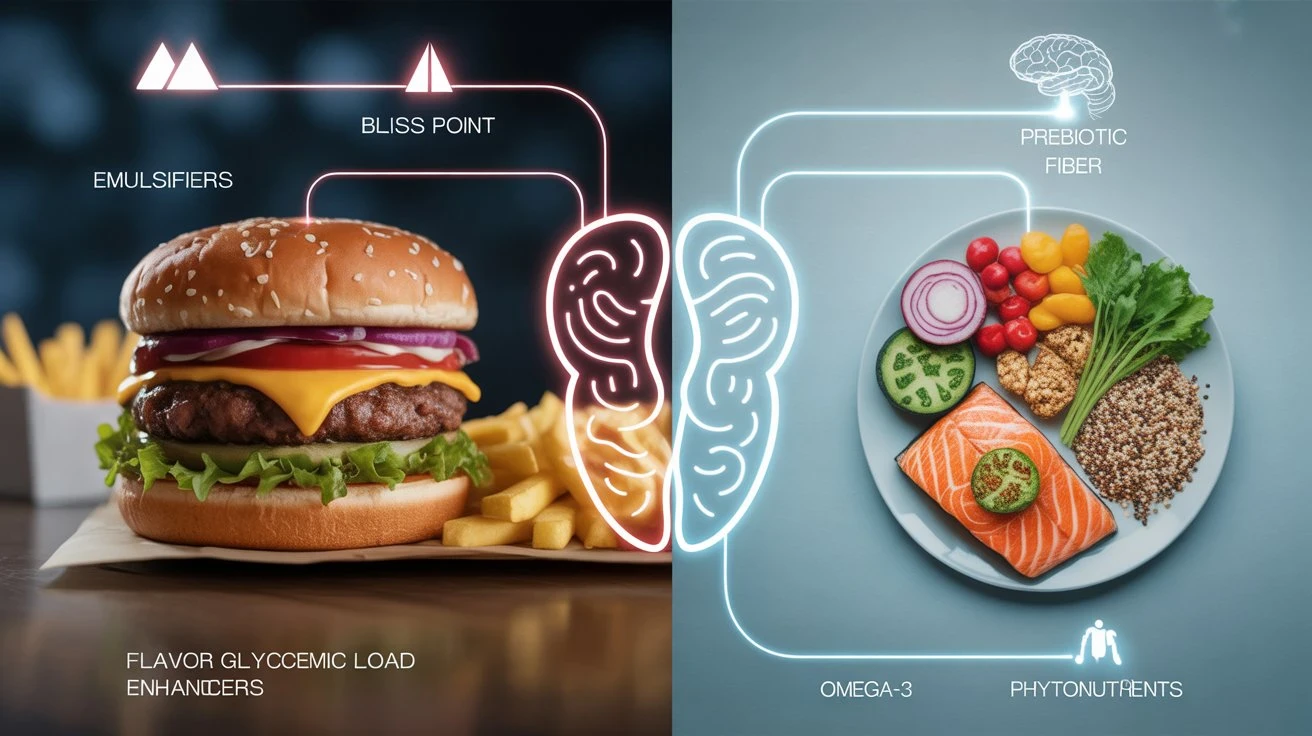
The term "bliss point," coined by food scientist Howard Moskowitz, refers to the precise combination of sugar, fat, and salt that maximizes pleasure and desire. The fast food industry hasn't just stumbled upon this; it relentlessly optimizes for it.
The Triad of Manipulation: A typical fast-food meal—a burger, fries, and soda—is a masterclass in this triad. The bun and fries provide rapidly digestible carbohydrates, the fried patty and oil deliver inflammatory fats, and the seasoning and sauces pack a high-sodium punch. This combination triggers a potent dopamine release in the brain's reward center, a neurotransmitter pathway associated with motivation and pleasure that is also activated by addictive substances
Beyond Nutrients: The Additive Cocktail: The engineering goes further. Flavor enhancers (like monosodium glutamate and its cleaner-label cousins, yeast extracts), texturizers, and artificial flavors create a taste and mouthfeel that nature cannot match. These additives ensure every bite is intensely consistent and rewarding, overriding our innate satiety signals that evolved to deal with whole, variable foods
Gut-Brain Sabotage - Silencing the Satiety Signal
Your gut is your second brain, home to a vast network of neurons and your microbiome. It communicates with your actual brain via the vagus nerve, sending crucial signals about hunger, fullness, and nutrition. Ultra-processed fast food sever this line
The Emulsifier Effect: Studies, such as those published in Nature, have shown that common dietary emulsifiers like polysorbate 80 and carboxymethylcellulose (ubiquitous in sauces, shakes, and baked goods) can degrade the protective mucus lining of the gut and increase bacterial inflammation. This doesn't just cause discomfort; it promotes leaky gut syndrome, allowing inflammatory compounds into the bloodstream
The Silent Vagus: When the gut is inflamed and the microbiome—starved of the prebiotic fiber absent in fast food—is imbalanced, the vagus nerve's "I'm full" signals are muffled. The brain doesn't get the memo that nourishment has arrived, leading to phantom hunger and overconsumption. You are, biologically, eating in a communication blackout
Sensory Pollution and the Corrupted Palate
Just as constant noise pollution raises your baseline stress, constant sensory pollution from engineered food raises your baseline for flavor expectation
Dulled Sensitivity: Chronic exposure to intense, artificial flavors and overwhelming sweetness/saltiness desensitizes taste buds. The subtle, complex flavors of a strawberry, a roasted vegetable, or a piece of grilled fish become undetectable, perceived as "bland." This creates a vicious cycle where nutrient-dense whole foods are rejected in favor of hyper-stimulating pseudo-foods
Rewired Reward: MRI studies reveal that frequent consumers of fast food have altered brain reward circuitry. They show diminished activation in response to healthier food cues, requiring greater sensory bombardment to achieve the same level of satisfaction. The palate isn't just bored; it's been biologically retrained
The Metabolic Speed Trap
This engineered food cocktail doesn't just affect your brain and gut; it directly sabotages your cellular engines, the mitochondria
The Glycemic Onslaught: The fast-food meal is a high-glycemic load event. The rapid flood of glucose from refined carbs triggers an insulin spike, a hormone designed to store energy. When combined with high levels of inflammatory omega-6 fats from industrial seed oils, this promotes fat storage and creates cellular insulin resistance
Mitochondrial Dysfunction: Your mitochondria, tasked with burning fuel for energy, become overwhelmed and inefficient—a state linked to fatigue and weight gain. You’re consuming a massive amount of "fast" energy designed to be stored, not used, teaching your body to be metabolically sluggish. This is the opposite of metabolic flexibility, where the body efficiently switches between fuel sources
The Reset Protocol: Reclaiming Your Biological Programming
The goal isn't lifelong deprivation but a strategic reset to regain sensitivity and control
The 72-Hour Sensory Reset: Commit to three days of only whole, unprocessed foods: vegetables, fruits, quality proteins, healthy fats, and whole grains. This isn't primarily about calories; it's about giving your gut a break from emulsifiers, resetting taste buds, and damping down inflammation. The first days are hardest, as your brain chemistry adjusts
Rebuild the Gut-Brain Axis: Post-reset, intentionally incorporate prebiotic fibers (garlic, onions, asparagus, oats) and probiotic foods (sauerkraut, kefir, yogurt) to heal the gut lining and repopulate a healthy microbiome, restoring clear communication with your brain
Become a Label Archaeologist: When you do encounter processed food, scan for the three key red flags: emulsifiers (especially polysorbate 80, carrageenan, cellulose gum), added sugars in multiple forms, and industrial seed oils (soybean, corn, canola oil). This knowledge disarms the engineering
From Passive Consumer to Active Defender
Understanding fast food as a vector of sensory pollution and biological hijacking reframes the entire conversation. It moves us from self-blame to strategic awareness. The "hyper-palatable engineered bite" is a powerful, designed technology. By recognizing its mechanisms—the bliss point engineering, the gut-brain sabotage, the palate corruption, and the metabolic trap—we equip ourselves to intervene
The path to metabolic health and authentic hunger cues begins not with a perfect diet, but with a recalibration of our senses and a repair of our internal communication lines. We must consciously choose to lower the sensory noise, listen to the whispers of our gut, and nourish the intricate biology that fast food seeks to override. In doing so, we stop being subjects of an experiment and become architects of our own well-being
Frequently Asked Questions (FAQs)
Q1: Is this basically saying fast food is addictive
A1: Yes, but with a specific scientific basis. It's not just psychologically "craveable." Its engineered combination of ingredients hijacks the same dopamine reward pathways as addictive substances, while its physical composition (lack of fiber, presence of emulsifiers) disrupts the biological systems (gut-brain axis) designed to regulate consumption and satiety
Q2: What's the single worst ingredient I should avoid
A2: It's less about one ingredient and more about the combination. However, based on the hijacking model, be most wary of dietary emulsifiers (like polysorbate 80, carboxymethylcellulose) in processed sauces, dressings, and desserts, and the triad of refined carbs + industrial seed oils + added sugar appearing together in a single meal
Q3: Can I ever eat fast food again after a “reset”
A3: The reset isn't about creating a permanent ban. Its purpose is to recalibrate your senses and biology. Afterward, you'll likely find you need much less to feel satisfied, and the negative effects (sluggishness, cravings) will be more noticeable. This allows for conscious, occasional consumption rather than compulsive habit
Q4: How long does it take to "repair" my gut from this kind of food
A4: Initial improvements in gut lining and microbiome diversity can begin within days of removing emulsifiers and adding fiber. Significant gut microbiome restoration is an ongoing process that can take several months of consistent, diverse, whole-food nutrition
Q5: Does this mean all processed food is harmful
A5: Not all. The focus is on ultra-processed foods—formulations of industrial ingredients with little intact whole food. Minimally processed foods (like frozen vegetables, canned beans, plain yogurt) can be part of a healthy diet. The key is the level of engineering and the presence of additives that disrupt biology