The 90-Day Ovarian Reboot: A Mitochondrial Protocol to Reignite Ovulation and Nurture Egg Quality
The 90-Day Ovarian Reboot: A Mitochondrial Protocol to Reignite Ovulation and Nurture Egg Quality
The silence of an anovulatory cycle—a month without an egg’s release—is more than a skipped period. It’s a profound signal from your body that the intricate system governing reproduction is under stress. Conventional approaches often focus solely on the hormonal messengers (like FSH, LH, estrogen). But what if we listened to what the follicles themselves are saying? They are asking for energy, clear signals, and a peaceful environment
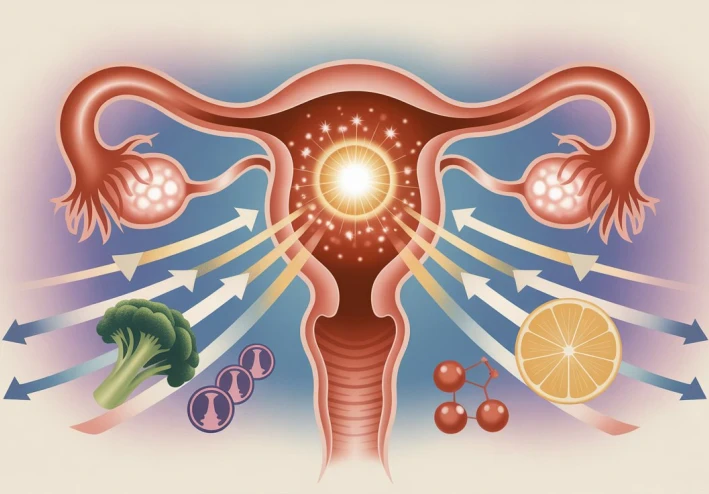
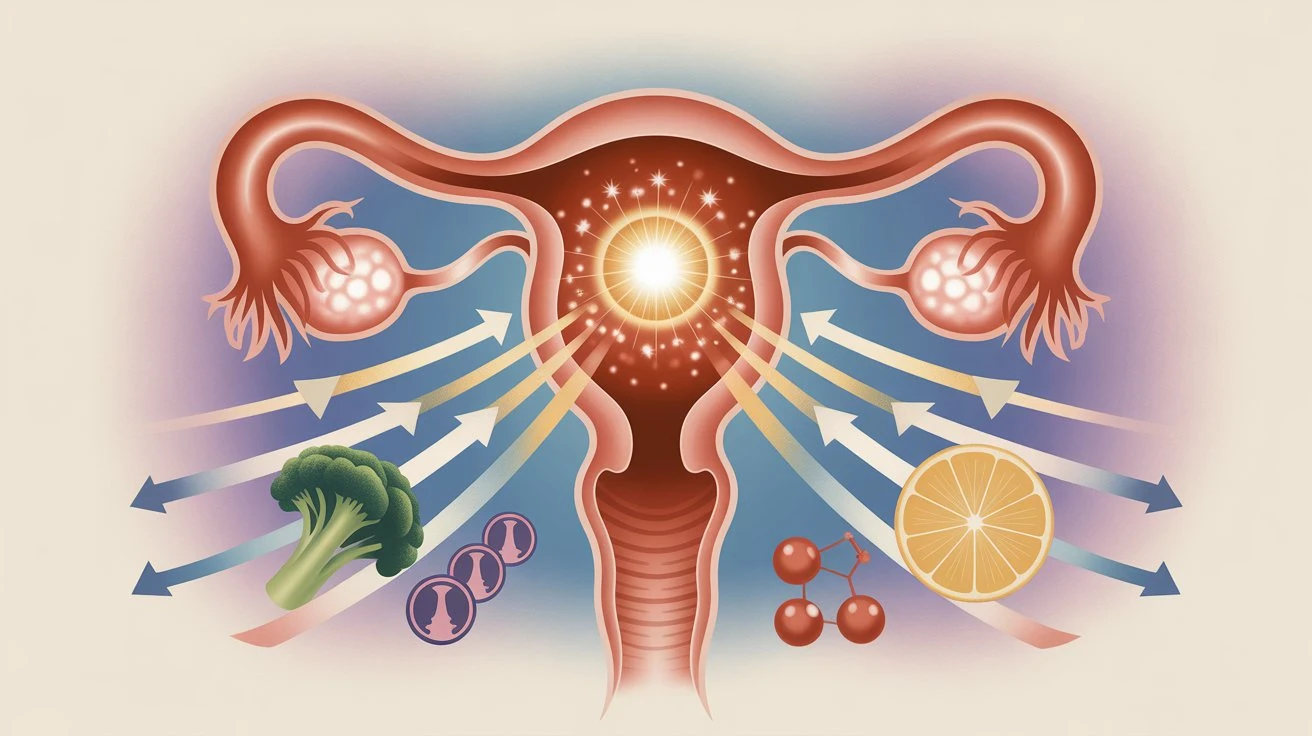
Emerging science reveals that ovulation is the culmination of a 90-day journey. It’s a metabolically expensive act requiring stellar cellular energy production. The dominant follicle must be the best energy producer to win the monthly selection. This article introduces a paradigm shift: to stimulate ovulation, we must nourish the cellular power plants (mitochondria) within the ovarian tissue, clarify the metabolic signals that guide follicular growth, and reduce systemic noise. This is a 90-day protocol to reboot your ovarian environment from the ground up
The Three-Pillar Ovarian Reboot Protocol
This protocol is designed to support the entire folliculogenesis window—the approximately 90 days it takes a follicle to develop before ovulation. It is foundational work, meant to complement, not replace, guidance from your reproductive endocrinologist
The Energy Project – Fueling the Follicle's Power Plant
The Science: Every egg and its surrounding granulosa cells are packed with mitochondria—the cell’s energy batteries. Their health dictates the egg’s viability and the follicle’s ability to mature and ovulate. Aging, stress, and toxins deplete both the number and efficiency of these mitochondria
The Application: Targeted Mitochondrial Support
Compound 1: Pyrroloquinoline Quinone (PQQ)
Role: Acts as a mitochondrial biogenesis stimulant. It signals your body to build new, healthy mitochondria
Food Sources: Trace amounts are found in natto, parsley, green peppers, kiwi, and papaya. However, therapeutic doses require supplementation
Practical Protocol: 10-20 mg of PQQ supplement daily, taken in the morning with a fat-containing meal (like avocado or eggs) for optimal absorption
Compound 2: Coenzyme Q10 (CoQ10) & Shilajit
Role: CoQ10 is the essential spark plug in the mitochondrial energy chain. Shilajit (fulvic acid) acts as an electrolyte, helping transport nutrients like CoQ10 deeper into cells
Food Sources: CoQ10 is found in organ meats (heart, liver), fatty fish (saloon, mackerel), spinach, and broccoli
Practical Protocol: 200-400 mg of ubiquinol (the active form of CoQ10) daily. Consider pairing with 100-250 mg of purified shilajit resin in water. Take with your largest meal
The Signal Clarifier – Mastering the Metabolic Conversation
The Science: Insulin is not just a blood sugar hormone; it’s a major communication line to the ovaries. Insulin resistance creates static on this line, leading to elevated androgens (like testosterone) and disrupted follicle-stimulating hormone (FSH) signaling, which can halt ovulation
The Application: Enhancing Insulin Sensitivity at the Ovarian Level
Compound 1: Myo-Inositol & D-Chiro Inositol (in a 40:1 ratio)
Role: These are insulin second messengers. They improve the ovary’s sensitivity to both insulin and FSH, helping restore regular follicular development and ovulation. A 2012 study in the European Review for Medical and Pharmacological Sciences found myo-inositol effectively restored ovulation in women with PCOS
Food Sources: Found in citrus fruits (especially oranges), cantaloupe, beans, brown rice, and whole grains. Achieving the therapeutic 40:1 ratio is challenging through diet alone
Practical Protocol: 2 grams of myo-inositol (with 50 mg of D-chiro) twice daily, dissolved in water. Morning and evening
Compound 2: Berberine
Role: A potent AMPK activator, often called "nature’s metformin." It improves insulin sensitivity systemically and helps regulate the energy-sensing pathways that influence ovarian function
Food Sources: Found in the roots of Goldenseal, Barberry, and Oregon Grape. Typically taken as a supplement
Practical Protocol: 500 mg, 2-3 times per day with meals. Crucial Note: Berberine can interact with medications. Consult your doctor before use, especially if you are on diabetes or blood pressure drugs
The Environmental Reset – Cooling Inflammation & Supporting Detox
The Science: Chronic, low-grade inflammation directly impairs ovarian function and follicular development. Furthermore, the liver must efficiently process and clear spent estrogen. A sluggish liver leads to estrogen dominance, which can further suppress ovulation
The Application: Systemic Cooling & Hormone Clearance
Compound 1: N-Acetylcysteine (NAC)
Role: A powerful precursor to glutathione, the body’s master antioxidant. It directly reduces inflammation in ovarian tissue and has been shown in studies to improve ovulation rates in women with PCOS
Food Sources: The body makes it from the amino acid cysteine, found in chicken, turkey, yogurt, cheese, eggs, and legumes
Practical Protocol: 600-1200 mg daily, taken with food
Compound 2: Sulforaphane (from Broccoli Sprouts)
Role: Activates the Nrf2 pathway, the body’s master regulator of antioxidant and detoxification enzymes. This provides a shield of protection directly to the developing follicles
Food Sources: Broccoli sprouts contain 100x more glucoraphanin (the precursor) than mature broccoli. Mustard seeds contain the activating enzyme
Practical Protocol: Eat ½ cup of raw, chopped broccoli sprouts daily. Chop and let sit for 40 minutes before eating, or sprinkle with mustard seed powder to maximize sulforaphane production
Investing in Your Fertility Foundation
Stimulating ovulation is more than triggering an event; it’s about cultivating the soil from which a healthy follicle can emerge. This 90-day Ovarian Reboot Protocol targets the foundational pillars of cellular energy, clear signaling, and a clean internal environment
Commit to this protocol as an act of deep nourishment. Track your cycle, note changes in your basal body temperature, and observe shifts in your energy. Most importantly, partner with a healthcare provider who can monitor your progress and integrate this foundational work with any necessary medical interventions. You are not just chasing a monthly event; you are building a legacy of cellular health that supports your fertility now and for the future
FAQs: Your Ovarian Reboot Questions Answered
Q1: Can I do this protocol while on fertility medications like Letrozole or Clomid
A: Many of these supplements (like CoQ10, myo-inositol, NAC) are considered complementary and are often used alongside medications. However, it is imperative to discuss this entire protocol with your reproductive endocrinologist before starting. They need to be aware of all you are taking to ensure safety and synergy with your treatment plan
Q2: How soon might I see a return of ovulation
A: Because this protocol supports the 90-day follicular development window, give it at least two to three full cycles (2-3 months) to see an impact on ovulation regularity and quality. The first changes you may notice are improved cycle length, a clearer thermal shift on your BBT chart, or changes in cervical mucus
Q3: Is this only for women with PCOS
A: No. While the insulin-sensitizing pillar is particularly relevant for PCOS, the mitochondrial support (Pillar 1) and anti-inflammatory support (Pillar 3) are fundamental for any woman experiencing unexplained anovulation or diminished ovarian reserve, as they address universal issues of cellular energy and oxidative stress
Q4: Are the food sources enough, or do I need supplements
A: For compounds like myo-inositol (40:1 ratio), PQQ, and therapeutic-dose berberine, supplementation is necessary to reach the clinically studied amounts. Food sources of CoQ10, NAC precursors, and sulforaphane are excellent and should be emphasized, but supplements ensure a consistent, measurable dose for the protocol
Q5: What’s the most important pillar to start with
A: All three work synergistically, but if you must prioritize, begin with Pillar 2 (Signal Clarifier) if you have signs of insulin resistance (e.g., PCOS, weight gain around the middle, skin tags). Otherwise, a strong foundation starts with Pillar 1 (Energy) and Pillar 3 (Environment) simultaneously, adding Pillar 2 after a few weeks