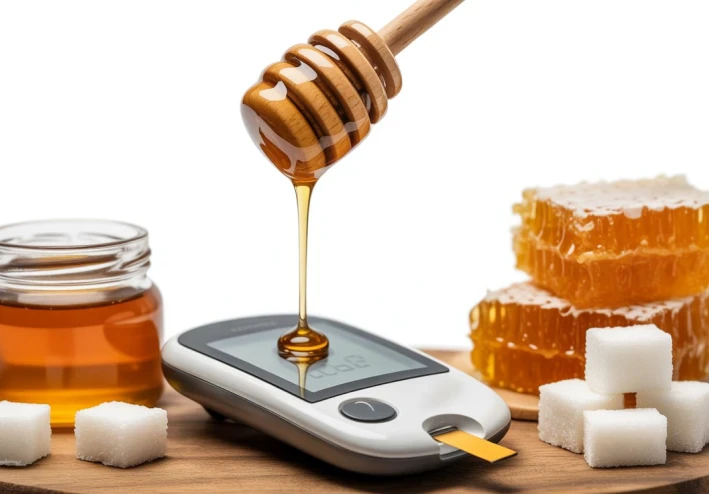
Honey and Blood Sugar: A Scientific Guide to Glycemic Impact and Safe Use
Honey and Blood Sugar: A Scientific Guide to Glycemic Impact and Safe Use

Honey, nature's liquid gold, has been revered for millennia as a sweetener and medicine. Yet, for anyone monitoring their blood glucose, from health enthusiasts to those with diabetes, it presents a perplexing question: Can this natural nectar be part of a healthy diet, or is it just another form of sugar in disguise? The answer is far more nuanced than a simple yes or no. While honey is indeed a carbohydrate that raises blood sugar, its story doesn't end there. Modern science reveals that its impact is shaped by a unique composition of sugars, enzymes, and bioactive compounds that set it apart from refined sugar. This article delves into the fascinating science behind honey's glycemic effect, separating fact from folklore to empower you with the knowledge to make informed dietary choices
Deconstructing Honey: More Than Just Simple Sugars
To understand honey's effect on blood sugar, we must first look at its complex biochemical profile. Honey is not a single entity but a sophisticated blend of components
The Sugar Composition: Fructose vs. Glucose
Honey is primarily composed of two simple sugars: fructose (approximately 40%) and glucose (approximately 30%), with the remainder being water, minerals, vitamins, and pollen. The ratio of these two sugars is critical. Glucose is absorbed directly into the bloodstream, causing a rapid rise in blood sugar and insulin. Fructose, on the other hand, is metabolized in the liver and does not cause an immediate spike in blood glucose. This higher fructose content is a key reason why honey often has a different metabolic profile than table sugar (sucrose), which is a 50/50 split of glucose and fructos
The Power of Minor Components
Beyond sugars, honey contains trace amounts of enzymes like invertase and diastase, antioxidants including flavonoids and phenolic acids, and prebiotic oligosaccharides. These minor components are the heroes in the honey narrative. The antioxidants are believed to play a role in reducing oxidative stress, which is often elevated in chronic high blood sugar states. Some research suggests that these compounds may also improve insulin sensitivity, potentially offering a moderating effect on the overall glycemic response. It's this synergy between the sugars and the co-factors that makes honey a subject of scientific interest
Honey vs. Refined Sugar: A Glycemic Showdown
When placed side-by-side in clinical studies, honey often demonstrates a different physiological impact compared to plain sucrose or high-fructose corn syrup
Comparing the Glycemic Index (GI)
The Glycemic Index (GI) is a scale that ranks carbohydrate-rich foods based on how quickly they raise blood glucose levels. Pure glucose has a GI of 100. Table sugar (sucrose) has a GI of around 65. Interestingly, most varieties of honey have a GI ranging from 35 to 58, often placing it in the low to medium category. This means that, gram for gram, honey typically causes a slower and lower rise in blood glucose than an equivalent amount of table sugar. The variation depends on the honey's floral source; for instance, acacia honey is known for its particularly low GI due to a higher fructose content
Metabolic and Hormonal Responses
The differences extend beyond the GI. Several controlled studies have compared the effects of honey and sugar on metrics like blood sugar and insulin levels. Some of these studies have found that while both raise blood sugar, the peak may be lower with honey. More notably, some research indicates that honey may lead to a lower C-peptide response (a marker of insulin secretion), suggesting the body may need to produce less insulin to manage the same level of sweetness compared to sucrose. This is a significant area of investigation, as a lower insulin demand is generally favorable for metabolic health
Practical Guidance: Using Honey Wisely for Blood Sugar Management
For individuals with insulin resistance or diabetes, the principle of "food as medicine" requires careful, individualized strategies
The Principle of Moderation and Substitution
The most critical rule is that honey is not a "free" food. It must be accounted for within one's total carbohydrate allowance. The primary strategic use for honey is not as an addition to the diet but as a substitution for other sweeteners. If you currently use a teaspoon of sugar in your tea, swapping it for a teaspoon of honey may offer a modestly better glycemic outcome and a boost of antioxidants. However, adding honey to an already sugar-laden diet will only exacerbate blood sugar control issues
Context and Synergy: The Meal Matrix
The impact of honey is profoundly influenced by what it is consumed with. Eating honey on its own will lead to a faster blood sugar spike. However, when combined with other foods that contain fiber, protein, or healthy fats, the glycemic response can be significantly blunted. For example, a drizzle of honey on a bowl of Greek yogurt with nuts and berries will result in a much slower and more stable release of glucose into the bloodstream than honey dissolved in a plain glass of water. The fat, protein, and fiber in the yogurt and nuts slow down gastric emptying and sugar absorption
Frequently Asked Questions About Honey and Blood Sugar
Can people with diabetes eat honey
Yes, but with caution and planning. It is not a recommended daily food, but it can be consumed in very small, controlled portions as part of a balanced meal plan. It is essential for individuals with diabetes to monitor their blood glucose levels closely before and after consuming honey to understand their personal response and to always consult with their healthcare provider or a registered dietitian
Is raw honey better for blood sugar than processed honey
Potentially, yes. Raw, unprocessed honey is more likely to retain its natural enzyme activity and antioxidant content. Heavy processing and pasteurization can destroy these delicate compounds, potentially reducing honey's moderating effects and turning it into a product that behaves more like simple sugar syrup
Are some types of honey better than others for blood sugar control
Yes, the floral source matters. Honeys with a higher fructose-to-glucose ratio, such as acacia, tupelo, or sage honey, tend to be slower to crystallize and have a lower Glycemic Index. These varieties are generally a better choice for those concerned about blood sugar spikes compared to honeys with a higher glucose content, like clover or golden blossom
A Sweetener to Be Respected, Not Feared
Honey occupies a unique middle ground in the world of sweeteners. It is not a guilt-free superfood that can be consumed without consequence, nor is it metabolically equivalent to refined sugar. The scientific evidence paints a picture of a complex substance whose natural composition can lead to a more favorable glycemic response than sucrose. Its potential benefits are tied to its antioxidant and anti-inflammatory properties, which are absent in empty-calorie sweeteners. The ultimate verdict is that honey can be a preferable occasional sweetener when used strategically—in strict moderation, as a substitute for less nutritious sugars, and always within the context of a whole-foods-based diet. For those managing blood sugar, knowledge and personal vigilance are the keys to unlocking its sweet potential safely