Autumn's Inner Harvest: Is Your Body Mirroring the Trees? A Public Health Deep Dive into Seasonal Vulnerability
Autumn's Inner Harvest: Is Your Body Mirroring the Trees
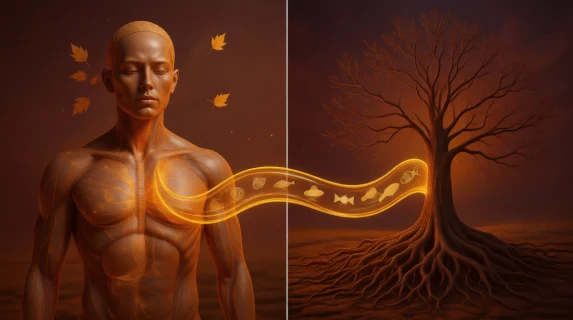
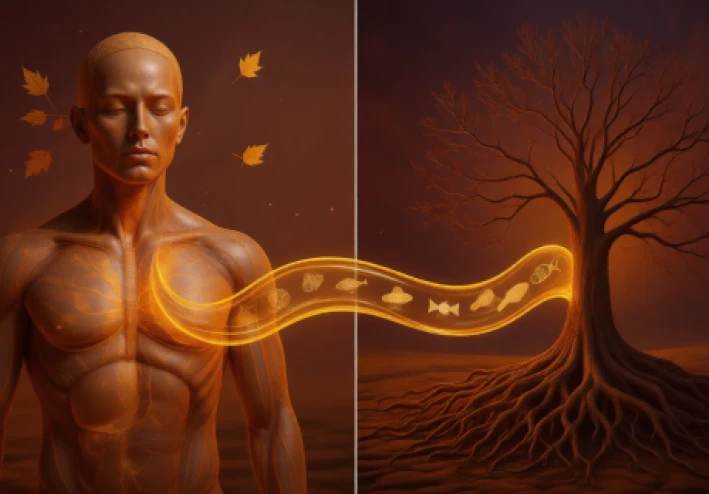
As the vibrant green canopy transforms into a tapestry of gold and crimson, a subtle shift occurs within us. Just as trees shed their leaves and brace for the coming chill, many people report a distinct feeling of bodily vulnerability. Tooth sensitivity flares, more hairs cling to our brushes, and the familiar scratch of a sore throat seems to linger in the crisp air. This is not mere coincidence. From a public health and therapeutic nutrition perspective, autumn represents a critical seasonal junction where environmental changes interact powerfully with our physiology
This article moves beyond the common advice on avoiding colds. We will explore a compelling and original hypothesis: that autumn induces a state of biological resource reallocation and environmental stress in humans, akin to deciduous trees, making us uniquely susceptible to specific ailments—and how a targeted nutritional strategy can be our root system for resilience
The Parallel: Trees and Our Shared Seasonal Biology
Deciduous trees undergo abscission—the deliberate shedding of leaves. This is not a sign of disease, but a brilliant survival strategy. As daylight wanes and temperatures drop, photosynthesis becomes inefficient. The tree actively seals off leaves, reclaims valuable nutrients (like nitrogen and phosphorus), and conserves its vital energy for core functions and surviving the winter
Could humans be experiencing a physiological parallel? While we don’t shed limbs, autumn triggers profound circadian rhythm shifts due to reduced sunlight, affecting melatonin and serotonin production. This impacts sleep, mood, and crucially, immune modulation. The drop in temperature and humidity also stresses our respiratory mucosa and alters our behavior (more time indoors). Our bodies are, in a sense, entering a conservation mode, which can create windows of vulnerability
Deconstructing Autumn's "Big Three" Vulnerabilitie
Toothaches & Oral Health Decline
The increase in tooth sensitivity and dental issues isn't just about Halloween candy. Several factors converge
Vitamin D Plunge: Sunlight is our primary source of Vitamin D, crucial for calcium absorption and oral immune health. Its rapid decline can weaken tooth enamel and the jawbone's integrity
Dietary Shifts: We often turn to warmer, acidic beverages (coffee, tea, hot cider) and comfort carbs, which can alter oral pH and promote enamel erosion and bacterial growth
Immune Redirect: As systemic immune resources are taxed by circulating viruses, the local immune defenses in our gums and oral mucosa may become less effective, exacerbating inflammation or gingivitis
Seasonal Hair Loss: More Than Just Folklore
Dermatologists recognize "seasonal telogen effluvium." Hair follicles have growth cycles, and studies suggest a higher percentage enter the resting (telogen) phase in late summer/autumn, leading to shedding 2-3 months later. This may be an evolutionary, conserved trait—a mild, physiological "shedding" mirroring mammals growing winter coats. Nutrient shifts and mild seasonal stress on the body can amplify this normal cycle
Viral Susceptibility: The Perfect Storm
The surge in upper respiratory infections is a classic public health challenge driven by
Environmental Conditions: Cool, dry air may help some viruses remain airborne longer and can dry out our nasal passages, compromising a critical physical barrier
Behavioral Change: "Indoor crowding" begins, facilitating virus transmission
Physiological Stress: The energy required for the body to adapt to new environmental conditions (thermoregulation, circadian adjustment) may temporarily divert resources from optimal immune surveillance
The Core Hypothesis: Resource Reallocation & Barrier Stress
Here is the unifying, original concept: In autumn, the human body faces a "double burden": it must divert internal resources to manage significant environmental and circadian changes, while simultaneously defending against heightened external threats. This can lead to a temporary nutrient partitioning dilemma and a weakening of our physical barriers (skin, oral mucosa, respiratory lining), manifesting in the specific issues we observe
Our skin (and scalp), oral cavity, and respiratory tract are our first lines of defense. When systemic resources are stretched thin, these barriers can falter first, explaining the concurrent rise in hair, tooth, and throat issues
Therapeutic Nutrition: Fortifying Your "Inner Root System"
This is where targeted therapeutic nutrition acts as our most powerful tool to mimic the wise tree—reclaiming and redirecting nutrients to fortify our core and our barriers
For Barrier Integrity & Immunity
Vitamin D3: The cornerstone supplement from October to April. Essential for immune cell function and calcium metabolism for strong teeth
Zinc & Selenium: Critical for wound healing, immune response, and antioxidant defense. Found in pumpkin seeds, lentils, and seafood
Omega-3s (EPA/DHA): Powerful anti-inflammatories that support skin/scalp health and immune regulation. Prioritize fatty fish or high-quality algae supplements
Vitamin C & A: For mucosal health. Think sweet potatoes, carrots, dark greens (A), and bell peppers, broccoli, kiwi (C)
For Adaptation & Resilience
Adaptogenic Herbs: Consider incorporating ashwagandha or astragalus into broths or teas. These herbs, used in traditions like Ayurveda, may help modulate the body's stress response and support immune function
Bone Broths & Collagen: Rich in glycine and proline, these support gut and skin barrier integrity, providing the "building blocks" for repair
Fermented Foods: Sauerkraut, kimchi, kefir. A significant portion of our immune system is governed by gut health. Prioritizing probiotics builds foundational resilience
A Public Health Prescription for Autumn
On a community level, this understanding shifts our public health messaging for autumn from just "get your flu shot" to a holistic seasonal preparedness model
Embrace "Nutritional Tuning": Prepare your pantry for the season with nutrient-dense, barrier-supportive foods
Prioritize Sleep Hygiene: Defend your circadian rhythm with consistent sleep schedules and morning light exposure
Practice Nasal & Oral Hygiene: Use saline nasal sprays to maintain mucosal moisture and maintain diligent oral care
From Vulnerability to Resilience
The synchrony between the autumn landscape and our internal state is more than poetic. It is biological. By observing the trees—who shed leaves not in weakness, but as a strategic conservation tactic—we can learn to approach our own autumn vulnerabilities with wisdom. By understanding the concept of seasonal resource reallocation and barrier stress, we can move from passive suffering to proactive nourishment. Through the targeted lens of therapeutic nutrition, we can fortify our "inner root system," transforming this season of perceived weakening into one of deliberate fortification and resilient health
FAQs: Autumn Health & Nutrition
Is seasonal hair loss a real medical issue
Yes. Studies document a peak in hair shedding in late autumn. It's typically a temporary telogen effluvium. However, if shedding is severe or persistent, consult a doctor to rule out other deficiencies (like iron or thyroid issues)
Should everyone take Vitamin D in autumn
Given the drastic reduction in UVB exposure for most latitudes, supplementation is widely recommended by public health experts. A simple blood test can determine your level, but a daily supplement of 1000-2000 IU is a common maintenance dose for adults during the darker months
Can changing my diet really prevent autumn colds
While no diet can guarantee absolute prevention, a nutrient-dense, antioxidant-rich diet high in vitamins C, D, zinc, and probiotics optimizes your immune system's function, making you more resilient and potentially reducing the severity and duration of infections
Why do my gums feel more sensitive in the fall
This could be linked to reduced Vitamin D (affecting calcium and inflammatory response), dietary changes towards more sugar or acidity, and the overall systemic immune stress, which can manifest as heightened inflammation in the oral cavity
What's the single most important dietary shift for autumn health
Focus on nutrient density and warmth. Swap cold salads for roasted vegetables and hearty soups. This ensures you get more vitamins and minerals per bite, and warm, cooked foods are traditionally considered easier to digest and more supportive to the body as the external environment cools