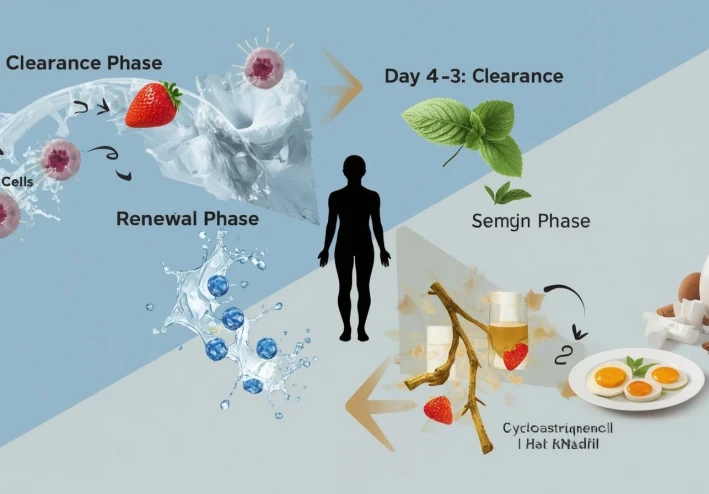
Cellular Housekeeping for a Century: The "Senescence Cycling" Protocol with Fisetin, Theaflavins, and Astragalus
Cellular Housekeeping for a Century: The "Senescence Cycling" Protocol with Fisetin, Theaflavins, and Astragalus
The quest for longevity has been dominated by a single, grueling paradigm: caloric restriction. While effective, this approach asks for perpetual hunger for a promise of tomorrow. Modern longevity science has shifted from simply slowing damage to actively removing it and regenerating tissue. The central discovery? Senescent cells – "zombie cells" that refuse to die, spewing inflammatory signals that accelerate aging and fuel chronic disease. The conventional approach of daily antioxidant cocktails does little to address these cellular saboteurs. True longevity nutrition requires a strategic, cyclical intervention: a targeted clearance of these zombies followed by a phase of renewal. This article introduces a revolutionary, time-bound protocol that harnesses three specific, underutilized plant compounds in a precise sequence to execute this cellular housekeeping, moving beyond slowing aging to actively reversing its markers
The Unconventional Core – Cyclical Clearance Over Constant Restriction
The standard "anti-aging" supplement regime involves taking the same daily stack of resveratrol, NAD+ precursors, and antioxidants. This static approach fails to respect biological cycles. The body repairs itself in phases: breakdown (catabolism) followed by rebuild (anabolism)
The "Senescence Cycling" Protocol is founded on two groundbreaking principles
Induced Apoptosis of Senescent Cells: Using potent, natural senolytic compounds that specifically target and clear zombie cells without harming healthy ones
Phased Regeneration: Following this clearance with a brief window of stem-cell supporting nutrition to encourage tissue repair and regeneration
This moves longevity hacking from a monotonous background task to a focused, monthly "maintenance window" that mimics natural repair cycles without the burden of chronic hunger
Novel Integration – The Clearance and Renewal Triad
We bypass common but weaker senolytics for agents with superior efficacy and complementary actions
Fisetin (from Strawberry Leaves) – The Superior Senolytic
The Science: While quercetin is commonly cited, fisetin is the most potent natural senolytic discovered to date. Research from the Mayo Clinic, published in EBioMedicine, demonstrated that fisetin reduced senescent cell burden in tissues by over 50% in aging mice, leading to extended healthspan and reduced age-related pathology. Its mechanism involves upregulating pro-apoptotic pathways specifically in senescent cells' heightened oxidative environment. Its bioavailability is significantly enhanced when paired with a fat source and a galactomannan fiber like shilajit
The Application: Serves as the primary "zombie cell" assassin in our protocol. Its job is to create clean, cellular "real estate" by removing the inflammatory old cells
The Patient Benefit: Ideal for those experiencing age-related stiffness, slowing recovery, or general "inflammaging" (age-related inflammation)
Black Tea Theaflavins (from Fermented Tea) – The Complementary Senolytic & Guardian
The Science: Moving beyond green tea's EGCG, the fermented black tea compounds theaflavins (TF-1, TF-2, TF-3) exhibit a unique dual action. They not only induce senescence clearance via p53 pathways but also protect mitochondrial membranes from damage during the subsequent renewal phase. A 2020 study in Aging Cell showed theaflavins improved mitochondrial function and reduced senescence markers in human cell lines more effectively than catechins alone
The Application: Acts as the precision senolytic and mitochondrial shield. It cleans up additional senescent cell types and ensures the energy factories of new cells are protected
The Patient Benefit: Crucial for cognitive longevity and for those concerned about energy decline, as mitochondria are key to cellular vitality
Astragalus Membranaceus (Cycloastragenol) – The Telomerase-Activating Regenerator
The Science: This adaptogen's active sapogenin, cycloastragenol, is a well-studied telomerase activator. Telomerase maintains the protective caps (telomeres) on chromosomes. More importantly for this protocol, its activation supports stem cell function and proliferation. Research in Cell Proliferation indicates it enhances the regenerative capacity of hematopoietic and mesenchymal stem cells. It is not taken concurrently with senolytics, but after
The Application: Serves as the "rebuild" signaler. After clearance, it encourages stem cells to regenerate fresh, healthy tissue in the newly vacated spaces
The Patient Benefit: Key for improving skin quality, immune resilience, and tissue repair capacity as we age
The Precision Protocol – The 5-Day Senescence Cycling Blueprint
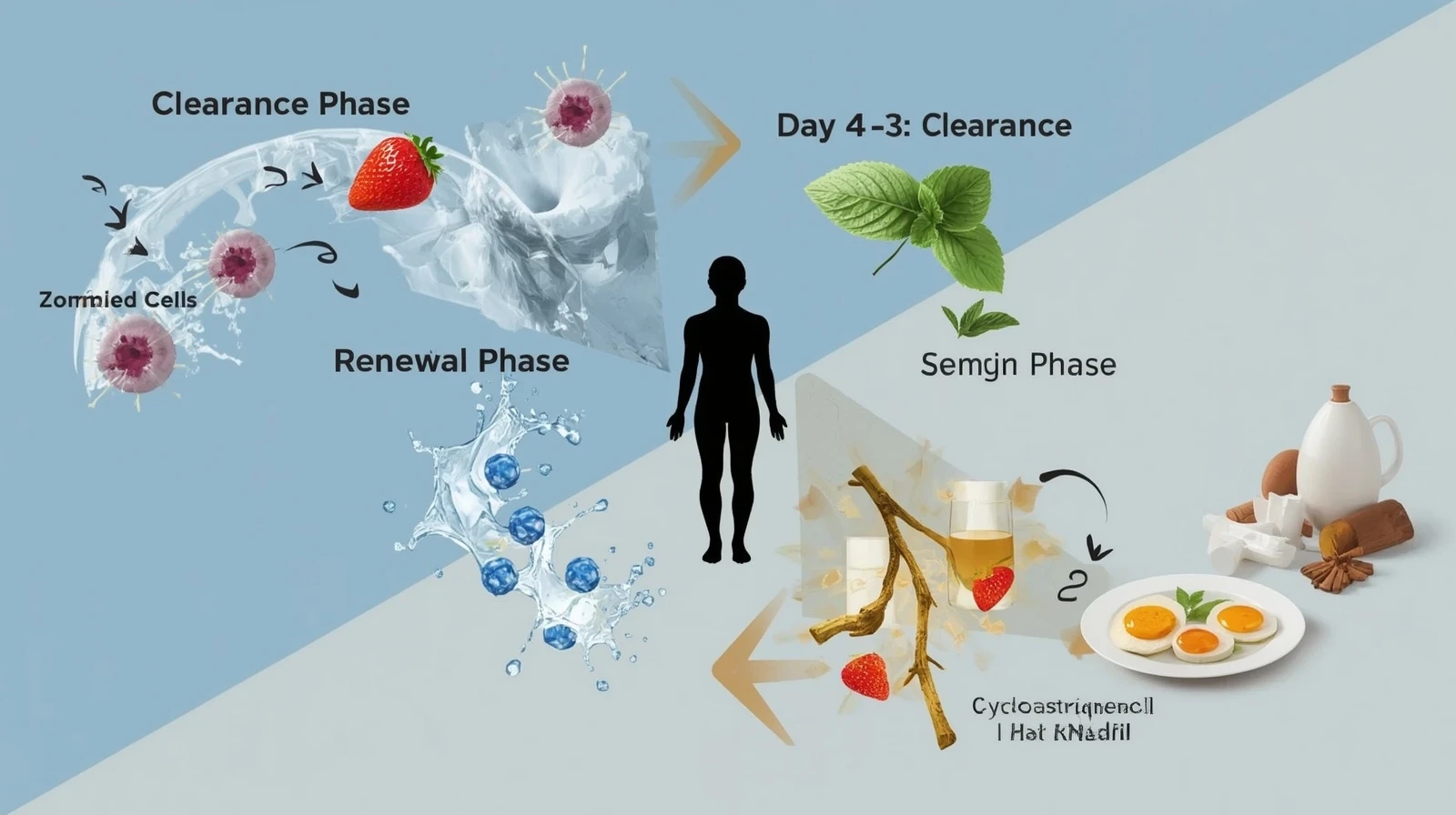
This is a monthly protocol, performed for 5 consecutive days. Day 1-3 is the Clearance Phase. Day 4-5 is the Renewal Phase
Preparation Week (Before Day 1): Focus on a diet rich in prebiotic fibers to prime the gut for optimal compound metabolism
The Clearance Phase (Days 1-3)
Dietary Context: Implement a Modified Fasting-Mimicking Diet (FMD). This is not about extreme calorie restriction, but specific macronutrient deprivation. Dramatically reduce intake of methionine and branched-chain amino acids (leucine, isoleucine, valine) – found primarily in red meat, dairy, and whey protein. These amino acids activate mTOR, a pathway that inhibits autophagy and senescent cell clearance. Consume plenty of healthy fats (avocado, olive oil), low-methionine vegetables, and minimal plant protein from non-soy sources
Supplement Protocol
Morning (with fat source like avocado or MCT oil): Fisetin (500-1000mg of a bioavailability-enhanced formulation)
Afternoon: Black Tea Theaflavin Extract (500mg standardized to 80% theaflavins).
Rationale: The low-protein, low-mTOR-signaling diet puts cells in a clean-up state. Fisetin and Theaflavins deliver the targeted apoptotic signal to senescent cells, which are uniquely vulnerable during this metabolic state
The Renewal Phase (Days 4-5)
Dietary Context: Shift to a protein-rich, nutrient-dense rebuilding diet. Re-introduce high-quality protein (fish, eggs, collagen), sulfur-rich vegetables, and colorful berries. This signals anabolism and provides the building blocks for new tissue
Supplement Protocol
Discontinue Fisetin and Theaflavins
Morning & Evening: Astragalus Extract (standardized to 50% cycloastragenol, 250mg per dose)
Rationale: With the "zombie cells" cleared, the body is primed for regeneration. The protein-rich diet provides amino acids, while cycloastragenol activates telomerase and stem cell pathways to populate tissues with fresh, functional cells
Post-Cycle (Day 6+): Return to a balanced, whole-food diet. Repeat the entire 5-day cycle every 4-6 weeks
From Passive Aging to Active Cellular Renewal
Longevity is no longer a passive game of damage limitation. It is an active process of cellular curation. The Senescence Cycling Protocol leverages the body's innate cycles of clean-up and repair, using fisetin and theaflavins as precise molecular tools to remove aging's debris, followed by astragalus to signal renewal. This monthly ritual transcends daily supplementation, offering a structured, scientifically-grounded method to not just add years to life, but to add vibrant, functional life to years. It is the art of becoming a better custodian of your own cellular future
FAQs: Your Senescence Cycling Questions Answered
Q1: Is this protocol safe? Clearing cells sounds intense
A: The safety profile of natural senolytics in short bursts is promising. The key is the cyclical, not continuous, approach. Healthy cells are not affected because they lack the specific pro-apoptotic pathways that are hyperactive in senescent cells. It's akin to targeted weeding, not carpet bombing. However, those with active cancer or on immunosuppressants should avoid senolytics unless under direct specialist supervision, as the effects on immune cell function require careful management
Q2: Can I just take these supplements daily instead of doing the 5-day cycle
A: This would be counterproductive and potentially risky. Continuous senolytic exposure could interfere with normal tissue turnover and wound healing. The power of the protocol lies in the sequence: a brief, intense clearance followed by a definitive stop and a rebuild phase. Daily use would likely lead to adaptive resistance and negate the stem-cell renewing benefits of the astragalus phase
Q3: How do I know if it's working
A: Subjective markers include improved joint flexibility, enhanced recovery from exercise, better skin texture, and increased energy. Objective biomarkers can be tracked, including inflammatory markers (hs-CRP, IL-6) which should decrease, and potentially NAD+ levels which may naturally rise as inflammatory burden drops. Tracking grip strength or a 6-minute walk test can also show functional improvement
Q4: Why the specific dietary shift from low-protein to high-protein
A: This is critical. The low-protein, low-BCAA phase during clearance lowers mTOR activity, which is the "green light" for cell growth and a "red light" for autophagy/clearance. This creates the optimal metabolic environment for senolytics to work. The subsequent high-protein phase reactivates mTOR, providing the "green light" and raw materials for the Astragalus-enhanced stem cells to build new tissue. It's a metabolic switch we deliberately flip
Q5: How does this compare to taking NAD+ boosters like NMN or NR
A: NAD+ boosters are like refilling the battery of an old, rusty machine (aged cells). Senescence cycling is like removing the rusty parts and installing new ones. They are complementary strategies. A highly effective approach is to use this 5-day cycling protocol, and then in the weeks between cycles, support the new, healthier cellular environment with NAD+ precursors and mitochondrial supporters