Your Body is a Symphony, Not a Spreadsheet: Conducting Personalized Nutrition with AI, Dynamic Biomarkers, and Epigenetic Switches
Your Body is a Symphony, Not a Spreadsheet: Conducting Personalized Nutrition with AI, Dynamic Biomarkers, and Epigenetic Switches
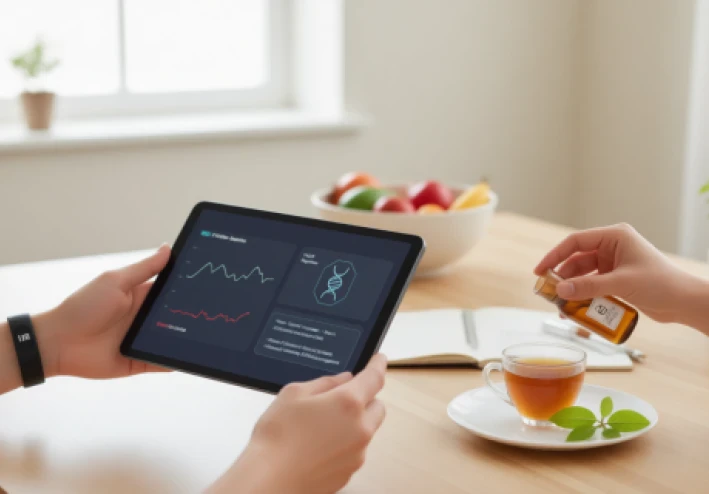
We were promised that our genes would be the blueprint for perfect health. Yet, after a decade of static DNA-based diet plans, the results are inconsistent and often disappointing. Why? Because your genome is the sheet music, but your current physiology is the live performance. A single genetic test cannot account for your sleep last night, your stress levels this morning, or the state of your gut microbiome after that antibiotic course three months ago. Conventional personalized nutrition operates on outdated, linear logic. The true frontier is dynamic adaptation: a system that listens to your body's real-time language of biomarkers and responds with precision nourishment. This article introduces the Adaptive Nutrition Platform—a conceptual leap where Artificial Intelligence synthesizes continuous data streams, bitter receptor genetics, and a database of epigenetic food compounds to act as your personal, real-time nutritional conductor, orchestrating a state of metabolic and neurological harmony
The Unconventional Core – Dynamic Adaptation Over Static Profiling
The old model of personalized nutrition is a snapshot: a DNA test, a microbiome analysis, a blood panel. It’s a fixed map for a constantly changing terrain. This leads to the "personalization paradox": advice that is personalized in theory but static in practice
Our approach is built on a triad of real-time inputs
Continuous Biomarker Streaming: Data from non-invasive wearables (continuous glucose monitors, heart rate variability rings, sleep trackers, emerging sweat-based cortisol/electrolyte sensors) creates a live physiological narrative
AI-Driven State Matching: An algorithm cross-references this live data with a vast, curated database of over 500 food compounds (polyphenols, terpenes, alkaloids) and their known epigenetic, metabolic, and neuroendocrine effects
Genetic Leverage for Digestive Priming: Profiling of TAS2R bitter taste receptor genes to personalize the selection of bitter herbs that optimally stimulate an individual’s digestive and metabolic reflexes
This system doesn’t just know who you are; it perceives what state you are in right now and prescribes accordingly
Novel Integration – The AI Triad: Sensor, Database, and Genetic Key
We are moving beyond meal logging apps. This is a predictive, responsive interface with your own biology
The Dynamic Adaptation Algorithm: The Conductor
The Science: The platform’s AI is trained on pharmacokinetic and nutrigenomic research. It doesn't just see "high glucose"; it interprets a pattern: a rapid glucose rise post-meal coupled with low heart rate variability (HRV). It then queries its database for compounds that simultaneously modulate glucose absorption and calm the sympathetic nervous system
The Application: The user receives a notification: *"Post-lunch glucose spike detected with low HRV. Stress-digestion interplay likely. Suggestion: 1 cup of Ginger (Zingiber officinale) and Holy Basil (Ocimum sanctum) tea. Ginger enhances gastric emptying and has independent glucose-lowering effects per a 2018 Journal of Ethnic Foods study, while Holy Basil's adaptogenic eugenol compounds modulate cortisol response, improving glucose uptake under stress"*
The Patient Benefit: Moves from generic "eat low-glycemic" to a context-aware, multi-system intervention
The Bitter Receptor Genetic Key: Unlocking Digestive Potential
The Science: Bitter receptors (TAS2Rs) in the gut are not just for taste; they trigger the release of digestive hormones (like ghrelin and CCK) and enzymes. Genetic variants (e.g., in TAS2R38) determine sensitivity. A 2020 study in Nutrients linked specific TAS2R38 variants to gut microbiome composition and satiety responses
The Application: During onboarding, a user’s TAS2R profile is analyzed. A "supertaster" for bitterness might be prescribed a gentler bitter like Dandelion root before meals to stimulate bile flow. A "non-taster" might require a potent bitter like Gentian or Wormwood to achieve the same digestive priming effect. This turns a genetic quirk into a precise therapeutic lever
The Patient Benefit: Solves the puzzle of why some thrive on bitter herbs and others can't tolerate them, optimizing digestive efficiency and nutrient absorption on an individual level
The Epigenetic Food Switch Database: The Symphony of Compounds
The Science: The platform's core is a database cataloging compounds that act as "epigenetic switches." For example, Sulforaphane from broccoli sprouts upregulates the Nrf2 pathway for detoxification, but its effect is influenced by current oxidative stress levels. Lion’s Mane mushroom (hericenones) upregulates Nerve Growth Factor (NGF), but its effect on Brain-Derived Neurotrophic Factor (BDNF) can vary under stress versus calm states
The Application: The AI doesn't just recommend "broccoli"; it recommends "broccoli sprouts with mustard seed powder (for active myrosinase) on a day with high pollution exposure (inferred from location data and inflammatory markers)." It suggests Lion’s Mane in the evening on high-sleep quality nights to optimize cognitive repair, but might suggest Rhodiola instead on high-stress days to modulate the HPA axis first
The Patient Benefit: Achieves a level of nutritional precision that respects the conditional nature of how food compounds actually interact with our ever-changing biology
The Precision Protocol – Living with Your Adaptive Platform
This is not an app you check once a week. It is a continuous, low-friction feedback loop
Phase 1: Foundational Profiling (Week 1)
Genetic Testing: TAS2R bitter receptor profile and key SNPs (like PEMT for choline needs, FADS1 for omega-3 conversion)
Baseline Biomarkers: Standard blood work (HbA1c, lipids, inflammation) and a microbiome analysis to seed the algorithm
Phase 2: Wearable Integration & Learning (Weeks 2-4)
Sensor Syncing: Connect CGM, HRV monitor, sleep tracker, and activity wearable
AI Training Period: The platform observes your responses to various foods, sleep patterns, and stressors, building your unique "response fingerprint"
Phase 3: Dynamic Partnership (Ongoing)
Morning Briefing: The platform reviews your sleep data, waking cortisol proxy (via HRV), and fasting glucose. It suggests a breakfast type: *"High sympathetic tone today. Prioritize a protein/fat breakfast with a side of 1 oz of blueberries (anthocyanins for endothelial function under stress). Consider delaying caffeine by 90 minutes"*
Real-Time Nudges: Post-meal biomarker shifts trigger specific, mild interventions: *"Glucose rise is more rapid than usual for this meal. A 10-minute post-meal walk now would be 35% more effective at mitigating the spike"*
Herbal Prescriptions: Based on your TAS2R profile and state, it recommends a specific bitter tonic or adaptogen: "Digestive enzymes appear low. Take 1 ml of Gentian tincture in water 10 minutes before your next meal
The End of the Universal Protocol
The future of nutrition is not a fixed plan derived from a single test. It is a fluid, intelligent, and responsive dialogue between you and your food, mediated by an AI that understands the language of your biomarkers. The Adaptive Nutrition Platform concept represents the culmination of personalized health: a system that honors your unique genetics while dynamically adapting to the reality of your daily life, stress, and environment. It shifts the paradigm from reactive eating to proactive, precise nourishment, conducting the complex symphony of your biology toward a state of enduring vitality
FAQs: Your Adaptive Nutrition ki Answered
Q1: This sounds incredibly invasive. Is my data safe
A: Data sovereignty and privacy are the bedrock of such a system. The conceptual platform operates on a "closed-loop personal server" model, where all sensitive data is processed locally on your device or in a personal, encrypted health vault. The AI algorithms can run without sending raw biomarker data to the cloud. You would own and control access to every byte of your biological data
Q2: Do I need to wear a dozen devices all day for this to work
A: The system is designed for graceful degradation. The more quality data points (CGM, HRV), the more precise its recommendations. However, even with just a continuous glucose monitor and a sleep tracker, it can provide profoundly more personalized insights than a static DNA report. It works with what you provide, and its intelligence scales with data richness
Q3: How is this different from my fitness tracker telling me to “move”
A: Current fitness trackers offer generic, population-level advice ("get 10,000 steps"). This platform provides contextual, multi-system prescriptions. It doesn't just see a number; it interprets a pattern across systems (metabolic, nervous, digestive) and recommends a specific food, herb, or behavior to alter that pattern. It’s the difference between a weather app telling you it's raining and a skilled advisor telling you when to plant, what to plant, and how to tend your garden in that specific rain
Q4: Won't this make me obsessed with every data point and increase anxiety
A: The platform's design philosophy is "ambient intelligence." The goal is not to make you stare at graphs, but to deliver simple, actionable insights at the right moment—like a trusted coach. The AI handles the complexity, presenting you with a clear, confident suggestion: "Try this now." It aims to reduce dietary anxiety by replacing guesswork and conflicting information with a single, data-backed recommendation
Q5: Is this science fiction, or are components available now
A: The fully integrated platform is a near-future vision, but every component exists today in isolation. CGMs are available. HRV apps exist. Nutrigenomic testing and bitter receptor genetics are known. AI is being applied to health data. The revolutionary step—and the focus of current R&D—is the sophisticated integration of these streams into a single, user-friendly, and clinically validated system. We are building the pieces of this future now