Alfalfa: The Unsung Root of Heart Health - A Deep Dive into Nature's Cholesterol Regulator
Alfalfa: The Unsung Root of Heart Health - A Deep Dive into Nature's Cholesterol Regulator
In the relentless pursuit of heart health, we often overlook the simplest solutions rooted in ancient wisdom. Amidst the noise of modern superfoods and synthetic supplements stands a humble, perennial herb with a profound legacy: Alfalfa (Medicago sativa). Known in Arabic as "Al-Fal-Fa" (literally "father of all foods"), this deep-rooted plant has sustained civilizations for millennia. Today, modern science is validating what traditional healers long understood—alfalfa is a formidable, multi-targeted ally in the battle against high cholesterol and for cardiovascular resilience
High cholesterol is not merely a number on a lab report; it's a sign of disrupted metabolic communication and oxidative stress. While pharmaceutical interventions have their place, nature offers synergistic solutions that address the root causes. Alfalfa emerges not as a magic bullet, but as a biological regulator, working through several sophisticated pathways to gently guide cholesterol metabolism back into balance. This article explores the robust scientific evidence behind alfalfa's hypolipidemic effects and provides a practical blueprint for integrating this powerful herb into your daily heart-health regimen
The Biochemical Arsenal of Alfalfa - More Than Just Fiber
Alfalfa's power lies in its synergistic blend of bioactive compounds, each playing a distinct role in lipid management and arterial protection
Saponins: Nature's Cholesterol Disruptors
The Science: Alfalfa is uniquely rich in specific plant saponins. These compounds have a distinctive chemical structure: a fat-soluble (lipophilic) core and a water-soluble (hydrophilic) tail. This allows them to bind directly to cholesterol molecules in the intestinal lumen, forming insoluble complexes that the body cannot absorb. This process is known as enteric sequestration. Essentially, alfalfa saponins "trap" dietary cholesterol and bile acids (which are made from cholesterol) and usher them out via the feces. The liver must then draw upon existing blood cholesterol to produce more bile, thereby effectively lowering circulating LDL ("bad") cholesterol levels
The Evidence: Animal and human studies have consistently demonstrated this effect. Research indicates that alfalfa saponins can significantly reduce total cholesterol and LDL without adversely affecting HDL ("good") cholesterol
Soluble Fiber: The Gel-Forming Guardian
The Science: Alfalfa provides a high concentration of soluble fiber, notably pectin. In the gut, this fiber forms a viscous gel that acts as a physical barrier, slowing the absorption of dietary fats and sugars. This moderates blood sugar spikes and further impedes cholesterol absorption. Furthermore, soluble fiber is fermented by gut bacteria into short-chain fatty acids (SCFAs) like propionate, which have been shown to inhibit cholesterol synthesis in the liver
The Synergy: The combination of saponins and soluble fiber creates a powerful one-two punch in the digestive tract, making alfalfa exceptionally effective at reducing the intestinal phase of cholesterol absorption
Antioxidant & Anti-Inflammatory Phytonutrients
The Science: Chronic inflammation and oxidative stress are the engines that drive cholesterol oxidation. Oxidized LDL cholesterol is the primary form that damages arterial walls, initiating plaque formation (atherosclerosis). Alfalfa is rich in chlorophyll, vitamins C and K, and various flavonoids that neutralize free radicals and cool systemic inflammation, thereby helping to protect LDL particles from oxidation and reducing vascular damage
The Multifaceted Cardiovascular Benefits - Beyond the Lipid Panel
Alfalfa's impact extends far beyond simply lowering a number, offering whole-system cardiovascular support
Arterial Plaque Prevention: By lowering LDL and preventing its oxidation, alfalfa directly addresses the initiator of atherosclerotic plaque. Some preliminary studies suggest its saponins may also help reduce the adherence of inflammatory cells to the arterial endothelium
Metabolic Harmony: Its fiber content helps regulate blood glucose levels. Stable blood sugar reduces the formation of advanced glycation end products (AGEs) that contribute to vascular stiffness and inflammation
Gentle Detoxification & Alkalinity: Alfalfa's deep root system draws a broad spectrum of minerals from the soil. It is a natural source of chlorophyll, often called "plant blood," which supports the body's detoxification pathways and has a mild alkalinizing effect, countering the pro-inflammatory acidity of a modern diet
The Practical Protocol - How to Harness Alfalfa Safely and Effectively
Integrating alfalfa for therapeutic benefit requires attention to form, dose, and quality
Available Forms & How to Use Them
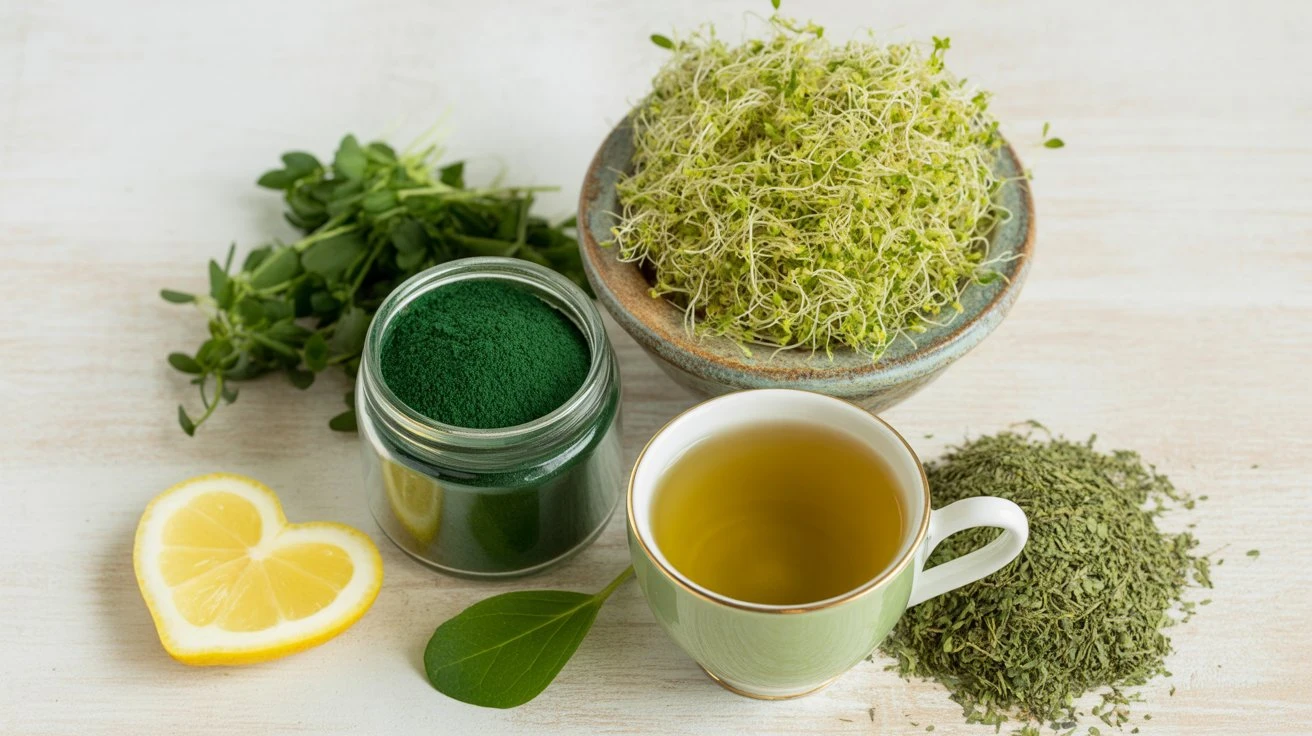
Dried Leaf/Herb (Tea or Infusion): The gentlest form. Steep 1-2 teaspoons of dried alfalfa leaf in hot water for 10 minutes. Drink 1-2 cups daily. Ideal for daily maintenance
Powder: Versatile and potent. Add 1 teaspoon (approx. 3-5 grams) to smoothies, juices, or soups. This provides a concentrated dose of fiber and nutrients
Sprouts: The living, whole-food form. Rich in enzymes and vitamins. Add a handful to salads, sandwiches, and wraps daily for a crunchy, nutrient-dense boost
Standardized Supplements (Tablets/Capsules): For targeted, consistent dosing. Look for supplements standardized for saponin content. Follow manufacturer or practitioner guidelines, typically ranging from 5-10 grams of alfalfa powder equivalent per day
Critical Safety & Sourcing Considerations
Autoimmune Conditions: Due to its immune-modulating L-canavanine content (primarily in the seeds and sprouts), individuals with lupus or other autoimmune conditions should avoid alfalfa or use it only under strict medical supervision
Blood Thinners: Alfalfa is very high in Vitamin K1 (phylloquinone), which supports blood clotting. Those on warfarin (Coumadin) must maintain consistent Vitamin K intake and should only use alfalfa after consulting their doctor to avoid interfering with medication stability
Quality is Paramount: Source organic alfalfa from reputable suppliers. Its deep roots can absorb both good minerals and potential contaminants from the soil. Organic certification ensures it's grown in clean soil without synthetic pesticides
Pregnancy & Breastfeeding: While food amounts in sprouts are likely safe, therapeutic doses of supplements are not recommended due to a lack of safety data
Rooting Your Heart Health in Nature's Wisdom
Alfalfa represents a paradigm of gentle, systemic support. It doesn't forcefully lower cholesterol; it encourages the body to rebalance its own lipid metabolism through intelligent, multifaceted actions. From its saponins intercepting cholesterol in the gut to its antioxidants guarding the arteries, it offers a holistic approach to cardiovascular wellness
In a world searching for complex solutions, the "father of all foods" reminds us that profound healing often comes from deep roots—both in the earth and in our herbal traditions. By making high-quality alfalfa a consistent part of a heart-healthy lifestyle rich in whole foods and exercise, you engage a powerful, natural ally in building lifelong vascular resilience. Always partner this ancient wisdom with modern medical guidance, especially if you have pre-existing conditions or are on medication, to create a truly integrated path to heart health
FAQs: Your Alfalfa and Cholesterol Questions Answered
Q1: How long does it take to see an effect on cholesterol levels with alfalfa
A: As a natural regulator, alfalfa's effects are gradual and cumulative. Most individuals using a therapeutic dose (e.g., 1-2 tbsp of powder or equivalent supplement daily) may begin to see improvements in lipid panels after 8 to 12 weeks of consistent use. It works best as part of a sustained lifestyle approach
Q2: Can I take alfalfa instead of my prescribed statin medication
A: Absolutely not. Do not discontinue or replace prescribed cholesterol-lowering medication without explicit guidance from your cardiologist. Alfalfa can be an excellent complementary therapy, and you should discuss adding it to your regimen with your doctor. They can monitor your levels and adjust pharmaceutical doses safely if the alfalfa proves effective for you
Q3: Are alfalfa sprouts as effective as the powdered leaf for cholesterol
A: Sprouts are a superb source of living nutrients, enzymes, and fiber, and they contribute positively to heart health. However, for a concentrated, therapeutic effect on cholesterol, the dried leaf powder or a standardized supplement is more potent. The powder contains a higher density of the key bioactive saponins and fiber per serving. Think of sprouts as excellent daily food and the powder as a targeted supplement
Q4: Does alfalfa have any common side effects
A: When started gradually, alfalfa is well-tolerated. Due to its high fiber content, introducing large amounts too quickly can cause temporary digestive bloating or gas. Start with a small dose (½ tsp of powder) and increase slowly over a week. Its mild diuretic effect may also be noticed. Those with the specific autoimmune or medication concerns mentioned above should exercise caution
Q5: Is there a difference between alfalfa leaf and alfalfa root
A: Yes. The leaf (and stem) is primarily used for cholesterol, nutrient support, and as a gentle diuretic. The root is sometimes used in traditional medicine for different purposes. For cardiovascular and cholesterol benefits, products and preparations made from the leaf are the standard and best-researched